Wedding Guest Dress Fall for Every Venue
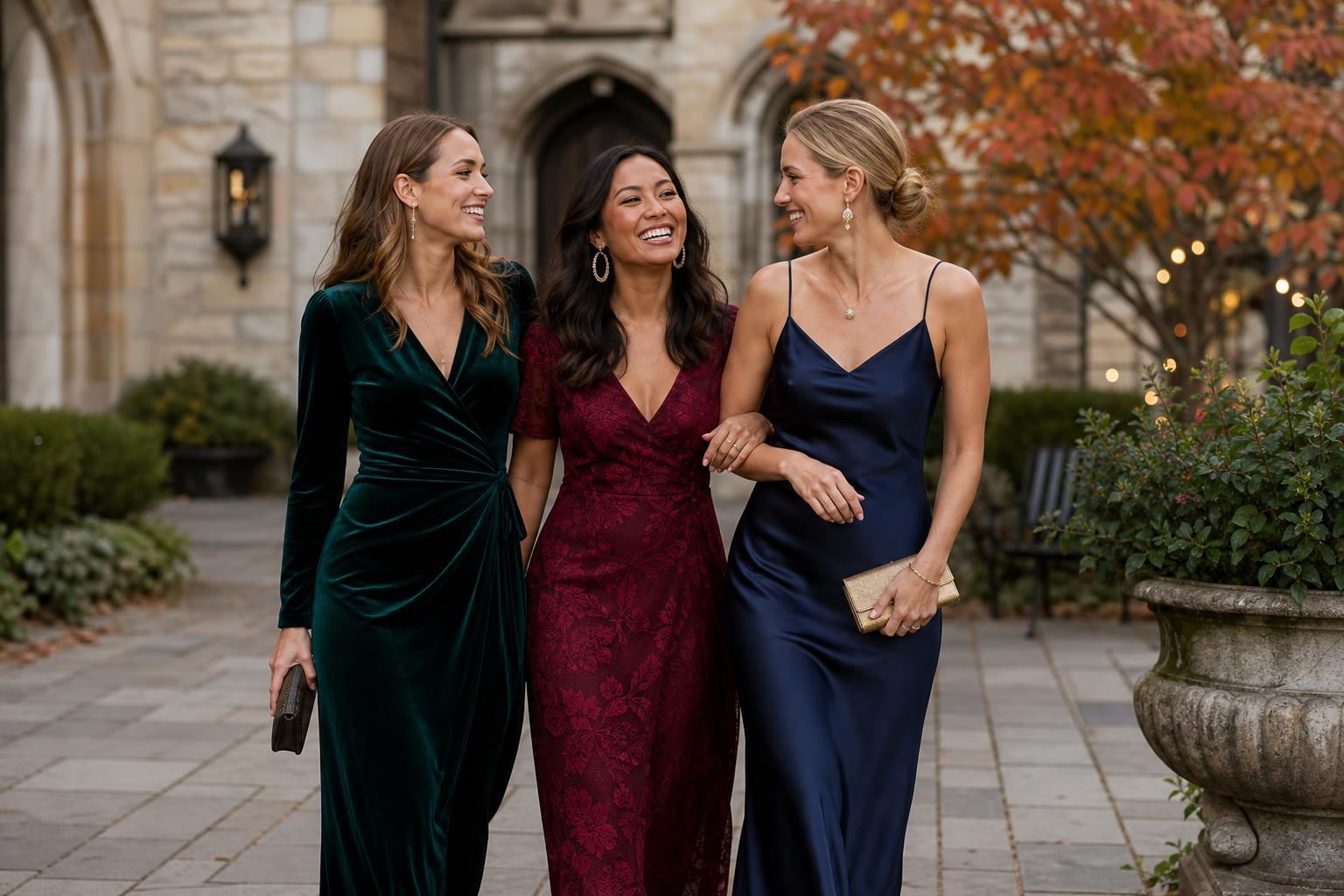
Fall weddings have a way of making every outfit decision feel slightly more complicated. The light changes earlier, the temperature can shift from warm afternoon sun to a chilly evening reception, and the dress code often sits somewhere between relaxed outdoor romance and polished formalwear. That is exactly why choosing the right wedding guest dress fall look is less about finding one pretty dress and more about building an outfit that makes sense from ceremony to last dance.
The best fall wedding guest dresses usually balance four things at once: fabric, silhouette, color, and layering. Velvet, satin, knit, and crepe all show up for good reason. Midi, maxi, wrap, and long-sleeve styles keep returning because they solve real problems like temperature changes, venue formality, and comfort over several hours. Add in rich shades like burgundy, navy, emerald, and chocolate, and you get the polished, cozy-but-elevated feeling that works so well for autumn weddings.
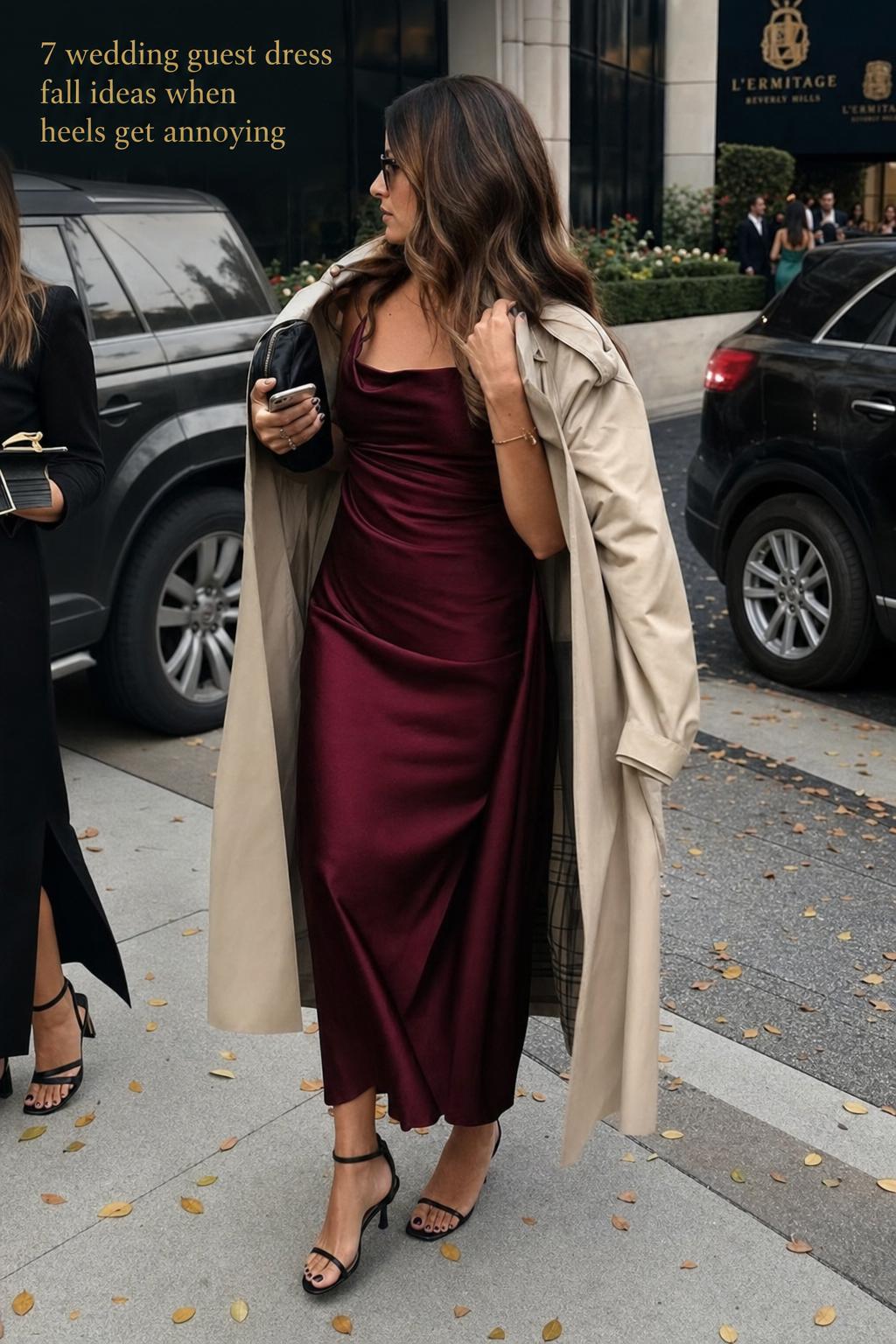
This guide breaks everything down in a practical way, from dress codes and fabric choices to save-worthy outfit ideas you can actually picture wearing. Whether the invitation says casual, semi-formal, or formal, the goal is the same: look appropriate, feel comfortable, and wear something that feels chic in real life, not just in a fitting room mirror.
The Fashion-Note Edit
Five effortless pieces to refresh your everyday wardrobe
A polished, practical edit for workdays, weekends, and everything in between.

The Drop
Women’s Blake Long Blazer
A longline, tailored blazer with a notched collar and a single-button closure—an easy layer for denim, dresses, or office-ready looks.
Shop the blazer
Amazon Essentials
Women’s Lightweight Crewneck
A soft, lightweight sweater with a clean crew neckline—the kind of reliable layer that works from cool mornings to air-conditioned spaces.
Shop the sweater
Amazon Essentials
Women’s Loafer Flat
A classic flat loafer that gives casual outfits a more polished finish and pairs naturally with tailored pants, skirts, and straight-leg jeans.
Shop the loafers
Levi’s
Women’s 501 90s Jeans
A relaxed, vintage-inspired take on the iconic 501 silhouette—made for an easy, lived-in look without the thrift-store search.
Shop the jeans
Colorfulkoala
High-Waisted 7/8 Leggings with Pockets
Soft, four-way-stretch leggings with side pockets and a high-rise waistband—designed for movement, errands, and off-duty comfort.
Shop the leggings
Affiliate disclosure: This section contains affiliate links. If you make a purchase through these links, I may earn a commission at no additional cost to you. Product selection, pricing, availability, and delivery terms may change—please review the current details on Amazon before purchasing.
As an Amazon Associate I earn from qualifying purchases.
What makes a fall wedding outfit work
A strong fall wedding outfit usually starts with context. Before focusing on trends or shopping, think about three things first: the dress code, the weather, and the venue feel. A satin midi dress may feel perfect for an evening hotel ballroom wedding, while a knit or crepe midi works better for a garden or courtyard setting. A dramatic velvet gown can look incredibly right for a formal event, but it may feel too heavy for a more relaxed daytime celebration.
Your wedding style is personal.
Your plan should feel that way, too.
Zarellea keeps your guest list, budget, vendors, and every next step beautifully organized — so you can focus on the moments that feel like you.
What separates a beautiful dress from a smart wedding guest choice is how well it handles the full event. A look that photographs well but feels restrictive after an hour is harder to wear than one with movement, coverage, and enough flexibility for changing temperatures. In fall, that practical side matters. Long sleeves, wraps, jackets, and thoughtful footwear can make an outfit feel much more considered.
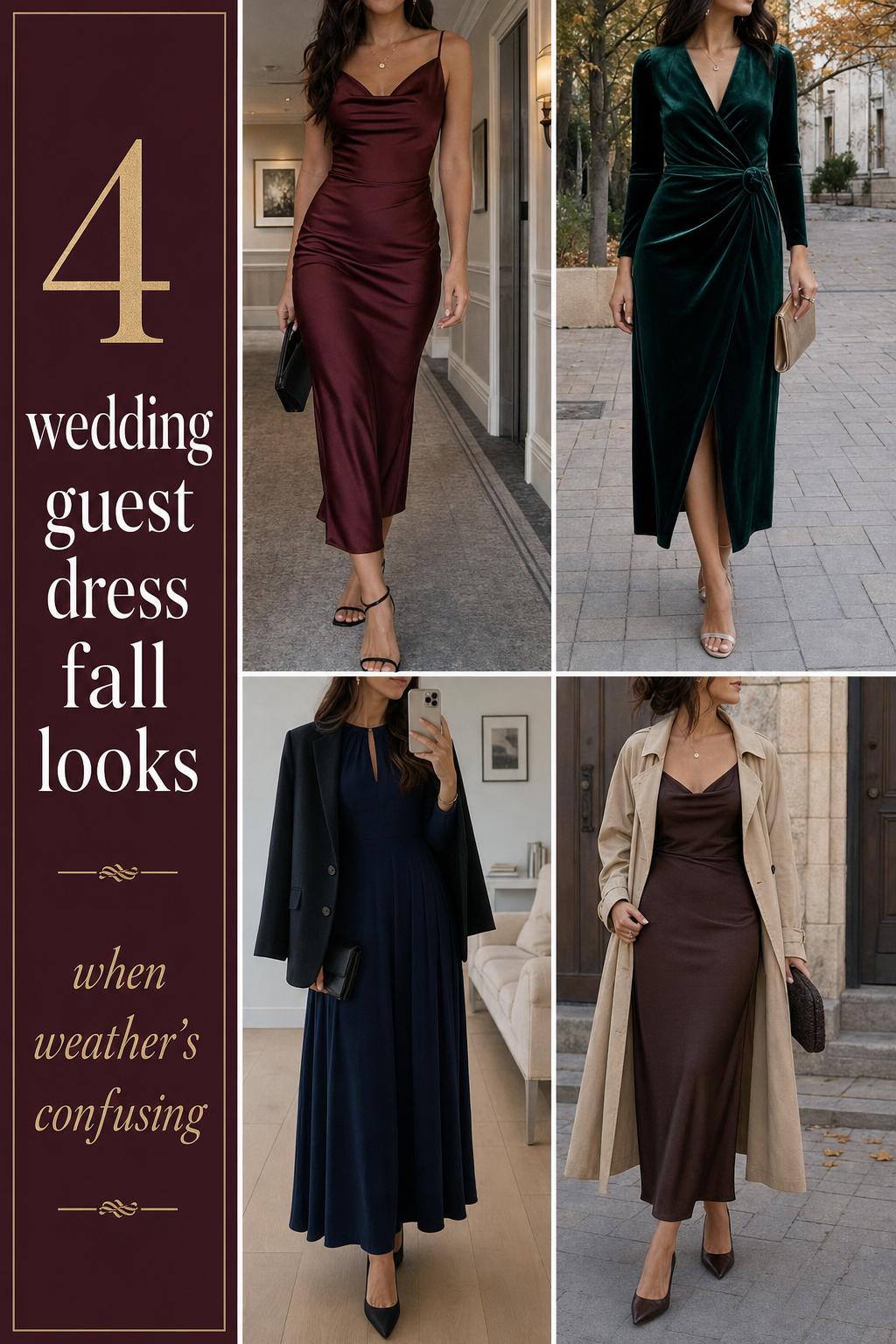
There is also a visual reason autumn dressing feels so appealing. Rich textures and jewel-toned colors naturally add depth. A burgundy velvet wrap dress, a navy satin midi, or an emerald maxi has more dimension than a flat fabric in a brighter seasonal palette. That depth is what makes many fall wedding guest outfits look elevated and timeless with very little extra effort.
Dress codes, decoded in a wearable way
Dress codes shape almost every other decision. Casual weddings typically leave room for easier silhouettes and softer textures, while semi-formal invites often sit in the sweet spot of polished but not overly dressed. Formal weddings call for more refined fabrics, longer lines, and a stronger finish overall. In fall, fabric often helps communicate formality faster than embellishment does. Velvet and satin usually read dressier, while knit and some crepe styles can lean more relaxed depending on cut and accessories.
A useful shortcut is to match structure and shine to the event tone. If the wedding feels elegant, lean into satin, a sleek midi, or a velvet gown. If the setting feels softer and more daytime, a wrap dress, long-sleeve midi, or a clean crepe silhouette tends to feel right. This approach keeps the outfit balanced instead of forcing one dramatic piece into the wrong setting.
Why weather and venue matter more in autumn
Fall weather is rarely constant through an entire wedding day. That makes layering one of the most useful style tools, not an afterthought. A jacket or tailored blazer can make a sleeveless satin midi feel seasonally grounded. A wrap, cardigan, or even faux fur-style outer layer can soften a more formal velvet look while still keeping it event-appropriate. The outfit should feel complete with or without that extra layer, because many fall weddings move between outdoor and indoor spaces.
Venue mood matters too. Outdoor ceremonies, church settings, hotel ballrooms, and garden celebrations all change how a dress reads. The same midi dress can feel modern and effortless at one wedding and slightly underdressed at another if the surrounding atmosphere is more formal. When in doubt, choose a silhouette with enough presence to stand on its own, then adjust the styling through shoes, jewelry, and outerwear.
The fabrics that feel right for fall weddings
Some fabrics simply look better in autumn light. They hold color more richly, add texture to your outfit, and make seasonal layering easier. The most reliable choices across fall wedding guest dresses are velvet, satin, knit, and crepe, each with a different mood and practical advantage.
Velvet for depth and evening polish
Velvet is one of the clearest fall signals in wedding guest dressing. It instantly adds visual richness, especially in burgundy, emerald, navy, or chocolate. A velvet gown works especially well for formal weddings, while a velvet wrap dress can feel a bit more relaxed and wearable. The reason this fabric is so flattering is that it gives the silhouette more presence without needing excessive detail.
Why this outfit works: velvet naturally carries texture, so even a simple cut looks intentional. That makes it useful if you want an elevated result with minimal accessories. Keep jewelry cleaner and let the fabric do most of the work. This also helps the outfit look more expensive because it avoids visual competition.
Satin for sleek movement and formal shine
Satin remains one of the most versatile choices for a fall wedding because it can shift from minimalist to dressy depending on the cut. A satin midi dress is especially reliable for semi-formal and formal settings. It has enough shine to feel event-ready, but the silhouette can stay simple and modern. Bias-cut slip-inspired styles also appear often because they move beautifully and layer well with jackets.
Why this outfit works: satin reflects light, so the silhouette reads cleaner when the fit is right. Midis are often especially flattering here because they keep the look balanced. If the dress already has fluid movement, pair it with structured outerwear to avoid looking too soft overall. That contrast gives the outfit a polished finish.
Knit and crepe for a softer dress code
Knit and crepe dresses are useful when the invitation leans casual or when the venue feels more relaxed. They also make sense for daytime weddings and settings like gardens or courtyards, where a full velvet gown might feel too heavy. A knit dress can still look refined if the shape is sleek and the accessories are intentional. Crepe often offers that middle ground between easy and polished.
Why this outfit works: these fabrics can create a smoother line over the body without feeling stiff. They are often easier to wear for longer events, especially when sitting, walking, and dancing are all part of the day. The key is to keep the styling elevated with a jacket, heeled shoes, or jewelry so the outfit still feels wedding-ready.
Silhouettes that keep showing up for good reason
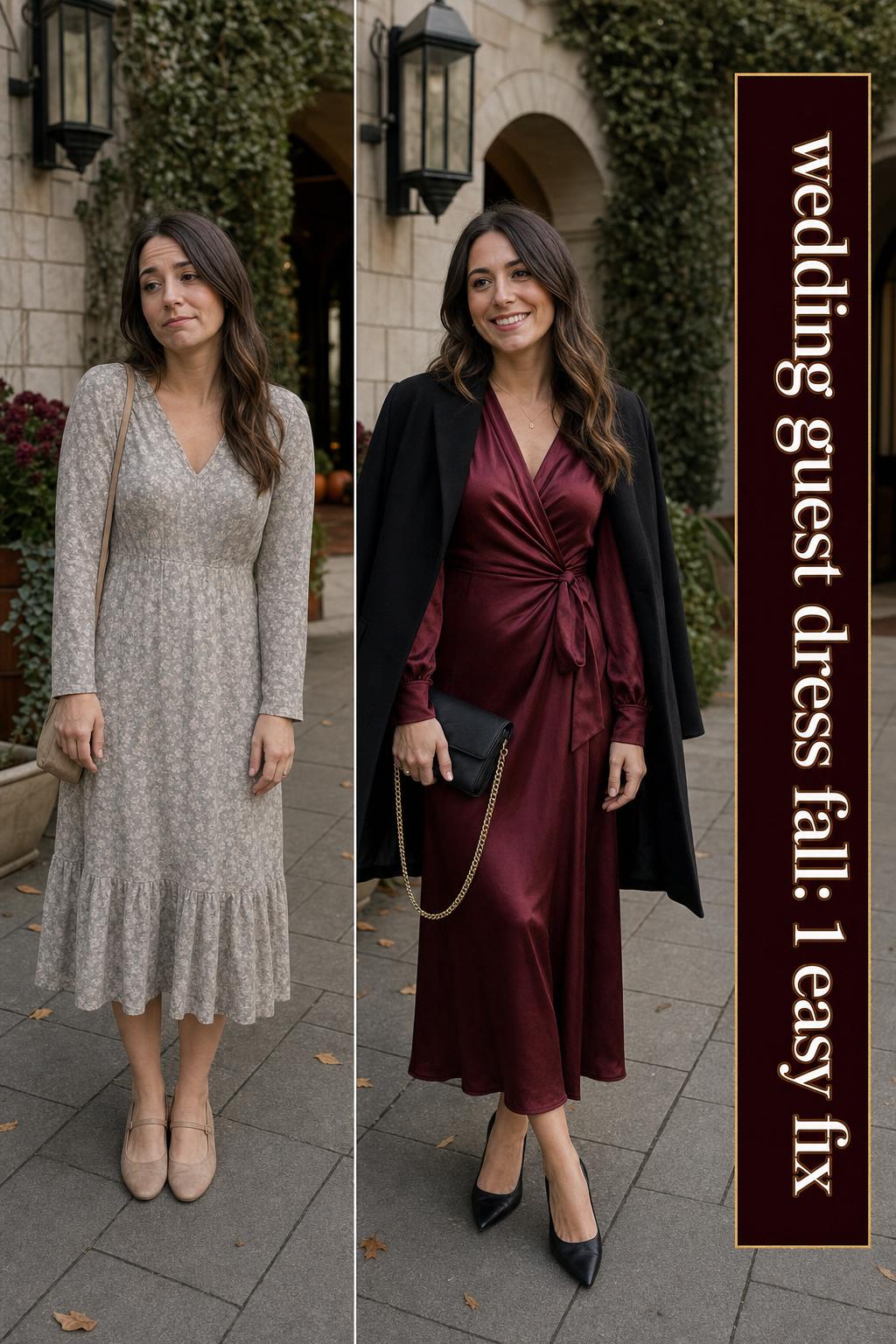
The strongest fall wedding guest outfits tend to rely on a few repeated silhouettes because they solve practical styling problems. They offer coverage, movement, and enough structure to handle layers. If you are unsure where to start, focus on midi, maxi, wrap, and long-sleeve styles first.
The satin midi that works almost everywhere
A satin midi dress is one of the easiest answers for a semi-formal or formal fall wedding. It feels refined without looking overdone, and the hemline works well with a range of shoes. If you want a clean silhouette, choose a shape that skims the body rather than clings too tightly. This usually looks more elegant and is more comfortable over a long event.
This is also one of the best options for balancing body proportions. A midi length can visually lengthen the frame when paired with a shoe that does not cut the leg line too abruptly. It is especially effective if the dress has a subtle drape and the accessories stay minimal. If your goal is minimalist but sophisticated, this is the formula.
The velvet wrap dress for easy shape
Wrap dresses continue to work well in fall because they are adjustable, flattering, and easy to style up or down. In velvet, they feel rich and seasonally appropriate. In a deep burgundy or navy, they strike that polished middle ground that fits many evening weddings. For readers who want comfort without losing shape, this silhouette is often a smart choice.
Why this outfit works: the wrap line defines the waist while keeping the overall look soft. That balance is especially helpful if you want something feminine but not fussy. It also layers well under jackets because the dress itself already has shape, so the outer layer does not overwhelm it.
Long-sleeve dresses for coverage without bulk
Long-sleeve dresses are one of the most practical fall wedding guest dress ideas, especially when the event starts outdoors or extends late into the evening. They offer natural coverage, which can make the outfit feel more complete without relying too heavily on outerwear. This is especially useful for church ceremonies or formal venues where a bit more coverage feels appropriate.
The best long-sleeve options still keep some visual lightness. A fluid midi or maxi in satin, crepe, or velvet avoids the heavy look that can happen when both fabric and cut feel too substantial. If the sleeves are already adding volume, keep the rest of the silhouette slimmer for a cleaner line.
Maxi dresses when the wedding leans formal
Maxi dresses bring immediate elegance, especially at formal fall weddings. In velvet, they can look dramatic in the best way. In satin, they feel sleek and evening-appropriate. The trick with a maxi in fall is to make sure the length and fabric still allow easy movement. A dress that drags or feels too heavy becomes less enjoyable after a few hours.
A maxi works best when the overall styling feels intentional rather than overloaded. Choose one focal point: rich fabric, strong color, or statement jewelry. Not all three. That editing is often what makes a formal outfit look tasteful instead of complicated.
Fall color palettes that always look polished
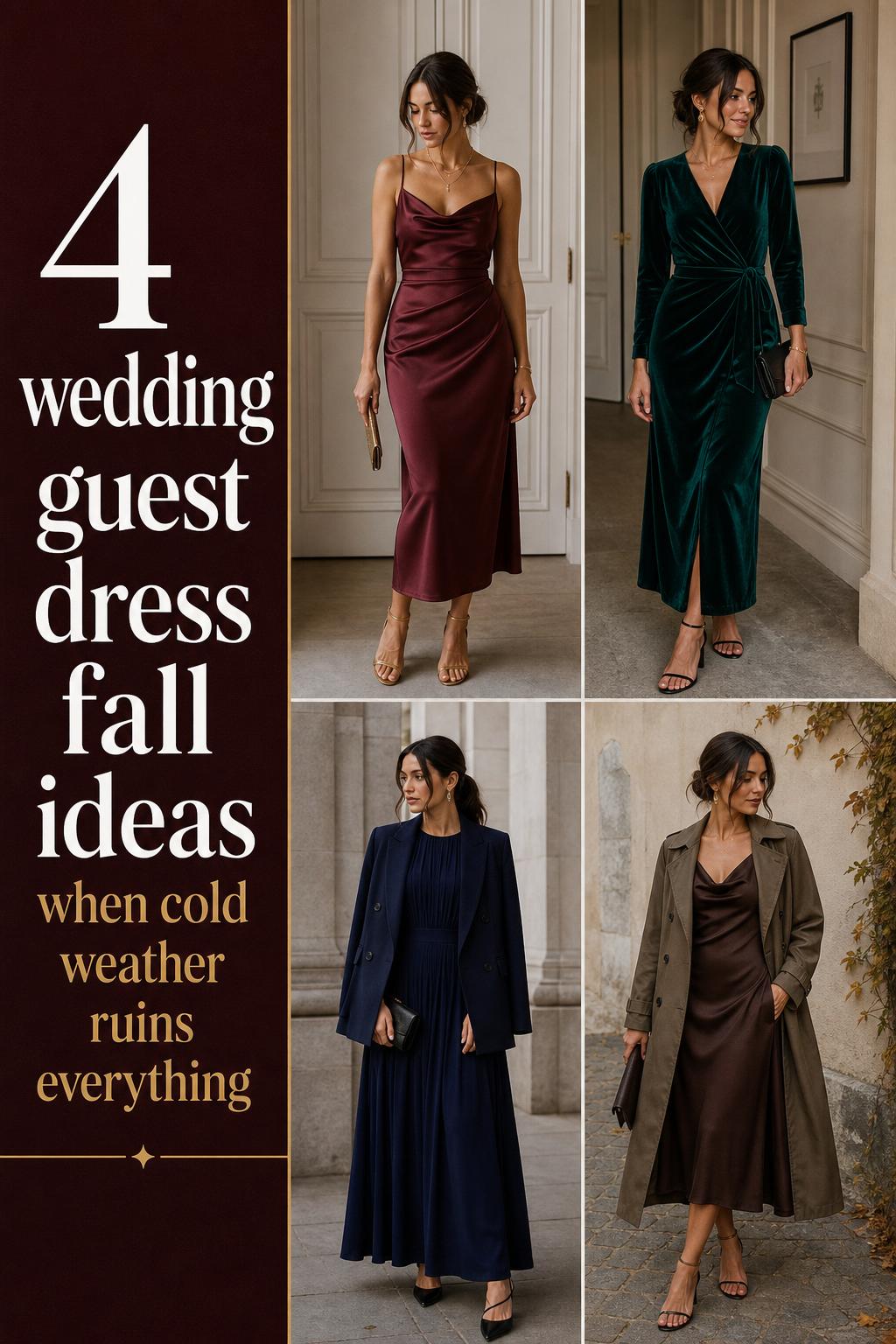
Color does a lot of work in autumn dressing. Many of the most wearable wedding guest dresses for fall stay within a palette of burgundy, emerald, navy, and chocolate because those shades naturally complement seasonal textures like velvet and satin. They also tend to photograph beautifully in softer fall light.
Burgundy feels romantic and grounded. Emerald adds richness and a little drama. Navy is reliable, sleek, and easy to accessorize. Chocolate brings warmth and subtle depth. Even when the dress itself is simple, these colors make the outfit feel more intentional than a brighter shade that fights against the season.
A small styling insight here: deeper colors often look especially expensive when the accessories stay tonal or restrained. That does not mean everything has to match exactly, but the cleaner the palette, the smoother the silhouette looks. Monochrome or near-monochrome dressing can also create a longer visual line, which is useful if you want the outfit to feel streamlined.
- Burgundy works especially well in velvet and wrap silhouettes.
- Emerald feels striking in satin or longer evening shapes.
- Navy is one of the easiest colors for midi dresses and formal layering.
- Chocolate suits textured fabrics and softer daytime-to-evening styling.
Save-worthy outfit ideas you can actually wear
It helps to think in complete outfits rather than isolated dresses. The combinations below are meant to feel realistic, wearable, and easy to imagine at different types of fall weddings.
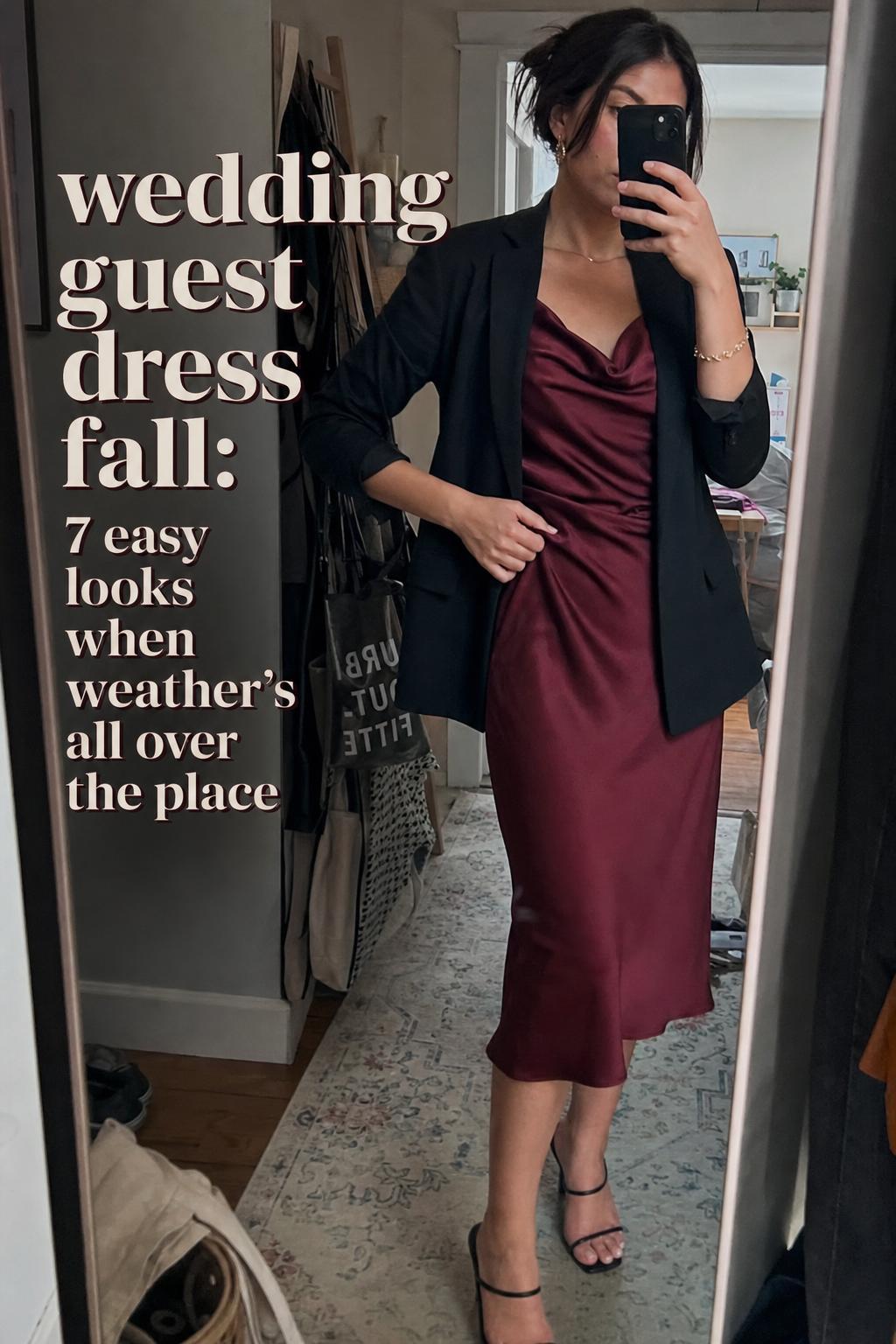
Evening hotel ballroom: emerald satin midi with a blazer
An emerald satin midi dress paired with a structured blazer creates a polished evening look that feels modern rather than overly formal. Add simple heels and minimal jewelry, and the result is sleek, elevated, and easy to move in. This outfit is ideal for a semi-formal or formal ballroom wedding where the lighting and setting already add glamour.
Why this outfit works: the satin brings shine and movement, while the blazer introduces structure. That contrast keeps the outfit balanced and makes it practical if the evening turns cool. If the dress is fluid, a sharp outer layer helps the whole look feel finished.
Outdoor ceremony: burgundy velvet wrap dress with a tailored jacket
A burgundy velvet wrap dress is one of those effortless choices that still feels special. Add a tailored jacket for the ceremony and remove it later if the reception moves indoors. This combination has warmth, texture, and an easy waist-defining shape that flatters a wide range of body types.
Why this outfit works: the wrap silhouette creates shape without feeling restrictive, and velvet adds enough visual richness that the outfit does not need much else. A tailored jacket sharpens the softness of the dress, which keeps the overall look polished.
Garden or courtyard wedding: crepe midi with delicate jewelry
For a daytime garden or courtyard celebration, a crepe midi dress in navy or chocolate feels refined but not too heavy. Keep the accessories lighter and let the simplicity of the silhouette do the work. This kind of outfit often feels especially right when the setting is elegant but still relaxed.
Why this outfit works: crepe has enough polish to feel occasion-appropriate while staying comfortable. The midi length keeps it versatile, and the softer fabric works beautifully in daytime light. This is a great option for readers who want casual yet put-together rather than overtly glamorous.
Church ceremony into evening reception: long-sleeve navy dress with simple heels
A long-sleeve navy dress handles multiple parts of the day with very little adjustment. It gives natural coverage for a ceremony setting, then still looks elegant during the reception. Add simple heels, understated jewelry, and a clean jacket if needed for travel between venues.
Why this outfit works: the sleeves make the outfit feel complete, so you are not relying on extra layers to feel appropriately dressed. Navy also keeps the look timeless and easy to style. If you prefer a more classic wedding guest outfit, this formula is hard to go wrong with.
Layering that looks intentional, not bulky
Fall layering works best when it supports the dress instead of competing with it. The most useful outerwear pieces mentioned again and again for autumn weddings are jackets, blazers, trench coats, cardigans, wraps, and faux fur-style layers. The right choice depends on whether you want structure, softness, or warmth.
Structured outerwear generally makes an outfit look more expensive. A blazer over a satin midi or crepe dress creates a cleaner silhouette than a shapeless layer would. Softer layers like wraps or cardigans can work well over slim dresses, especially if you want comfort, but they usually look best when the dress itself already has a defined shape.
How to choose the right outer layer
- Choose a blazer if your dress is soft, draped, or shiny and needs structure.
- Choose a wrap if the dress is already sleek and you want warmth without stiffness.
- Choose a trench coat for arrival and departure when the wedding includes moving between spaces.
- Choose faux fur-style outerwear sparingly with simpler dresses so the textures do not fight each other.
A small but useful trick: if your dress has volume, keep the outer layer more streamlined. If your dress is very slim, you can handle a slightly softer or more relaxed top layer. This kind of proportion balance is what makes layered outfits look chic instead of accidental.
Shoes, hosiery, and the finishing details
Footwear can completely change how a fall wedding guest outfit feels. Heels usually keep satin, velvet, and midi silhouettes looking refined. Boots and knee-high boots appear in the broader fall styling conversation, but for weddings, they need to be handled carefully so the outfit still feels appropriate. When in doubt, choose footwear that supports the dress rather than becoming the main focus.
Tights can also be useful in cooler temperatures, especially with shorter hemlines or more delicate fabrics. The important thing is keeping the finish intentional. Opaque tights create more contrast and visual weight, while sheer styles feel lighter. If the dress is already rich in texture, a cleaner hosiery choice often works best.
Jewelry and belts should refine the outfit, not crowd it. With velvet, simpler jewelry usually looks more elegant. With satin, a little shine can work beautifully as long as the silhouette stays clean. A belt can help define the waist on softer dresses, but if the cut already does that naturally, skip it. One of the easiest ways to make a wedding guest outfit look elevated is to edit accessories down to only what is needed.
Practical tips that make fall wedding dressing easier
Comfort is part of looking polished
Even a beautiful dress can feel wrong if it is too tight to sit in comfortably or too delicate to handle a full day of movement. Fall weddings often involve transitions between ceremony, cocktails, dinner, and dancing, so wearability matters. Wrap silhouettes, fluid midis, and dresses with natural drape usually handle these shifts better than very rigid styles.
Use texture instead of too many accessories
If the goal is an elevated look, texture often does more than extra styling. Velvet, satin, knit, and crepe already bring visual interest. Let that be enough. This is one of the easiest everyday styling tricks to adapt for event wear too: when fabric looks rich, the whole outfit reads more intentional.
Think about the full temperature range
A dress that works only indoors is not always the best fall choice. Plan for the coolest part of the day, not just the warmest. Long sleeves, layering options, and slightly heavier fabrics help the outfit stay wearable from start to finish. This matters even more for outdoor ceremonies and evening receptions.
Quick mistakes to avoid
- Choosing a fabric that looks too summery for the season when the venue and timing feel clearly autumnal.
- Adding a bulky outer layer that hides the shape of the dress entirely.
- Wearing too many statement pieces with a textured dress like velvet.
- Ignoring the dress code and relying only on color to make the outfit feel formal.
- Picking shoes that look good standing still but are difficult to wear through a long reception.
Shopping inspiration from familiar names
If you like using retailer and brand guidance while narrowing down styles, names such as Revolve, Adrianna Papell, and Windsor often appear around fall wedding guest attire because they organize options by silhouette, fabric, or dress code. That can be useful when you already know your preferred direction, such as a satin midi, velvet wrap, or long-sleeve formal dress.
Revolve tends to align with fashion-forward dress archetypes like satin midi dresses, velvet wraps, and bias-cut slip styles. Adrianna Papell leans into fall wedding attire with dress-code awareness and layering guidance. Windsor focuses clearly on explaining casual, semi-formal, and formal fall wedding dress codes. If you are a visual shopper, using stores this way can save time: first choose the silhouette, then refine by fabric and color.
For readers who prefer editorial inspiration, online style roundups and fashion blogs often help you compare how the same core ideas repeat across settings: burgundy velvet for evening, navy midi dresses for versatility, emerald satin for a bolder formal look, and layered styling for cooler weather. The value is in spotting the pattern and then choosing the version that fits your own event.
A simple formula for choosing your dress without overthinking it
If you feel stuck between too many options, use this sequence. Start with the dress code, then choose the fabric, then the silhouette, then the color, and finally the layer. That order helps because it solves the biggest practical questions first.
- Formal wedding: start with velvet or satin, then choose maxi or refined midi lengths.
- Semi-formal wedding: start with satin, crepe, or velvet, then choose midi, wrap, or long-sleeve styles.
- Casual wedding: start with knit or crepe, then choose easy midi or soft wrap silhouettes.
- Cooler weather: build in a blazer, jacket, wrap, or trench from the start.
- Unsure on color: burgundy, navy, emerald, and chocolate are the easiest fall-safe choices.
This approach keeps the process practical. It also helps avoid buying a dress you love in theory but struggle to style once the invitation details become real.
FAQ
What are the best fabrics for a fall wedding guest dress?
Velvet and satin are two of the strongest choices because they feel seasonally appropriate and naturally look polished. Knit and crepe also work well, especially for casual or daytime weddings, because they offer comfort while still looking refined when styled correctly.
Is a satin midi dress appropriate for a fall wedding?
Yes, a satin midi dress is one of the most versatile options for fall weddings, especially for semi-formal and formal dress codes. It looks sleek, moves beautifully, and pairs well with jackets or blazers for cooler temperatures.
Can I wear velvet to a fall wedding as a guest?
Yes, velvet is one of the most natural fabrics for autumn weddings. A velvet gown works especially well for formal settings, while a velvet wrap dress can feel a little easier and more flexible for many evening events.
What colors work best for fall wedding guest dresses?
Burgundy, emerald, navy, and chocolate are some of the most reliable fall shades because they complement autumn textures and lighting. These deeper tones also tend to look polished with minimal accessories.
How do I dress for a fall wedding when the temperature changes during the day?
Choose a dress that can stand on its own indoors, then add a layer that feels intentional, such as a blazer, jacket, wrap, or trench coat. Long-sleeve styles and slightly heavier fabrics also help the outfit stay comfortable from ceremony to reception.
Are long-sleeve dresses good for fall weddings?
Long-sleeve dresses are a smart option for fall weddings because they provide coverage and make the outfit feel more complete in cooler weather. They are especially useful for church ceremonies, outdoor events, and weddings that continue into the evening.
What should I wear to a semi-formal fall wedding?
A satin midi, velvet wrap dress, or refined crepe midi usually works well for a semi-formal fall wedding. Look for polished fabrics, clean silhouettes, and accessories that elevate the outfit without making it feel too formal.
How do I make my fall wedding guest outfit look more expensive?
Focus on rich fabric, a clean silhouette, and edited accessories. Structured outerwear, tonal color combinations, and dresses in velvet, satin, or crepe often create a more elevated look than adding too many statement details.
Finish the look
The little extras that make a summer outfit feel complete
From beach days to city weekends, these easy pieces bring comfort, texture, and a polished finishing touch.

FENBEN
Straw Hobo Crossbody Bag
A handwoven straw bag with both short and crossbody straps—an effortless finishing touch for vacation looks and warm-weather outfits.
Shop the bag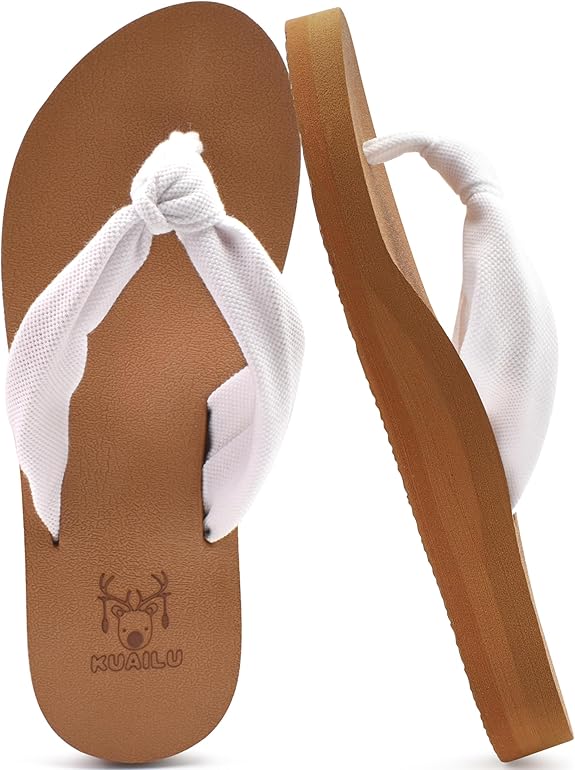
KuaiLu
Flip Flops with Arch Support
Cushioned, lightweight sandals with supportive arch design—a practical choice for beach trips, errands, and long summer walks.
Shop the sandals
baleaf
Athletic One-Piece Swimsuit
A functional one-piece with adjustable straps and moderate coverage, designed for swimming, training, surfing, and active beach days.
Shop the swimsuit
Astylish
Linen-Cotton Button-Down Shirt
A relaxed cotton-linen shirt with a collared V-neck and roll-up sleeves—easy to style over swimwear or with denim and shorts.
Shop the shirt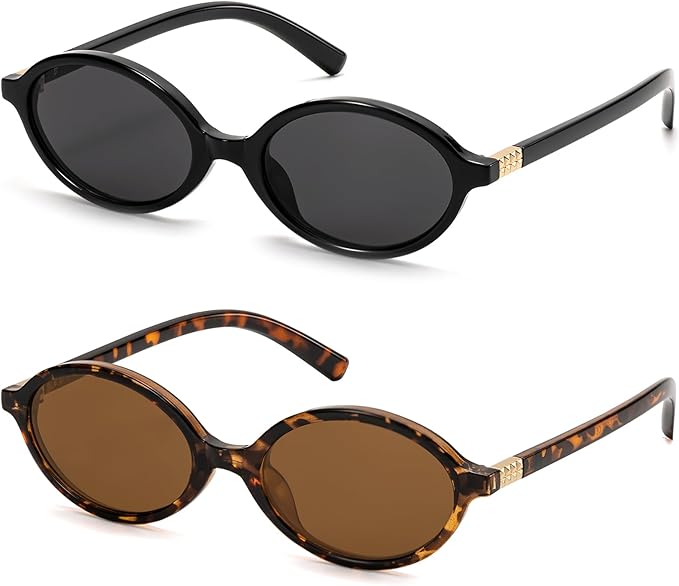
ViewJoy
Retro Oval Sunglasses
Small oval sunglasses with a 90s-inspired silhouette and UV400 lens protection—a quick way to add a vintage edge to everyday looks.
Shop the sunglasses
Affiliate disclosure: This section contains affiliate links. If you make a purchase through these links, I may earn a commission at no additional cost to you. Product selection, pricing, availability, and delivery terms may change—please review the current details on Amazon before purchasing.
As an Amazon Associate I earn from qualifying purchases.