What to Wear: 90s Fall Outfits That Feel Polished
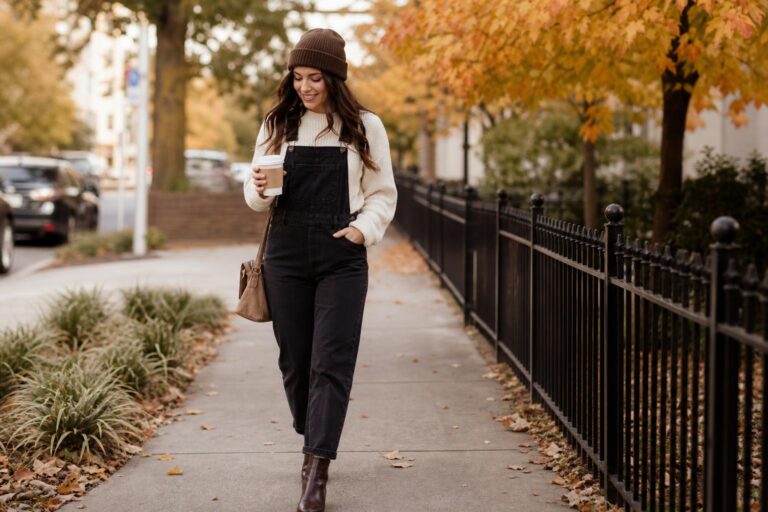
Fall dressing gets tricky when the weather shifts by the hour and you want your outfit to feel intentional instead of thrown together. That is exactly why 90s fall outfits keep coming back. They solve a real wardrobe problem: how to look polished, comfortable, and a little cool without overcomplicating the process.
The best 1990s-inspired autumn looks were built on pieces that actually work in real life: slip dresses with jackets, denim with leather, trench coats over simple layers, cardigans with boots, and tailoring that feels easy rather than stiff. The challenge is making those ideas feel wearable now, especially when layering can quickly turn bulky or when a minimalist outfit starts to feel too plain.
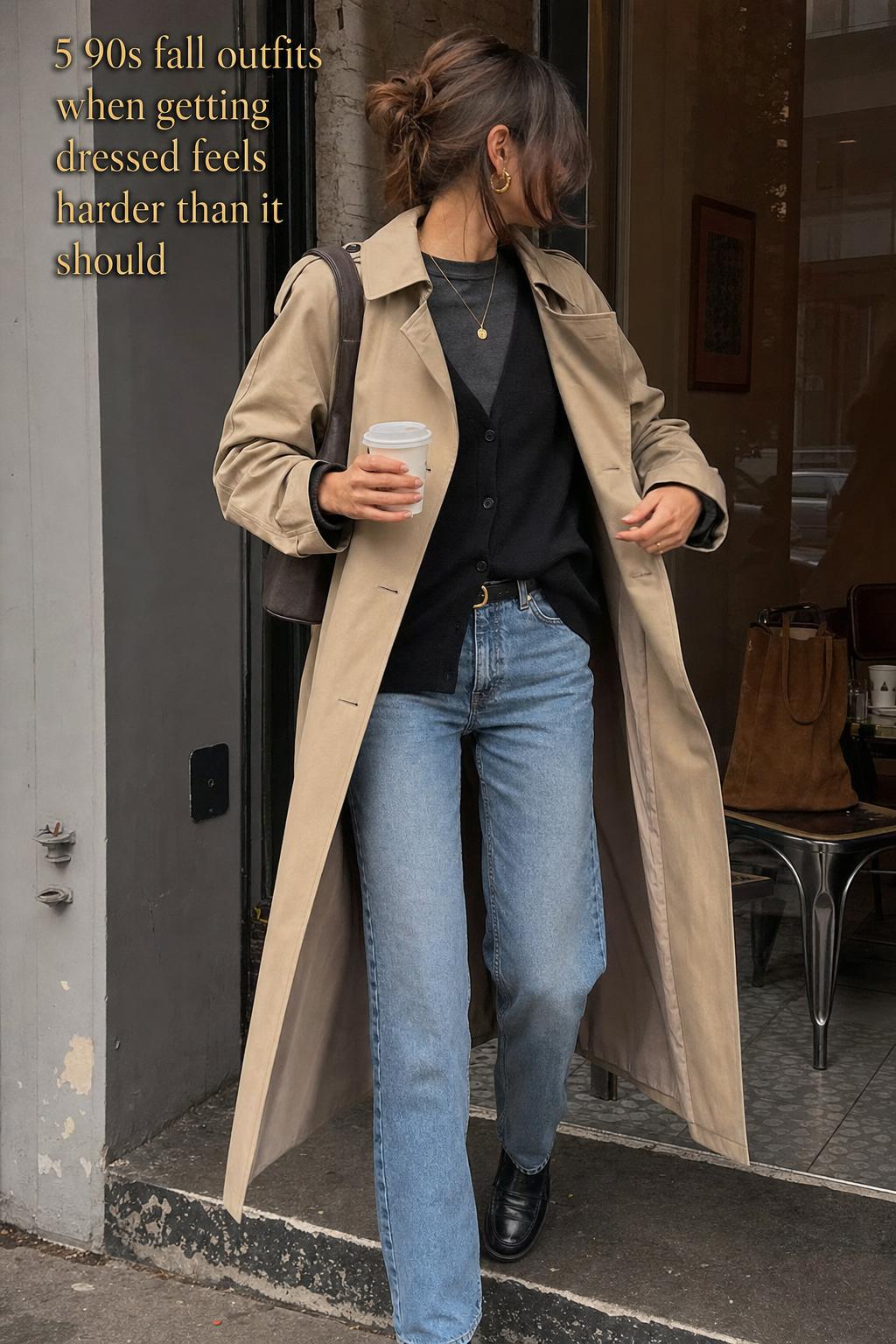
This guide focuses on practical styling logic. You will find outfit ideas anchored in recurring 90s references like Carolyn Bessette-Kennedy, Kate Moss, Naomi Campbell, Cindy Crawford, Tyra Banks, Gwyneth Paltrow, Julia Roberts, Halle Berry, and Jennifer Lopez, along with the pieces that consistently define the season: slip dresses, leather jackets, denim, trench coats, knee-high boots, satin skirts, flannel shirts, blazers, and cardigans.
The Fashion-Note Edit
Five effortless pieces to refresh your everyday wardrobe
A polished, practical edit for workdays, weekends, and everything in between.

The Drop
Women’s Blake Long Blazer
A longline, tailored blazer with a notched collar and a single-button closure—an easy layer for denim, dresses, or office-ready looks.
Shop the blazer
Amazon Essentials
Women’s Lightweight Crewneck
A soft, lightweight sweater with a clean crew neckline—the kind of reliable layer that works from cool mornings to air-conditioned spaces.
Shop the sweater
Amazon Essentials
Women’s Loafer Flat
A classic flat loafer that gives casual outfits a more polished finish and pairs naturally with tailored pants, skirts, and straight-leg jeans.
Shop the loafers
Levi’s
Women’s 501 90s Jeans
A relaxed, vintage-inspired take on the iconic 501 silhouette—made for an easy, lived-in look without the thrift-store search.
Shop the jeans
Colorfulkoala
High-Waisted 7/8 Leggings with Pockets
Soft, four-way-stretch leggings with side pockets and a high-rise waistband—designed for movement, errands, and off-duty comfort.
Shop the leggings
Affiliate disclosure: This section contains affiliate links. If you make a purchase through these links, I may earn a commission at no additional cost to you. Product selection, pricing, availability, and delivery terms may change—please review the current details on Amazon before purchasing.
As an Amazon Associate I earn from qualifying purchases.
Why 90s-inspired fall dressing feels easier than many trend cycles
There is a reason these outfits remain useful beyond pure nostalgia. The 90s balanced two strong style directions that still matter in fall: minimalist chic and grunge-influenced layering. Minimalist dressing, often associated with Carolyn Bessette-Kennedy, relies on clean lines, neutral palettes, and luxury-looking fabrics. Grunge, often linked visually with Kate Moss and other model-off-duty references, brings in flannel, plaid, denim, leather, and a looser attitude. Between those two extremes, there is plenty of room for everyday styling.
Your wedding style is personal.
Your plan should feel that way, too.
Zarellea keeps your guest list, budget, vendors, and every next step beautifully organized — so you can focus on the moments that feel like you.
Fall also demands flexibility. A look may need to work for a commute, indoor heating, an outdoor lunch, and evening plans. That is where 90s fashion still feels practical. A slip dress can be softened with a cardigan, sharpened with a leather blazer, or grounded with moto boots. Straight denim can be made polished with loafers and a trench coat or more relaxed with a denim jacket and boots. The wardrobe is modular, which is why it adapts so well.
Another reason these outfits work is visual simplicity. The decade favored recognizable silhouettes: the slip, the A-line shape, oversized coats, straight-leg denim, tailored blazers, and sleek boots. When the shape is clear, layering becomes easier because each piece has a role. You are not stacking random trends. You are building a silhouette.
Understanding the styling challenge behind fall outfits
Most fall outfit frustration comes from trying to solve several problems at once. You want warmth, but not heaviness. You want layers, but not bulk. You want comfort for walking and sitting all day, but you also want the outfit to look put-together. 90s fall outfits help because they often use one relaxed piece and one structured piece together, which keeps the outfit balanced.
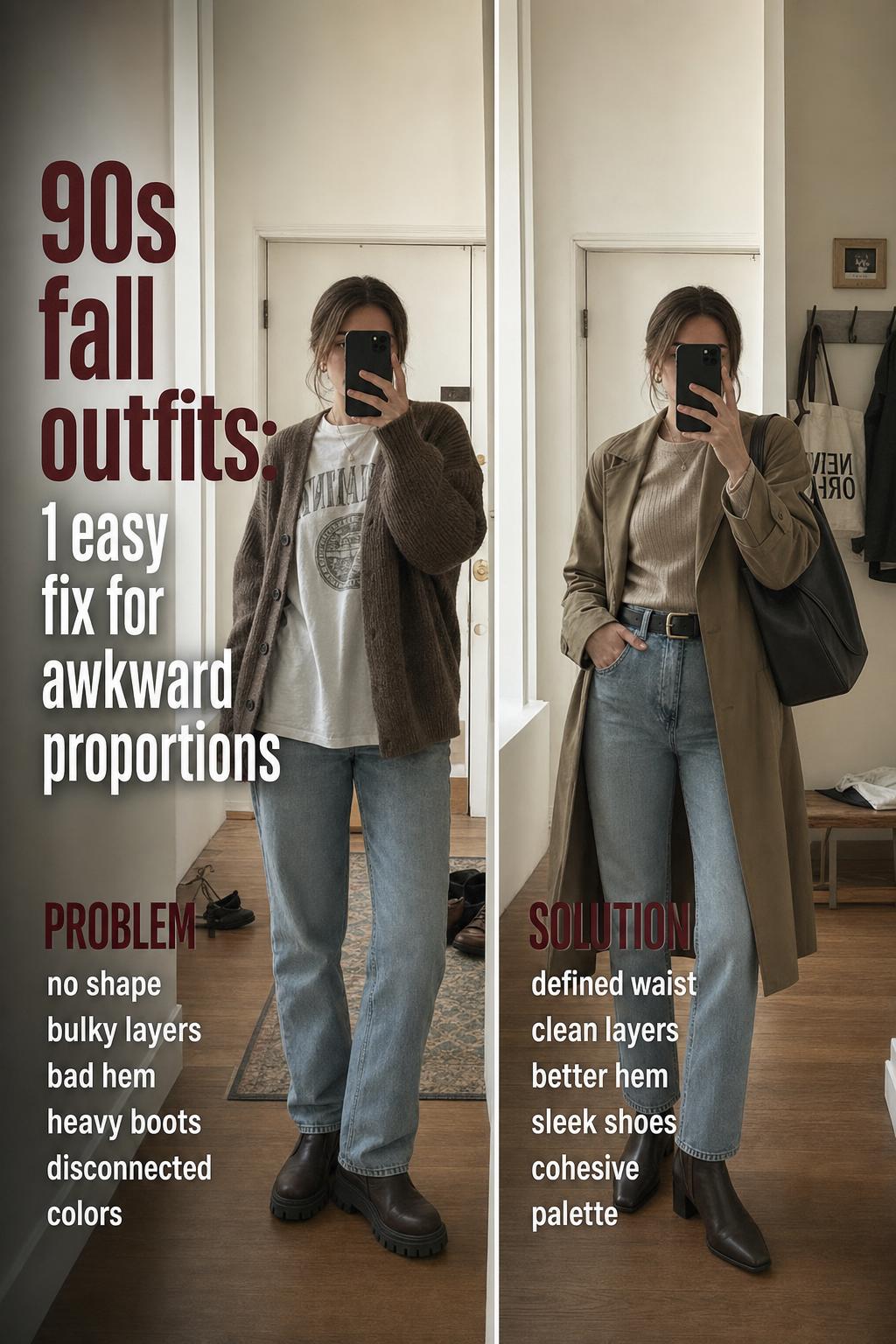
Layering goes wrong when volume is added everywhere at once. An oversized sweater over wide denim with chunky footwear can feel visually heavy, especially in transitional weather. The more effective 90s approach is contrast: a slim slip dress under a leather jacket, a straight skirt with a roomy trench coat, or a fitted knit with relaxed denim. That contrast gives the eye structure.
Fabric behavior matters too. Satin and silk-style slip pieces can cling or look too evening-focused if worn alone, which is why they often need grounding textures such as leather, denim, cashmere, or chunky knits. Plaid and flannel can read costume-like if they are not paired with cleaner pieces. Denim can skew too casual unless the cut is clean and the shoes add intention.
Footwear is another common stumbling block. Knee-high boots, loafers, moto boots, and sleek flats all appear across modern recreations of 1990s looks because they change the mood of the outfit without forcing you to rebuild everything. The wrong shoe can make a slip dress feel seasonally confused or a blazer-and-jeans combination feel unfinished.
The dressing principles that make 90s autumn outfits actually work
Use one anchor piece and build around it
The easiest way to avoid a messy outfit is to let one item lead. In 90s fall dressing, that anchor is usually a slip dress, leather jacket, trench coat, denim jacket, satin skirt, or tailored blazer. Once one piece defines the mood, the rest can stay simple. This is why so many celebrity-inspired looks still feel wearable. The outfit starts with a clear focal point.
Balance softness with structure
This is one of the most reliable styling tricks from the decade. A soft slip or satin skirt becomes more grounded with a cropped leather jacket or trench coat. Relaxed denim looks smarter with a tailored blazer. A flannel shirt works better when the rest of the outfit is streamlined. This balance prevents fall layering from looking shapeless.
Keep the color palette controlled
Many of the strongest references, especially the Carolyn Bessette-Kennedy school of minimalism, rely on neutrals. But the decade also embraced jewel tones, animal prints, and plaid. The practical takeaway is not to avoid statement colors. It is to let one visual idea lead. If you are wearing leopard print or technicolor streetwear-inspired color, keep the silhouette simple. If you are working with all-black leather and denim, texture can do more of the work.
Choose layers that can come off without ruining the outfit
A strong fall outfit should still make sense indoors. That is why a slip dress with a leather blazer is more useful than relying on one oversized coat to do everything. The underlayer still looks complete if the outer piece comes off. Trench coats, cardigans, blazers, and denim jackets all fit this logic.
Let accessories finish the look, not overcrowd it
Headbands, tiny sunglasses, chokers, round-top bags, and sleek loafers all support the 90s mood, but they work best as finishing details. The reason many iconic looks from Kate Moss, Naomi Campbell, Cindy Crawford, and Gwyneth Paltrow still feel fresh is that the outfit itself remains clean. Accessories sharpen the message rather than carry it alone.
The core 90s fall archetypes worth knowing
Understanding the main style directions helps you build outfits faster. Instead of trying to copy one photo exactly, you can decide which archetype suits your day, your closet, and your comfort level.
- Minimalist chic: slip dresses, leather blazers, clean coats, knee-high boots, neutral shades, sleek bags. This is the Carolyn Bessette-Kennedy lane and also connects to labels repeatedly tied to this mood, including The Row, Toteme, Prada, and Theory.
- Grunge-luxe layering: plaid, flannel shirts, denim, leather, moto boots, slip pieces with rougher textures. This direction reflects the recurring Kate Moss and Naomi Campbell references around layered autumn styling.
- Tailored formal-casual: blazers, straight denim, midi skirts, loafers, trench coats, cardigans. This is where Cindy Crawford, Julia Roberts, and Gwyneth Paltrow-inspired looks become especially useful.
- Denim and leather staples: leather jackets, denim jackets, straight jeans, knee-high boots, simple knits, animal print accents. Tyra Banks, Halle Berry, Jennifer Lopez, and Naomi Campbell-inspired outfits often sit here.
You do not need to choose only one. Most wearable outfits blend two. A slip dress with a flannel shirt is minimalist and grunge. Straight jeans with a trench coat and loafers are tailored but still easy. That overlap is what keeps 90s dressing versatile.
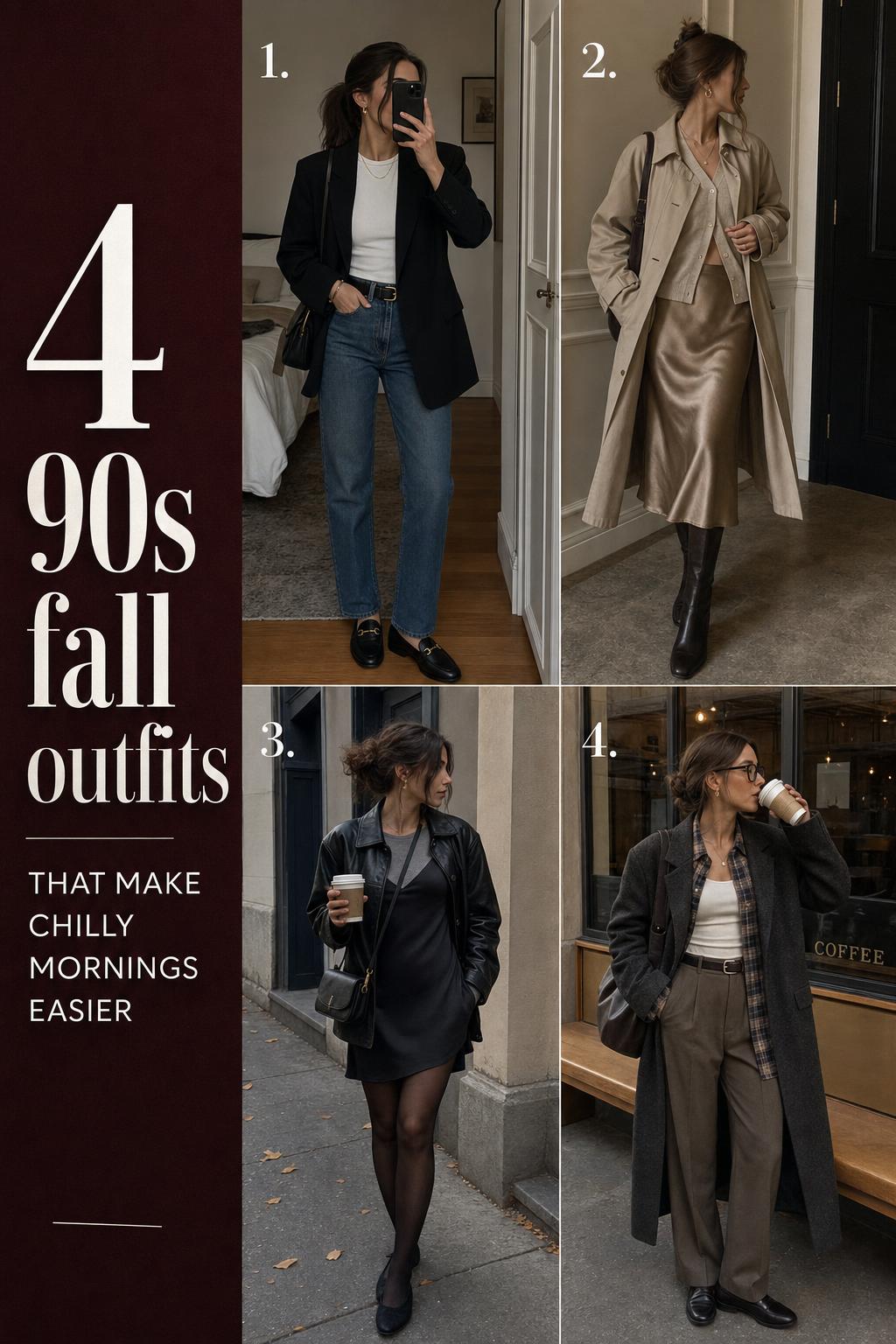
Outfit solution: minimalist city layers that never feel overdressed
This is the answer for days when you want to look sharp but not too formal. The mood is very Carolyn Bessette-Kennedy: restrained, sleek, and effortless. It works especially well for city errands, lunch meetings, gallery afternoons, or any moment when you want to feel polished without relying on obvious statement pieces.
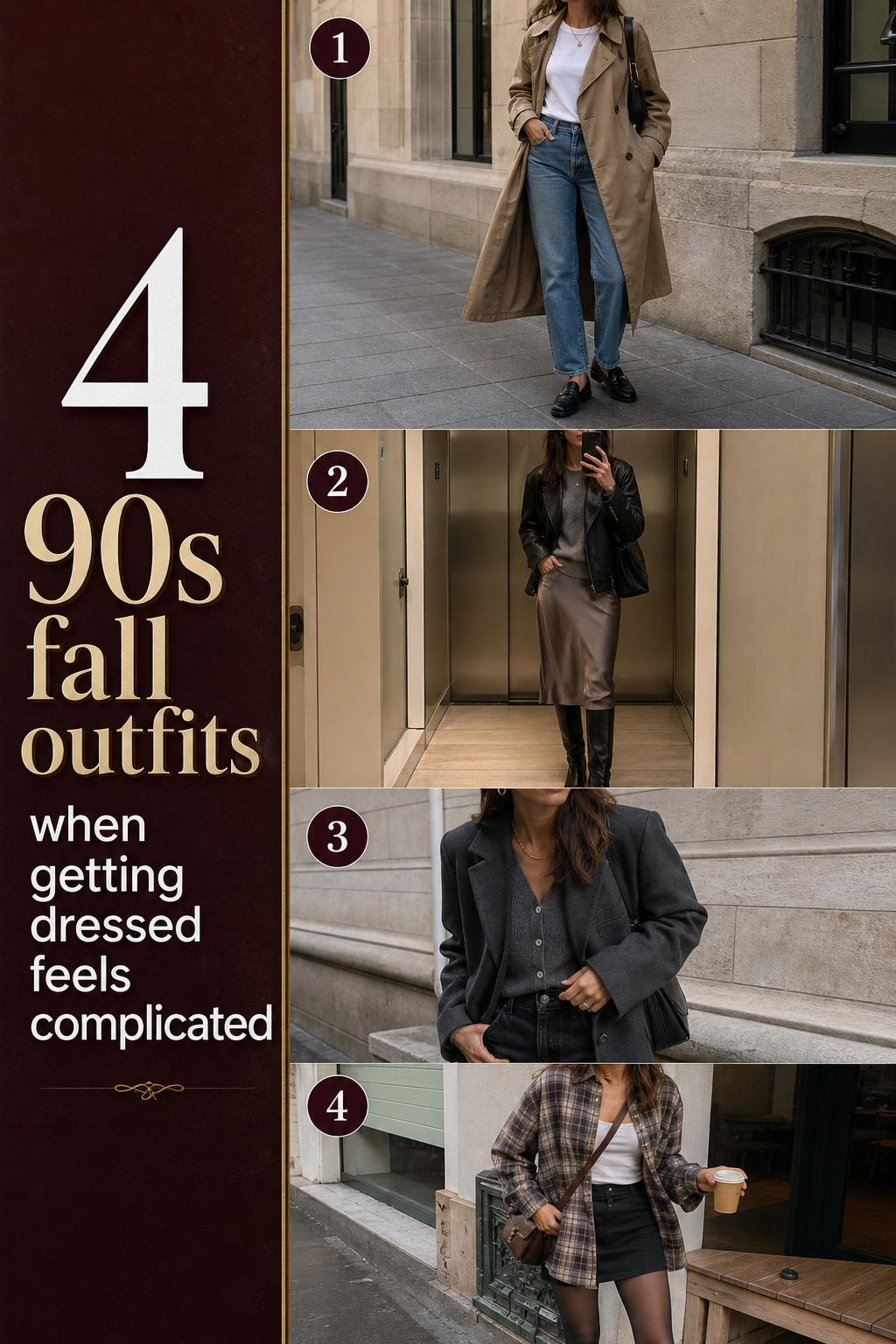
Start with a slip dress or satin slip skirt in a neutral shade. Add a leather blazer or cropped leather jacket, then finish with knee-high boots or sleek flats. A round-top bag and simple sunglasses keep the outfit clean. If the weather is cooler, layer a Toteme-style coat or a minimalist coat over the top. This combination works because the softness of the slip is held in place by the clean lines of the outerwear.
The small styling change that improves everything here is the shoe choice. Knee-high boots make the look more autumnal and give the lower half visual weight, which helps a slip silhouette feel grounded. Flats keep it lighter and more understated. Both can work, but the choice changes the outfit from airy to anchored.
Outfit solution: grunge-luxe layering for changing weather
Some fall days call for something less polished and more relaxed, but still intentional. This is where the Kate Moss-inspired formula is useful: a slip dress or simple dress layered with a flannel shirt, leather jacket, or oversized cardigan. It has that off-duty ease without becoming sloppy.
Use a slim base layer first. A slip dress, a simple mini skirt, or a satin skirt works well because it gives the outfit shape before the heavier layers go on. Add a plaid flannel shirt open over the top, or tie it around the waist if the temperature changes. A leather jacket can sit over that for colder moments. Finish with moto boots or lace-up boots. If you want the look to feel less rugged, swap the flannel for a soft cardigan and keep the boots sleek.
Why this outfit combination works is simple: there is contrast in every direction. Soft against rough, slim against oversized, feminine against practical. That contrast is what made grunge-influenced 90s fashion so wearable in fall, and it still solves the problem of looking relaxed without losing shape.
Outfit solution: tailored denim for everyday polish
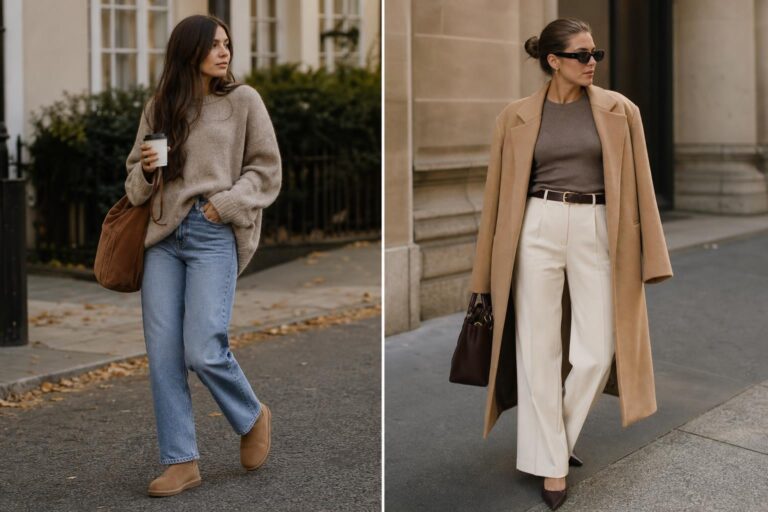
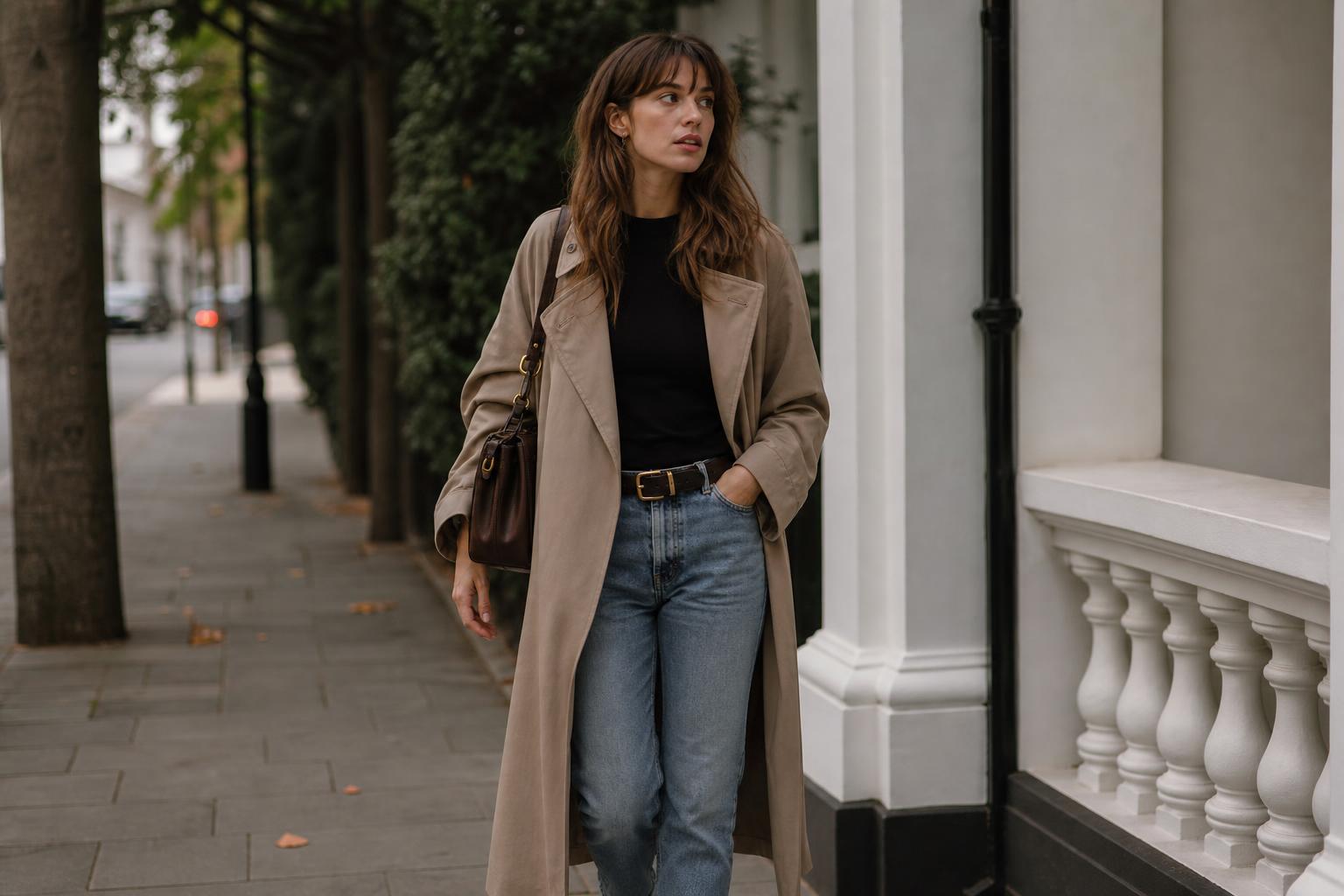
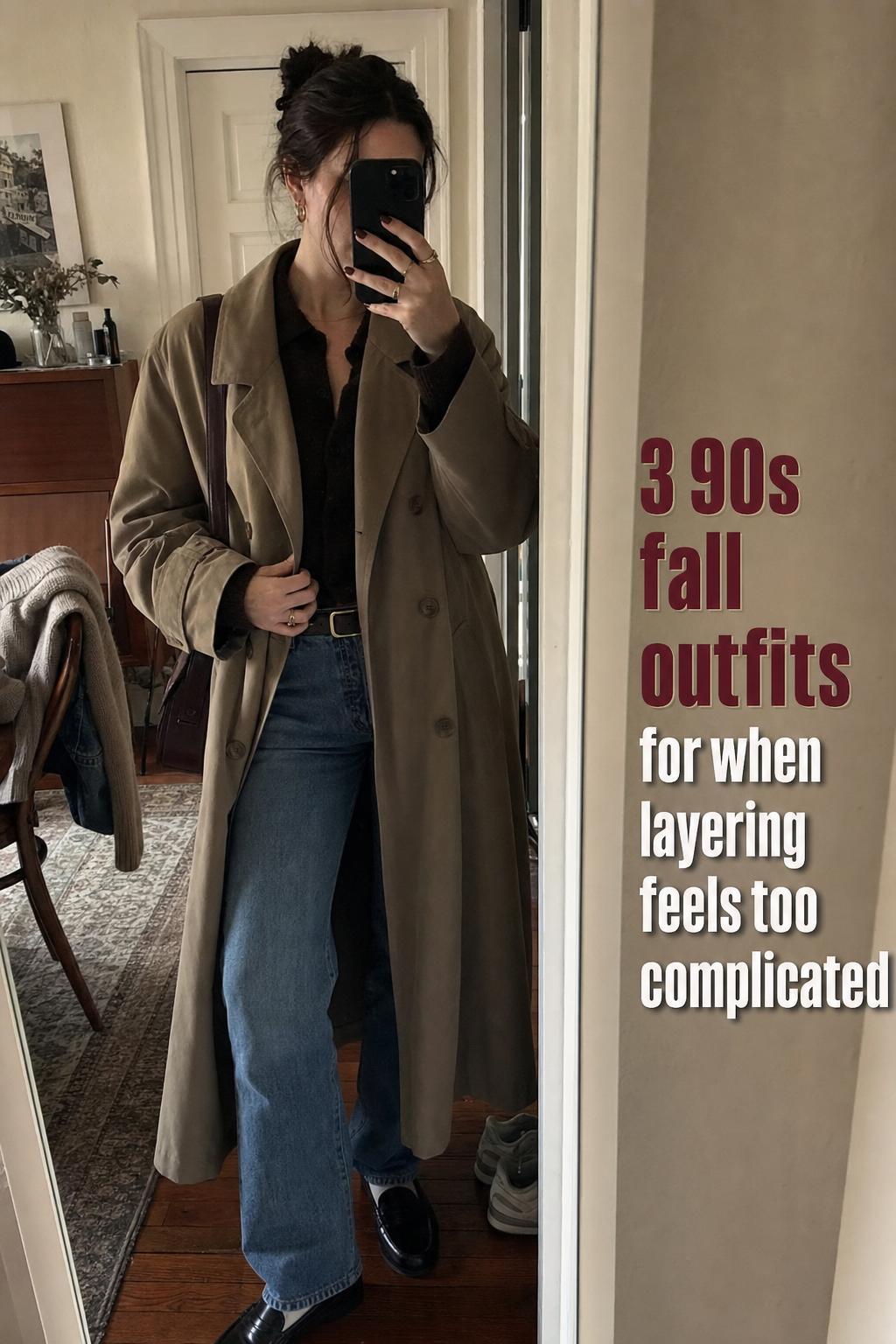
For anyone who likes casual clothes but wants them to feel more refined, this is one of the strongest 90s fall outfits to keep on repeat. Think Cindy Crawford, Julia Roberts, or Gwyneth Paltrow references: a trench coat, straight-leg jeans, a tailored blazer or simple knit, and practical loafers or boots. It works for office-casual settings, coffee meetings, travel days, and weekends when you want to look awake and intentional.
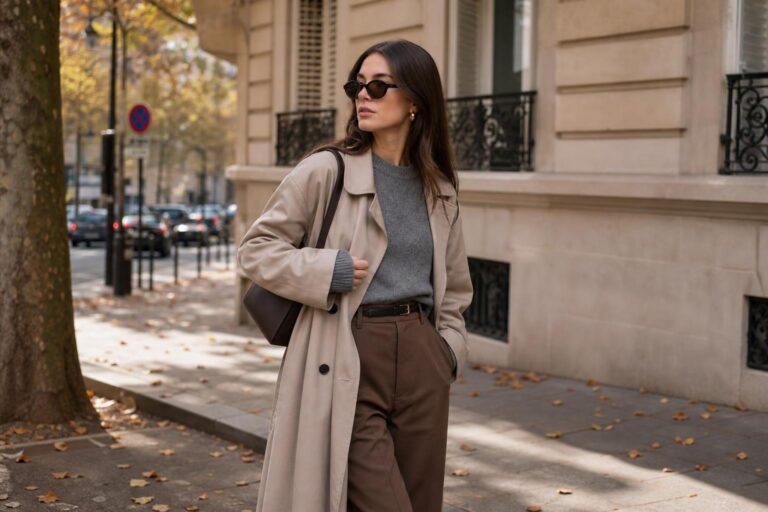
Build the look with straight denim or clean jeans, then add a fitted cardigan or lightweight knit. A trench coat over the top creates vertical line and movement, which instantly makes the outfit feel more finished. If you prefer more structure, trade the cardigan for a blazer. Loafers keep it smart and comfortable. Knee-high boots make it more seasonal and slightly dressier, especially with darker denim.
The reason this silhouette feels flattering is that the trench and blazer both create frame. Even simple denim looks sharper when there is a defined shoulder line or long outer layer involved. This is also a practical way to wear 90s style if slip dresses or grunge textures do not feel natural in your closet.
Outfit solution: leather and denim with a supermodel edge
When you want a little more presence, a leather-and-denim combination captures the stronger side of 1990s style. Naomi Campbell, Tyra Banks, Halle Berry, and Jennifer Lopez references often point to this sharper kind of autumn dressing: simple silhouettes, confident textures, and footwear that gives the outfit purpose.
Try straight jeans or a denim skirt with a fitted top and a leather jacket. Add knee-high boots if you want a cleaner line, or go with moto boots if you want the outfit to lean more grunge. A leopard-print detail can bring in the Halle Berry direction without overwhelming the look. Keep the rest restrained so the leather remains the main texture. This is not an outfit that needs many extras.
Easy ways to improve comfort without sacrificing style include choosing a softer knit or cropped cashmere under the jacket and making sure the denim is not too oversized. If both the jeans and jacket are stiff or bulky, the outfit can start to feel heavy. One structured piece is enough.
Outfit solution: soft tailoring with a 90s formal-casual feel
Not every 90s-inspired outfit has to be edgy. Some of the most useful looks from the decade were built around gentle tailoring and easy elegance. This is where polished but practical dressing really shines: blazer, satin skirt or midi skirt, simple knit, loafers or boots, and maybe a headband for a subtle period nod.
A tailored blazer over a satin skirt creates a nice tension between structure and fluidity. If you prefer pants, swap in tailored trousers or straight denim. Brands often linked to this mood in modern recreations include Ann Taylor, Madewell, Reformation, Staud, Zara, Mango, and Old Navy for more accessible versions, while Prada, Gucci, The Row, and Toteme represent the more aspirational end of the same visual language.
This outfit works especially well when you need flexibility. You can wear the blazer over a knit indoors, then add a trench coat outside. You can change loafers for boots depending on the weather. It is an ideal example of how to look more put-together instantly without wearing anything difficult.
How celebrity references help without turning the outfit into costume
Celebrity anchors are useful because they clarify the mood. Kate Moss suggests slip dresses, minimalist lines, and grunge layering. Carolyn Bessette-Kennedy signals precision, neutrals, and restraint. Naomi Campbell often points toward strong outerwear, body-skimming shapes, and confidence in leather or sleek tailoring. Cindy Crawford and Julia Roberts bring accessible, tailored casualwear into focus. Halle Berry and Jennifer Lopez help when you want a little more boldness through print or shape.
The practical rule is to borrow the formula, not the full costume. Instead of trying to replicate a full red-carpet or film-premiere moment, identify the styling logic. Was the look built on a slip plus jacket? Denim plus trench? Leather plus boots? Once you understand that, the outfit becomes easier to wear in daily life.
This is also where location can subtly influence styling. New York references often connect well with minimalist coats, tailoring, and sleek boots. LA-inspired celebrity images can feel easier, lighter, and more denim-based. London-leaning fall styling fits naturally with plaid, trench coats, and more visible layering. You do not need to overstate the geography, but it can help you decide the finish of the outfit.
The key pieces worth repeating all season
- Slip dress: useful as a base layer under leather, trench, or cardigans.
- Leather jacket or leather blazer: adds structure and autumn weight to softer fabrics.
- Trench coat: one of the easiest ways to make denim and knits feel polished.
- Straight denim: reliable for tailored casual outfits and easier to style than more extreme cuts.
- Knee-high boots: ground skirts, slips, and shorter hemlines while making the outfit feel seasonally complete.
- Flannel shirt: brings in grunge and helps with flexible layering.
- Cardigan: softens sharper pieces and works well for indoor-outdoor dressing.
- Tailored blazer: the fastest route to a formal-casual 90s silhouette.
- Satin skirt or midi skirt: a useful alternative if a slip dress feels too bare for daytime.
If you are creating a small capsule, these pieces cover most of the outfit formulas in this guide. They also make it easier to mix budget-friendly and investment pieces. A Zara trench, Mango blazer, or Old Navy denim can sit alongside a more elevated bag or coat without the outfit feeling inconsistent, because the silhouette remains simple.
Best fabrics and textures for real fall wear
Texture is one of the biggest reasons 90s fall outfits feel rich even when the palette is quiet. Satin and silk-style slips bring lightness. Leather adds weight and edge. Denim offers everyday practicality. Cashmere and soft knits make minimalist looks feel less stark. Velvet can deepen the seasonal mood without requiring more layers.
The best fabrics for this situation are the ones that layer cleanly. Satin under leather works because the surface contrast is visible but the bulk stays low. Denim under a trench works because the jean structure supports the long line of the coat. Cashmere under a blazer keeps warmth close to the body without making the shoulders too thick.
If an outfit feels flat, the fix is often not another accessory. It is texture. A black slip with a black leather jacket feels intentional because matte and shine play against each other. A plaid shirt with denim feels complete because pattern breaks up the solid blocks. That is often the difference between simple and unfinished.
Common mistakes that make 90s-inspired outfits harder to wear
One common mistake is adding too many era-specific details at once. A choker, tiny sunglasses, animal print, mini skirt, and knee-high boots can quickly feel more costume than daily outfit. It is usually stronger to choose one or two details and let the silhouette do the rest.
Another issue is ignoring proportion. Oversized blazer, oversized jeans, and heavy boots can work in theory, but in everyday fall wear they often become visually dense. The easier fix is to keep either the top half or the bottom half cleaner. A fitted knit under an oversized blazer or a slim skirt under a roomy coat usually reads better.
People also sometimes force minimalism too far. A plain slip dress with bare legs and light shoes may not feel convincing in autumn, even if it looks good in a photo. The practical upgrade is to add boots, a leather layer, or a trench coat so the outfit makes sense for the season.
Smart styling swaps for different comfort levels and budgets
Not every reader wants a full archival-fashion approach, and not every closet needs one. The appeal of 90s fall outfits is that the formulas translate across price points. A Prada or Gucci reference can guide the mood, while a Reformation, Madewell, Staud, Zara, Mango, Ann Taylor, or Old Navy version can serve the same styling purpose in everyday wear.
- Swap a slip dress for a satin skirt if you want more coverage and easier layering.
- Swap moto boots for sleek knee-high boots if you want the outfit to feel less grunge and more polished.
- Swap a leather jacket for a trench coat if you prefer lighter structure.
- Swap a flannel shirt for a cardigan if plaid feels too rugged for your style.
- Swap a mini skirt for a midi skirt if comfort and mobility matter more than a sharper 90s silhouette.
These are small changes, but they can completely shift how wearable the outfit feels. The goal is not to dress like a time capsule. It is to use the decade’s strongest formulas in a way that fits your day and your body.
How to make 90s fall outfits feel current now
The most modern-looking versions usually keep the styling edited. Even when the references include famous names like Miuccia Prada, Tom Ford-era Gucci, Helmut Lang, The Row, or Toteme, the common thread is restraint. The outfit feels current when the lines are clean and the layers are purposeful.
That can mean using a minimal palette with one strong texture, or taking a grunge formula and refining it with a better coat and cleaner boots. It can also mean leaning into a substyle more deliberately. If you like preppy influences, focus on blazers, loafers, cardigans, and midi skirts. If you prefer grunge, work with plaid, denim, leather, and rougher boots. If ultra-minimalist is more your lane, stay with slips, sleek outerwear, and quiet accessories.
The point is clarity. The strongest modern 90s-inspired looks know what they are trying to say.
Practical tips for building your own 90s fall capsule
Start with the pieces you will actually rewear. A trench coat, leather jacket, straight jeans, cardigan, and one slip-style piece already give you a strong foundation. Then decide whether your version of 90s fashion leans more toward minimalist chic, grunge, or tailored casual.
- Keep one reliable neutral outer layer for daily use.
- Add one soft, fluid piece such as a slip dress or satin skirt.
- Choose one pair of practical statement shoes, usually knee-high boots or loafers.
- Use plaid, leopard print, or tiny sunglasses as accents instead of loading them into every outfit.
- Repeat silhouettes that make your life easier, especially for commuting or long days out.
A good capsule feels flexible. You should be able to remove the jacket, switch the shoes, or swap the bag and still have an outfit that works. That kind of flexibility is one of the biggest reasons these 1990s-inspired combinations continue to feel relevant for fall.
A final note on wearing the trend in real life
The appeal of 90s fall outfits is not just that they look iconic. It is that they solve everyday dressing problems with simple styling logic. A clean silhouette, one strong layer, practical footwear, and a few recognizable references can take an outfit from uncertain to effortlessly put-together.
Whether you are drawn to Carolyn Bessette-Kennedy minimalism, Kate Moss grunge-luxe layering, Naomi Campbell leather-and-denim confidence, or Cindy Crawford’s tailored casual ease, the most wearable version is the one that balances comfort, proportion, and clarity. Small shifts in texture, shoe choice, and outerwear make the biggest difference.
Fall style does not need to be complicated to feel memorable. Often, it just needs a better silhouette and a smarter layer.
FAQ
What are the most essential pieces for 90s fall outfits?
The most consistently useful pieces are a slip dress or satin skirt, a leather jacket or leather blazer, a trench coat, straight denim, a cardigan, and knee-high boots or loafers. These items appear again and again because they layer well, transition easily through fall weather, and can be styled toward minimalism, grunge, or tailored casual looks.
How do I make a slip dress work for fall instead of summer?
A slip dress works better in fall when it is grounded with heavier textures and more practical footwear. Add a leather jacket, trench coat, cardigan, or blazer, then finish with knee-high boots, moto boots, or even sleek flats if the weather is mild. The key is giving the soft fabric enough structure around it so the outfit feels seasonally complete.
Which 90s style direction is easiest for everyday wear?
Tailored casual is often the easiest place to start because it uses familiar clothes like straight jeans, blazers, trench coats, cardigans, and loafers. It still feels clearly inspired by the 1990s, especially through celebrity references like Cindy Crawford, Julia Roberts, and Gwyneth Paltrow, but it tends to be less intimidating than full grunge or more dramatic evening-inspired slip looks.
How can I wear grunge-inspired 90s fall outfits without looking too heavy?
The easiest way is to keep one part of the outfit slim and let only one layer add volume. A slip dress or satin skirt under a flannel shirt and leather jacket works better than combining several oversized pieces at once. Moto boots add edge, but if the outfit starts to feel bulky, switch to cleaner boots or remove one layer so the silhouette stays balanced.
What shoes work best with 90s fall outfits?
Knee-high boots, moto boots, loafers, and sleek flats are the most practical choices mentioned across recurring 90s styling formulas. Knee-high boots are especially useful with slip dresses, mini skirts, and midi skirts because they add seasonal weight. Loafers make denim-and-blazer outfits feel polished, while moto boots support grunge-inspired layering.
How do I keep a 90s-inspired outfit from feeling like a costume?
Focus on the formula rather than copying every detail. Use one or two recognizable 90s elements, such as a slip dress with a leather jacket or straight denim with a trench coat, and keep the rest clean. Adding too many period details at once, like chokers, tiny sunglasses, animal print, and multiple statement layers, can make the outfit feel forced rather than wearable.
Are neutral colors better than bold colors for this trend?
Neutrals are often easier because they support the minimalist side of 90s fashion and help textures stand out, but bold elements still have a place. Jewel tones, leopard print, plaid, and even technicolor streetwear-inspired touches can work if the silhouette stays simple. The strongest outfits usually let either color or shape lead, rather than trying to make both dominant at once.
Can I build 90s fall outfits on a budget?
Yes, because the decade’s strongest outfit formulas depend more on silhouette and layering than on one specific price point. A trench from Zara, denim from Old Navy, a blazer from Mango or Ann Taylor, or a cardigan from Madewell can still capture the same overall mood seen in more aspirational references connected to Prada, Gucci, The Row, Toteme, Reformation, or Staud.
Who are the best style references for 90s fall outfits?
Carolyn Bessette-Kennedy is the clearest reference for minimalist chic, while Kate Moss often represents slip-dress layering and grunge-luxe ease. Naomi Campbell, Tyra Banks, Halle Berry, and Jennifer Lopez are strong references for leather, denim, and more confident silhouettes, while Cindy Crawford, Julia Roberts, and Gwyneth Paltrow are useful for tailored everyday outfits.
Finish the look
The little extras that make a summer outfit feel complete
From beach days to city weekends, these easy pieces bring comfort, texture, and a polished finishing touch.

FENBEN
Straw Hobo Crossbody Bag
A handwoven straw bag with both short and crossbody straps—an effortless finishing touch for vacation looks and warm-weather outfits.
Shop the bag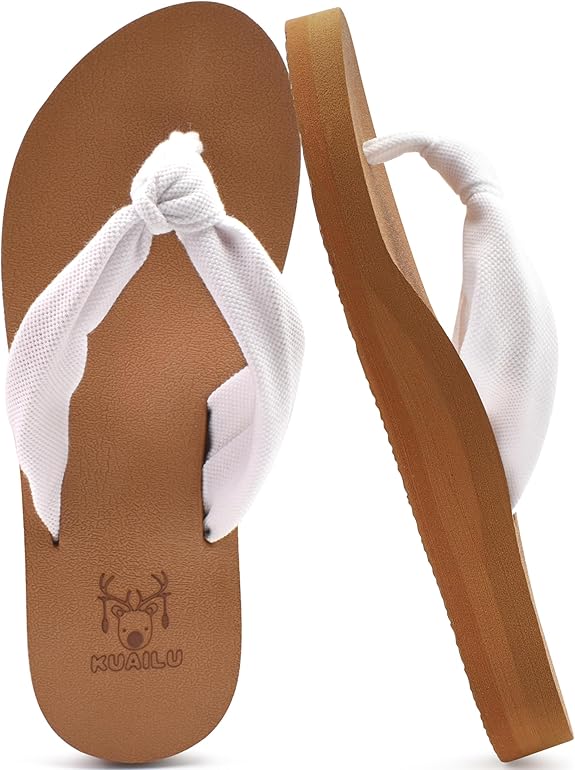
KuaiLu
Flip Flops with Arch Support
Cushioned, lightweight sandals with supportive arch design—a practical choice for beach trips, errands, and long summer walks.
Shop the sandals
baleaf
Athletic One-Piece Swimsuit
A functional one-piece with adjustable straps and moderate coverage, designed for swimming, training, surfing, and active beach days.
Shop the swimsuit
Astylish
Linen-Cotton Button-Down Shirt
A relaxed cotton-linen shirt with a collared V-neck and roll-up sleeves—easy to style over swimwear or with denim and shorts.
Shop the shirt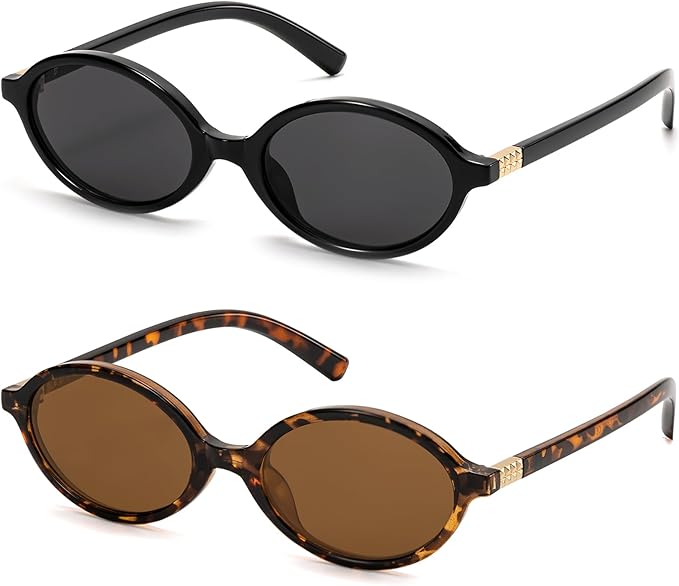
ViewJoy
Retro Oval Sunglasses
Small oval sunglasses with a 90s-inspired silhouette and UV400 lens protection—a quick way to add a vintage edge to everyday looks.
Shop the sunglasses
Affiliate disclosure: This section contains affiliate links. If you make a purchase through these links, I may earn a commission at no additional cost to you. Product selection, pricing, availability, and delivery terms may change—please review the current details on Amazon before purchasing.
As an Amazon Associate I earn from qualifying purchases.