Polished vs. Utility: Rainy Day Outfit Summer for City Showers
Rainy day outfit summer: comparing “polished trench” vs “casual utility” rainy-day fashion
A summer storm has a way of turning outfit planning into a quick decision tree: you want to look like it’s still summer, you need to move through puddles without thinking, and you don’t want to feel sticky the second you step indoors. That’s exactly why “rainy day outfit summer” searches tend to pull up the same ingredients—trench coats, lightweight raincoats, breathable fabrics like cotton and linen, and shoes that can handle wet sidewalks.
But the outfits people actually wear tend to fall into two styling approaches that get talked about interchangeably. One is the polished, city-ready formula—think trench coat structure, clean lines, and a slightly styled finish that nods to street-style and even fashion-week cues. The other is a casual utility approach—lightweight layers, denim, moisture-wicking tees, and practical accessories that prioritize comfort and quick changes when rain arrives.
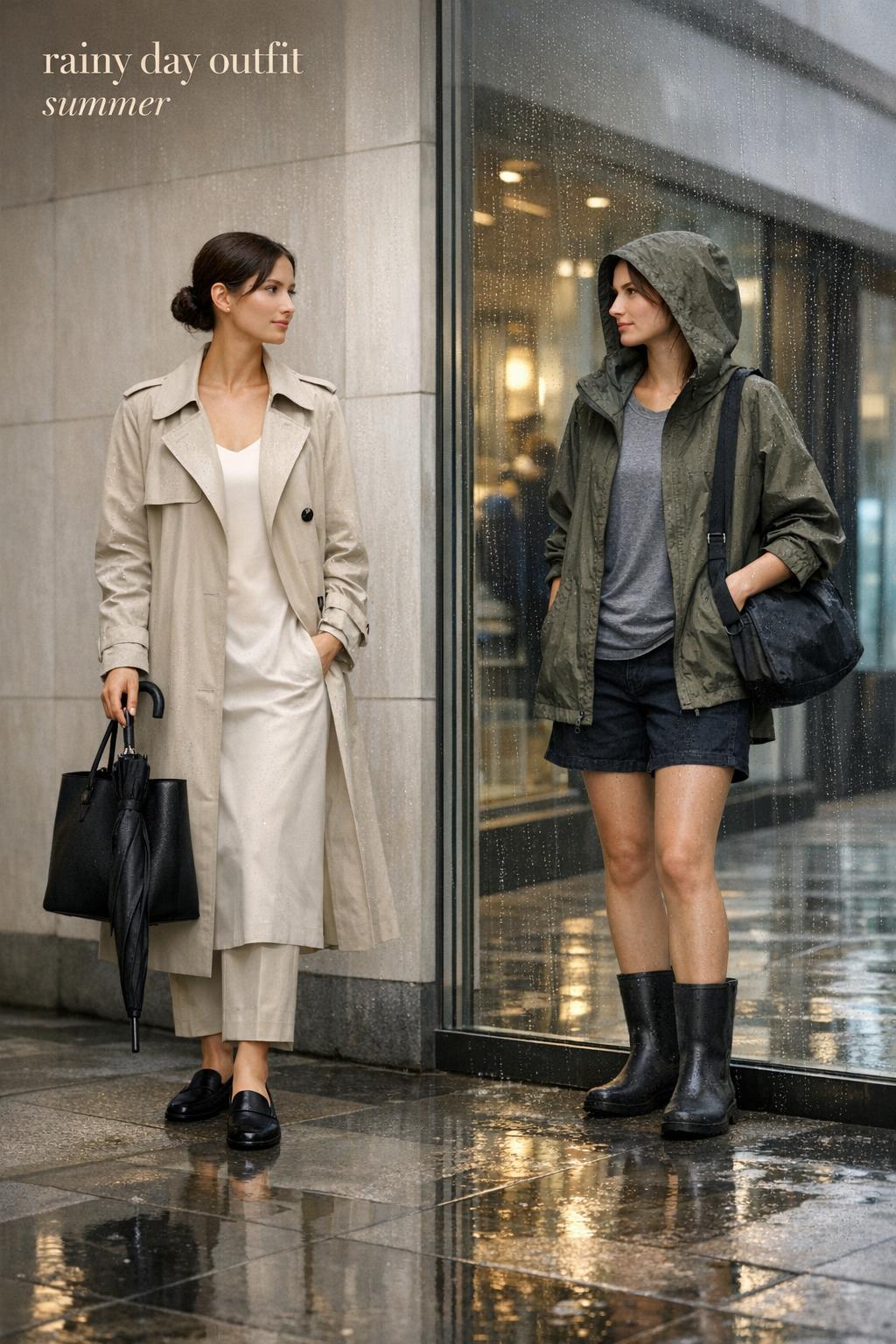
This comparison breaks down both aesthetics (and why they’re easy to confuse), then shows how to build real-life wet season outfit combinations for warm rain: what to wear, what to avoid, how to layer without overheating, and how to choose footwear and accessories that make the whole look work.
The Fashion-Note Edit
Five effortless pieces to refresh your everyday wardrobe
A polished, practical edit for workdays, weekends, and everything in between.

The Drop
Women’s Blake Long Blazer
A longline, tailored blazer with a notched collar and a single-button closure—an easy layer for denim, dresses, or office-ready looks.
Shop the blazer
Amazon Essentials
Women’s Lightweight Crewneck
A soft, lightweight sweater with a clean crew neckline—the kind of reliable layer that works from cool mornings to air-conditioned spaces.
Shop the sweater
Amazon Essentials
Women’s Loafer Flat
A classic flat loafer that gives casual outfits a more polished finish and pairs naturally with tailored pants, skirts, and straight-leg jeans.
Shop the loafers
Levi’s
Women’s 501 90s Jeans
A relaxed, vintage-inspired take on the iconic 501 silhouette—made for an easy, lived-in look without the thrift-store search.
Shop the jeans
Colorfulkoala
High-Waisted 7/8 Leggings with Pockets
Soft, four-way-stretch leggings with side pockets and a high-rise waistband—designed for movement, errands, and off-duty comfort.
Shop the leggings
Affiliate disclosure: This section contains affiliate links. If you make a purchase through these links, I may earn a commission at no additional cost to you. Product selection, pricing, availability, and delivery terms may change—please review the current details on Amazon before purchasing.
As an Amazon Associate I earn from qualifying purchases.
Style overview: the polished trench look (city rain, clean lines, “ready for plans”)
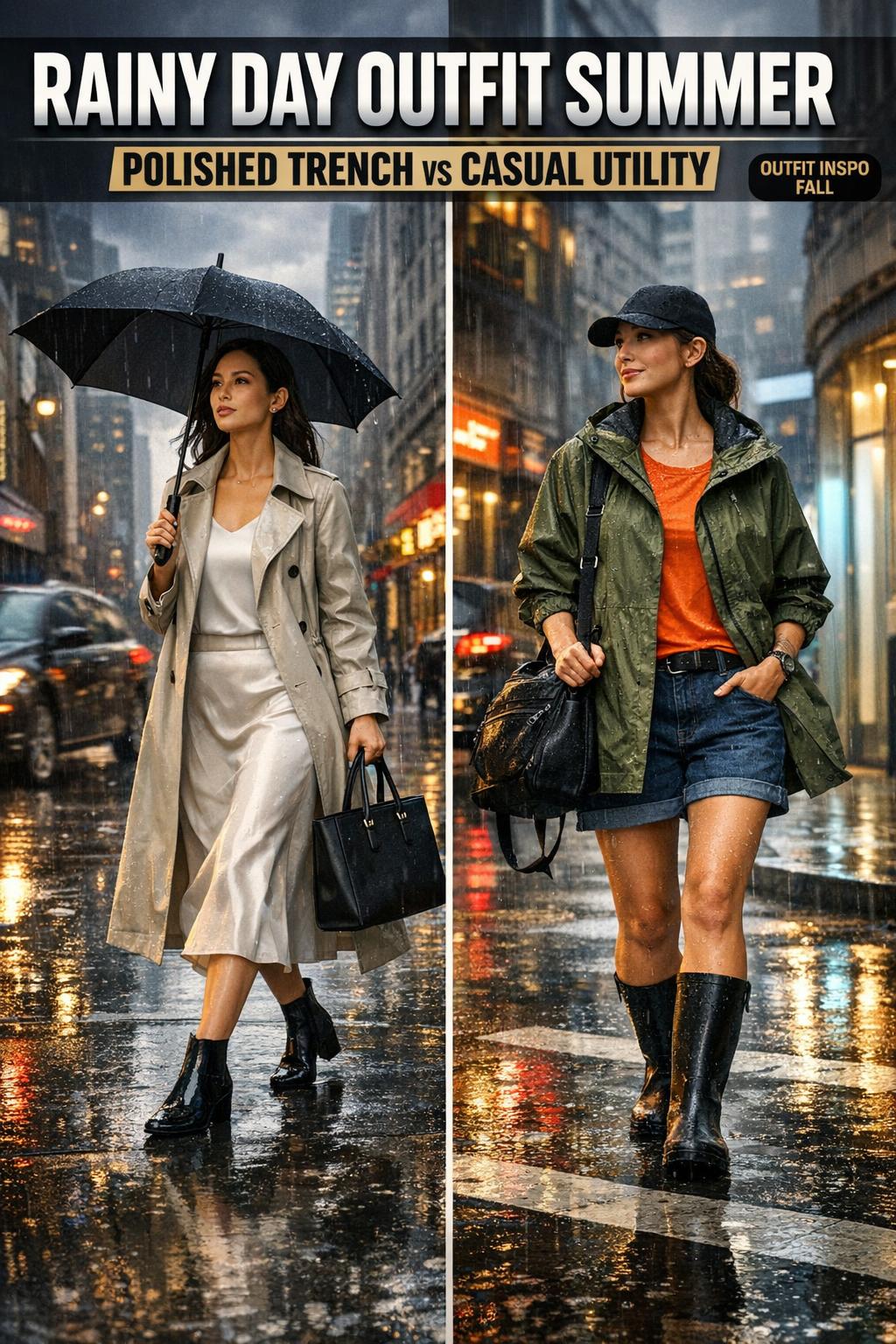
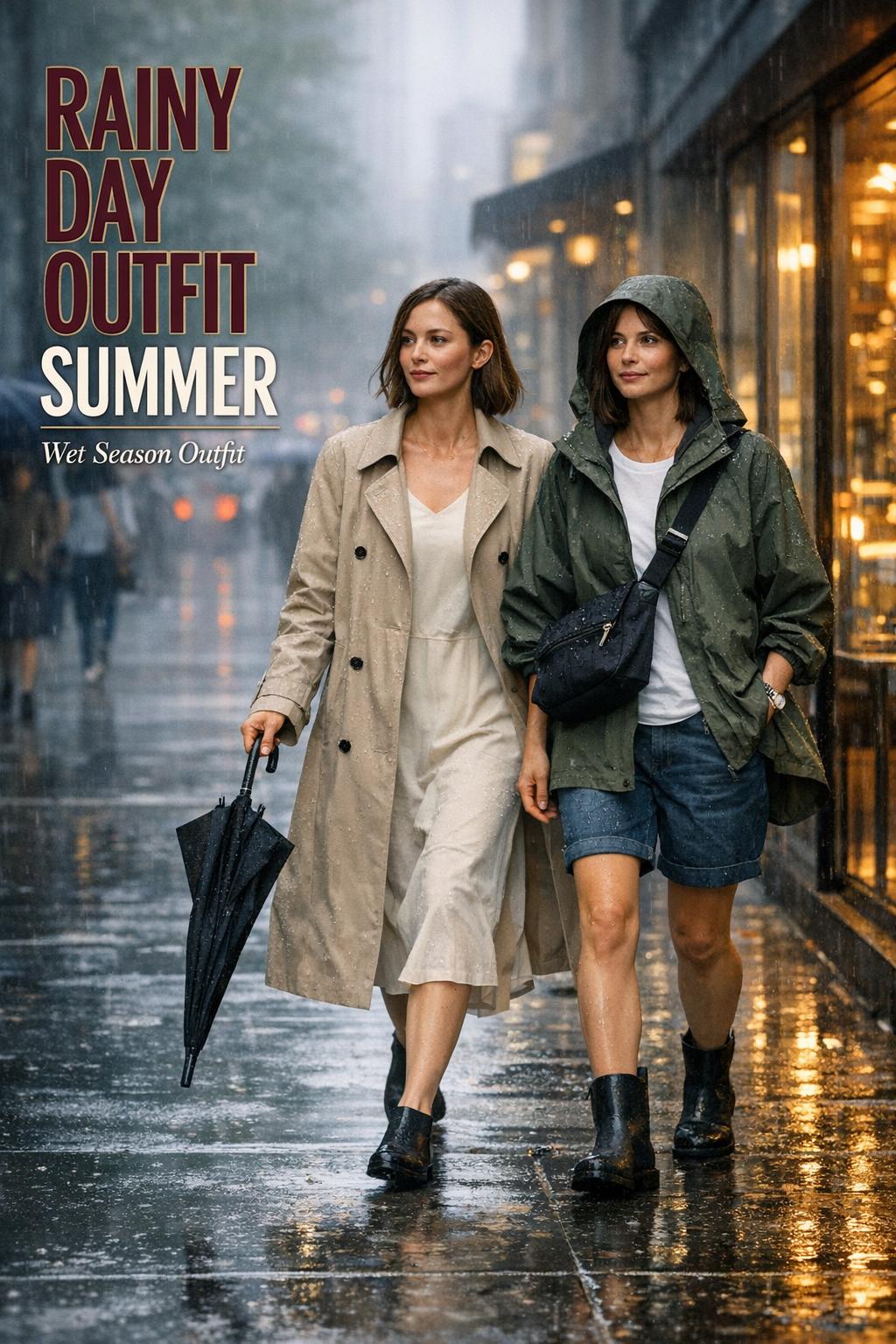
The polished trench look is the rainy day fashion approach that treats rain as a styling element, not a disruption. It relies on outerwear as the visual anchor—usually a trench coat or a lightweight raincoat with a bit of structure—then builds a streamlined outfit underneath. The mood is “I can still go to lunch, a meeting, or dinner even if the weather changes.”
Your wedding style is personal.
Your plan should feel that way, too.
Zarellea keeps your guest list, budget, vendors, and every next step beautifully organized — so you can focus on the moments that feel like you.
Silhouette-wise, this style leans on long vertical lines (a trench worn open over a dress or straight-leg pants) and clean proportions. Colors often land in classic neutrals, with occasional bright accents or color-blocking that reads intentional in gray weather. Fabrics are chosen to stay breathable—cotton and linen show up for the base layers—while the outer layer does the heavy lifting for coverage.
Accessories in this lane feel purposeful: a compact umbrella, a tote bag that can handle a little moisture, and footwear that doesn’t look bulky but still makes sense for wet pavement. This is where you’ll see inspiration pulled from street-style and celebrity or influencer looks in roundups—less about one specific person, more about that “caught in the rain but still put-together” vibe.
Style overview: casual utility (warm-rain comfort, quick-change layers, everyday practicality)
Casual utility is the rainy day outfit approach that starts with a comfort goal: stay dry enough, stay cool, and stay mobile. Instead of making the trench the star, it uses lightweight rain-ready layers—think a packable raincoat, a poncho, or a lightweight parka over a tee—and builds from casual staples like denim and easy dresses.
The silhouettes are relaxed and movement-friendly: jeans with a moisture-wicking tee, a simple dress with a light jacket, or shorts with a tunic when the rain is warm but persistent. Textures are part of the look—denim shows up often because it reads casual and holds its shape, even if you’re relying on an outer layer for actual rain protection. The palette can be neutral, pastel, or practical darker tones, depending on how much you want to hide splashes.
This is also the style that best supports “quick-change tips when rain arrives.” You’re dressing for the reality of summer showers: stepping in and out of air-conditioning, carrying an umbrella, and needing shoes that won’t feel ruined after a damp commute.
Why these styles get mixed up (and how to tell them apart fast)
Both aesthetics share the same core entities because summer rain demands the same fundamentals: outerwear (trench coats, raincoats, ponchos), weather-appropriate footwear (rain boots, ankle boots, loafers or other closed-toe options), breathable fabrics (cotton, linen), and accessories like umbrellas and practical bags. That overlap is why outfit roundups can look similar at a glance.
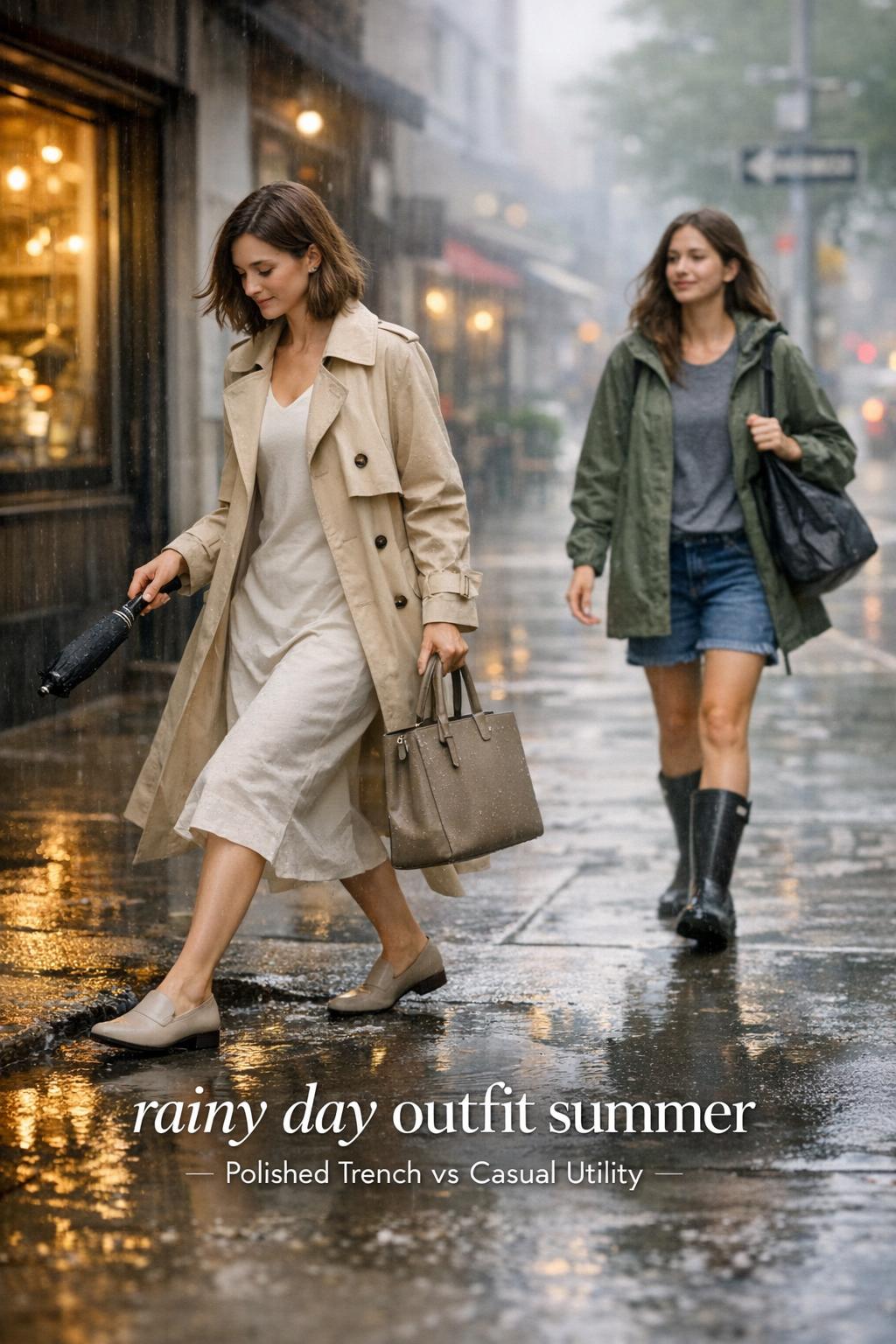
The difference is the styling philosophy. The polished trench look uses outerwear to create a composed silhouette—your outfit looks finished even if you remove the coat later. Casual utility treats outerwear as gear: it’s there to handle the wet weather first, and the outfit underneath is optimized for comfort and movement.
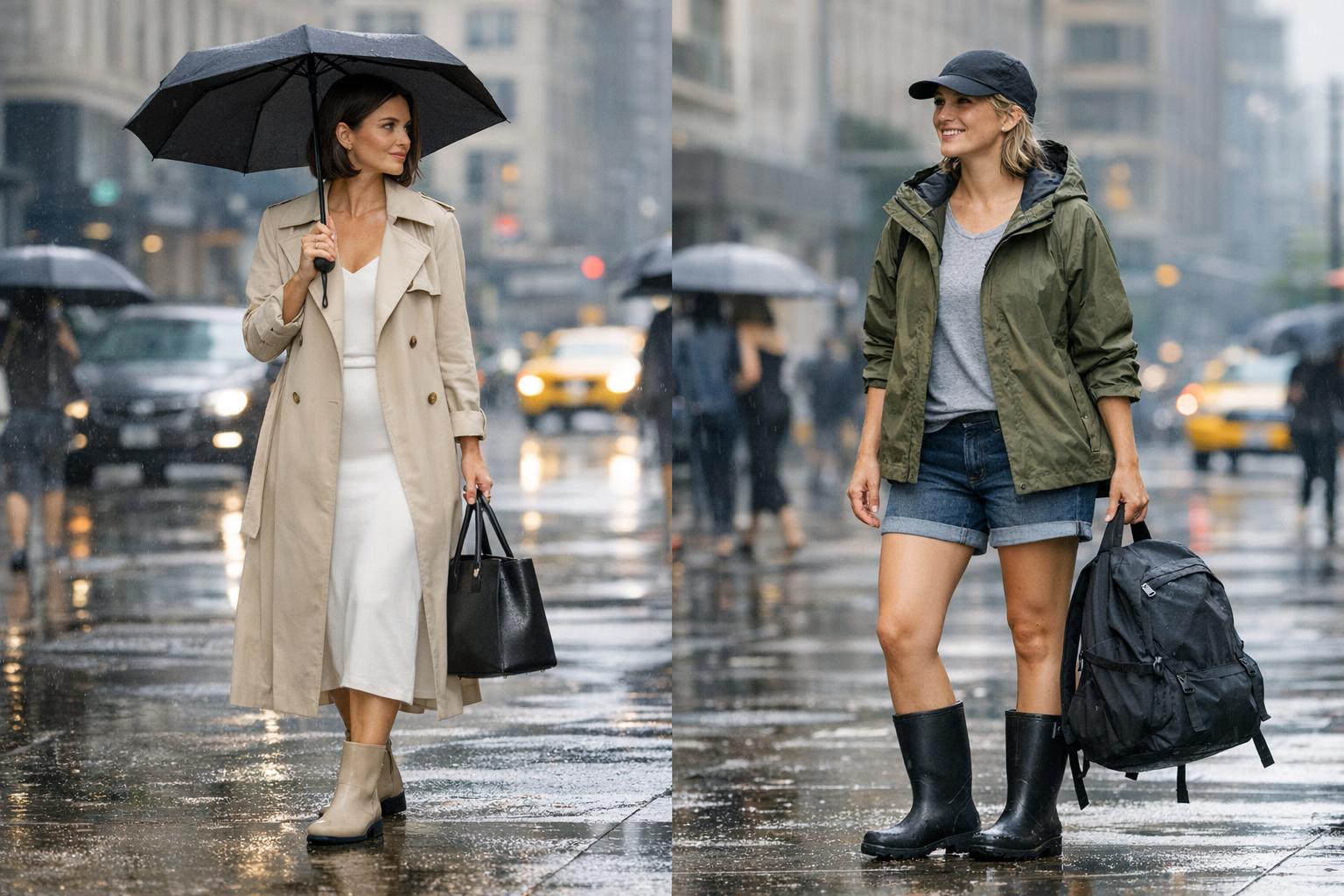
If you want a quick visual test, look at what feels “planned.” A belted trench over a dress, paired with sleek boots and a structured tote, reads polished. A lightweight raincoat over denim and a tee, paired with practical boots and a foldable umbrella, reads utility—even when both outfits are equally appropriate for warm rain.
Key differences: silhouette, formality, and fabric behavior in warm rain
Silhouette and structure
The polished trench approach leans on structure: a trench coat creates a long line, frames the outfit, and makes simple pieces (a cotton dress, a slip-style dress, straight pants) look intentional. Casual utility is looser through the torso and arms because the outer layer is often a lightweight raincoat, poncho, or parka that needs to fit comfortably over whatever you’re wearing.
Color palette and “rain visibility”
Both styles use neutrals, but they use them differently. Polished trench outfits often keep the palette tight—beige, black, navy, white—so wet-weather accessories (umbrella, boots) don’t look like an afterthought. Casual utility is more flexible: pastels and brighter accents can feel summery even under gloomy skies, and darker bottoms can be chosen simply because splashes are less visible.
Level of formality and where the outfit “lands” indoors
In real life, the most important difference shows up once you step inside. A trench-based look tends to transition smoothly into offices, dinners, or events because the outfit underneath often reads polished on its own. Utility looks are built to be comfortable and functional, which is ideal for errands, commuting, travel days, and casual plans—but may feel underdressed if the setting expects a sharper finish.
Fabric choices: breathable base layers vs rain-ready outer layers
Summer rain outfits are really about fabric behavior. Cotton and linen help you feel like it’s still summer, but they can cling or look rumpled if they get wet. That’s why both styles rely on outerwear as protection and prefer breathable layers underneath. The polished trench lane often keeps base layers minimal (a dress, a simple top) to avoid bulk. Casual utility is more open to moisture-wicking tees and quick-dry, rain-ready fabrics because comfort is the priority.
Outerwear comparison: trench coats, lightweight raincoats, ponchos, and parkas
Outerwear is the decision that sets the tone for the entire wet season outfit. In summer, the goal is coverage without heaviness—something you can wear in warm rain and still feel comfortable when the humidity hits.
Trench coats and lightweight raincoats (the polished lane)
A trench coat is the classic polished move because it creates shape instantly. Worn open, it frames a dress or denim look without making you feel bundled. Worn belted, it reads more intentional and can replace a blazer on a rainy day when you still need structure. Many people think of a Burberry-inspired trench silhouette here—not as a requirement, but as the reference point for why this shape feels timeless and city-ready.
Lightweight raincoats can sit in either lane, but they look more polished when they have clean lines and a slightly longer length. In practice, this is the coat you keep near the door for sudden showers because it does the job without overwhelming a summer outfit underneath.
Ponchos and capes (the quick coverage solution)
Ponchos and lightweight rain capes show up when you want the most coverage with the least styling effort. They’re especially useful for quick-change moments—when the forecast looked fine and then a storm rolls in. Visually, ponchos skew casual utility, but a simple, solid color can still look clean if the rest of your outfit is streamlined.
Lightweight parkas (the humid-shower workhorse)
When the rain is warm and the air feels heavy, a lightweight parka can be the most comfortable option because it reads sporty and practical while still feeling like outerwear (not just a throw-on layer). It fits naturally into the casual utility style, especially for travel-friendly outfits where you’ll be walking a lot and carrying an umbrella.
Footwear comparison: rain boots vs sleek closed-toe shoes (and when sandals make sense)
Footwear is where rainy day fashion becomes either effortless or annoying. The right pair makes puddles a non-issue; the wrong pair turns every step into a careful shuffle. Summer adds a second challenge: you don’t want heavy boots if the day is already warm.
Waterproof boots and ankle boots (most reliable for wet pavement)
Rain boots are the obvious practical choice, especially when the rain is steady or the sidewalks are splashing back. Ankle rain boots are the middle ground: they’re less heavy visually, still protective, and easier to wear with dresses and cropped pants. In the polished trench style, the best effect comes from keeping the boot sleek so the outfit doesn’t feel weighed down. In casual utility, chunkier rain boots can feel right because the whole look is already relaxed.
Loafers and other water-aware closed-toe shoes (polished, but weather-dependent)
Closed-toe shoes like loafers can work for summer rain when the showers are light and you’re mostly moving between car, office, and indoors. They read more refined than boots, which is why they show up in outfit-idea roundups as a way to keep the look elevated. The trade-off is practicality: in a real downpour, you’ll be happier in boots.
A note on open-toe shoes in summer rain
Some summer rain outfits include sandals in styling inspiration, but they’re the most conditional choice. If the rain is warm and light, open-toe shoes can be fine—especially if you’re not dealing with dirty puddles. If you’re commuting, walking a city route, or dealing with unpredictable showers, closed-toe footwear is usually the less frustrating option.
Footwear care tips that matter after a rainy day
The easiest way to keep shoes wearable through a rainy summer is to treat drying as part of the outfit plan. Give shoes time to air out before wearing again, and don’t trap moisture inside a bag after you change. This is especially important if you rotate between rain boots and your everyday shoes during the week.
Fabrics, textures, and why some summer pieces fail in the rain
Warm rain highlights fabric behavior. It’s not just about getting wet—it’s about how a fabric looks once it’s damp, how quickly it dries, and whether it clings in humidity. That’s why breathable fabrics like cotton and linen come up constantly in summer rain styling, along with quick-dry and moisture-wicking options that keep you comfortable when the forecast shifts mid-day.
Linen and cotton: summery, breathable, but choose silhouettes wisely
Linen and cotton are great for keeping outfits light, but rainy weather asks for a bit of strategy. A linen shirt or cotton dress works best when the fit isn’t skin-tight—slightly relaxed silhouettes look better if they catch a bit of moisture. If you’re wearing a fitted dress, a trench or lightweight raincoat helps the outfit keep its shape until you’re indoors.
Denim and satin/blouse textures: casual polish vs practicality
Denim shows up in summer rain outfit ideas because it reads casual and styled at the same time. Straight-leg or relaxed denim paired with a simple top is one of the easiest rainy day outfit formulas, especially in the casual utility lane. Some inspiration leans into satin blouses or dressier tops for contrast—visually it’s a nice “texture play,” but the key is making sure your outer layer is doing the weather work so the outfit doesn’t feel too precious for a wet commute.
Layering for humidity: keep it light, keep it movable
The most wearable rainy day outfit summer layering is the kind you can adjust quickly: a breathable base, a single outer layer, and accessories that handle the rest. Over-layering can make you feel overheated the moment the rain stops, so both styles do best with one strong outerwear piece rather than multiple mid-layers.
Visual style breakdown: how these two rainy-day aesthetics look on the street
If you’re trying to picture the difference, imagine the same weather—humid air, on-and-off showers, puddles at the curb—and two people walking through the same city block.
Layering approach
The polished trench look uses a trench or lightweight raincoat like a frame. Underneath is usually simple: a slip dress, a cotton midi dress, or straight pants with a clean top. Casual utility uses coverage more like gear: a packable raincoat, poncho, or lightweight parka over a tee, denim, or an easy dress that can handle movement.
Proportions and outfit balance
Polished outfits tend to balance longer outerwear with a streamlined base—so the overall line looks neat even when the coat is open. Utility outfits balance relaxed outerwear with practical bottoms (denim, shorts, leggings in some late-summer styling) so the look feels lived-in and comfortable.
Accessories: umbrella, bags, and the “finished” detail
In the polished lane, accessories are minimal but intentional: a compact umbrella, sunglasses when the sky is bright-but-wet, and a tote bag that keeps the outfit looking structured. In the utility lane, the umbrella is often the hero—easy to grab, easy to stash—and the bag choice is about function first, like a carryall that won’t stress you out if it gets a little damp.
Footwear choices and the message they send
Polished trench styling often pairs with sleek ankle boots or refined closed-toe shoes (including loafers when conditions allow). Utility styling leans into rain boots more freely because they’re the most dependable on wet sidewalks and pair naturally with denim and casual layers.
Outfit comparisons you can actually use: same scenario, two styling approaches
Below are side-by-side outfit interpretations for real summer situations. Each one uses the same rainy-day building blocks—outerwear, breathable fabrics, and weather-aware shoes—but the styling logic shifts depending on whether you want polished trench energy or casual utility ease.
City lunch plans with surprise showers
Polished trench: A white slip dress under a trench coat creates a clean column of color, with ankle rain boots grounding the look so you’re not tiptoeing around puddles. Add a tote bag and a compact umbrella; the outfit still reads like a normal summer day once you’re inside.
Casual utility: A simple cotton dress with a lightweight raincoat feels less precious and more forgiving in humidity. Choose rain boots if you’ll be walking more than a few blocks. This version is about staying comfortable through the whole day, especially if the rain comes and goes.
Commute-to-office rainy day outfit
Polished trench: Straight-leg pants with a breathable top (cotton or a light knit) under a trench reads sharp without feeling heavy. Closed-toe shoes can work if rain is light; ankle boots are safer if sidewalks are wet. Keep accessories simple so the coat remains the focus.
Casual utility: Denim pants with a moisture-wicking tee and a lightweight raincoat is the “I’m outside longer than I want to be” solution. It’s not trying to look dressy; it’s trying to get you to your destination without feeling damp or overheated once you arrive.
Weekend errands in warm rain
Polished trench: A midi dress with a lightweight raincoat can be the simplest polished outfit because it’s one-and-done under the coat. If you choose a tighter dress, keep the outer layer slightly structured so the silhouette doesn’t collapse in humidity.
Casual utility: Linen shorts with a tunic and an umbrella is the warm-rain answer when you still want to feel summery. This is where the utility lane shines: the outfit is airy, the coverage is portable, and you can move fast when the weather changes.
Late-summer rain when the day starts warm but cools down
Polished trench: A trench over a dress or pants handles the temperature dip without needing extra layers. This is also where a slightly darker palette can feel right—still summer, but a little more grounded for late-season weather.
Casual utility: A lightweight parka over denim is the easy answer when the weather is uncertain. If you’re tempted to add more layers, keep them thin and breathable so you don’t end up uncomfortable when the rain stops.
Day-to-night plans when you can’t fully change outfits
Polished trench: A jumpsuit with a belted coat looks intentional from afternoon through evening because the belted outerwear gives shape and reads “styled.” Swap your umbrella from hand to tote once you’re inside and the outfit still makes sense at dinner.
Casual utility: A simple dress or denim-and-tee base with a packable rain layer works if the plans are casual. The trade-off is that utility reads more daytime; if you want it to feel more evening, choose cleaner lines and avoid overly bulky outerwear.
Where the “jean jacket” fits (and why jean jacket celebrity outfits can be confusing in summer rain)
Jean jacket celebrity outfits get referenced a lot in seasonal inspiration, so it’s easy to wonder if a denim jacket is the answer for warm rain. Visually, a jean jacket works with denim, dresses, and even skirts—but it doesn’t replace a trench coat or a lightweight raincoat when the weather is truly wet. In other words, it’s a style layer, not a rain solution.
If you’re borrowing a celebrity-inspired denim-jacket silhouette for a rainy day outfit, it works best on days with light drizzle or short indoor-to-indoor movement. For actual showers, you’ll want a rain-ready outer layer (trench, raincoat, poncho) and then treat denim as the outfit underneath, not the protection on top.
This is also where people accidentally slide into “outfit inspo fall” habits—adding heavier layers because denim feels transitional. In summer rain, that can backfire fast. Keep the denim element, but keep the rest breathable and the outer layer truly weather-ready.
Accessories that make summer rain outfits feel intentional, not improvised
Accessories are what keep a wet season outfit from looking like you dressed for sunshine and got caught off guard. The goal isn’t to pile on extras; it’s to pick a few pieces that solve real problems: getting wet, carrying damp items, and keeping the outfit balanced.
Umbrellas: the easiest “instant rain plan”
A compact umbrella is the simplest way to keep summer outfits feeling light while still being prepared. It’s especially useful with dresses and linen pieces that you’d rather not soak through. Even in the utility lane—poncho, parka, raincoat—an umbrella adds flexibility when the rain is intermittent.
Bags and totes: choose what won’t stress you out
A tote bag is popular in rainy-day outfit ideas because it holds an umbrella, sunglasses, and any quick-change items without looking bulky. The practical rule is simple: if you’ll be outside for more than a few minutes, carry a bag you don’t have to baby. That alone makes the outfit feel calmer and more pulled together.
Sunglasses and finishing details
Summer rain often comes with bright skies before or after the shower, which is why sunglasses still show up in warm-weather rainy outfits. They also help the outfit read summery even when you’re wearing boots. If you’re doing polished trench styling, sunglasses plus a clean coat silhouette can be enough to make the whole look feel intentional.
Tips for dressing for rain without overheating (the quick-change mindset)
The hardest part of a rainy day outfit summer plan isn’t the rain—it’s the temperature swings. You get damp outside, then step into strong air-conditioning, then back into humidity. The outfits that work best are the ones that let you adjust fast.
Tips: build a three-part outfit you can “edit” during the day
- Base layer: breathable cotton, linen, or a moisture-wicking tee so you stay comfortable when the rain stops.
- Single outer layer: trench, lightweight raincoat, poncho, or lightweight parka—choose one that matches your style lane.
- Weather-proofed steps: boots when it’s truly wet; closed-toe shoes when conditions are light; an umbrella as backup either way.
Tips: avoid the two most common summer rain mistakes
First, don’t dress for “cold rain” when it’s actually warm rain—heavy layers can make you feel uncomfortable fast. Second, don’t rely on delicate fabrics as your outermost layer. If you want to wear linen, satin, or a simple dress, let the trench or raincoat take the weather exposure so the outfit underneath stays wearable.
Tips: plan your footwear around your day, not just the forecast
A light-rain forecast can still mean soaked sidewalks by afternoon. If your day includes a commute, long walks, or errands, rain boots or ankle rain boots usually make the day easier. If you’ll be indoors most of the time, loafers or other closed-toe shoes can keep the outfit more polished—just be honest about how much walking you’re doing.
Regional reality check: adapting rainy day fashion for Seattle, NYC, and humid summer storms
Even the same “rainy day” can feel totally different depending on where you are. Adding a city lens helps you choose between polished trench and casual utility without overthinking it.
Seattle-style capsule thinking (rain as a regular part of the week)
If rain is frequent, the casual utility approach often wins because it’s easy to repeat: a lightweight raincoat or parka, denim, breathable tops, and reliable boots. The polished trench look still works—especially for work and dinner—but utility tends to be the everyday uniform because it supports walking, commuting, and unpredictable drizzle.
NYC urban rain look (walking, puddles, and “still have plans” energy)
New York rain styling often leans polished because you’re dressing for sidewalks and social plans at the same time. A trench coat over a dress or straight pants is the classic solution: it reads sharp and handles the weather. Footwear matters more here—ankle boots or rain boots keep the outfit functional when curbs and crosswalks are wet.
Humid summer storms (when breathable fabrics matter most)
In hotter, more humid climates, the casual utility approach can feel better simply because it’s lighter: moisture-wicking tees, airy silhouettes, and a truly lightweight outer layer you can take off quickly. Linen and cotton still belong in your wardrobe here, but you’ll want to keep the shapes relaxed and rely on an umbrella and outerwear for protection.
Choosing your lane: which style works best for your life (work, travel, and weekends)
Everyday wear and errands
For everyday rainy days, casual utility is usually the easiest to repeat. Denim plus a moisture-wicking tee with a lightweight raincoat is a no-drama formula, and it’s forgiving when the rain shifts from drizzle to a quick downpour. Polished trench outfits can work for errands too, but they’ll feel like more of a choice—especially if you’re in and out of stores with the coat on and off.
Work environments and meetings
If you want a rainy day outfit that reads professional without being fussy, the polished trench lane tends to fit better. A trench provides the structure that summer outfits sometimes lack, and it makes simple pieces underneath look intentional. Utility looks can still work for casual offices, but they’re best when you keep the colors and shapes clean so the outfit doesn’t feel like pure rain gear.
Travel days (walking-heavy schedules)
Travel is where casual utility shines. You’ll be carrying a bag, stepping through variable weather, and moving between indoor and outdoor spaces all day. A poncho or lightweight parka gives you quick coverage, and boots remove the stress of wet pavement. If you prefer polished trench styling, it can still work for travel—just keep the layers minimal so you don’t overheat.
Casual vs polished occasions
For casual plans, utility outfits feel natural and comfortable. For more polished moments—nice lunches, dinners, events—the trench approach tends to look more “ready” without requiring you to dress formally. In practice, a trench over a simple dress is one of the most reliable bridges between rain readiness and a polished finish.
Practical mini-capsules: build a repeatable rainy day outfit summer wardrobe
If you want rainy-day ease without reinventing your closet, mini-capsules help. Think of these as small sets of pieces that mix into multiple outfits—useful when you’re dealing with frequent showers or a full week of unpredictable forecasts.
The polished trench mini-capsule
- Trench coat or clean-lined lightweight raincoat
- Simple dress (slip-style, cotton midi, or an easy midi dress)
- Straight-leg pants for alternate days
- Ankle rain boots or sleek rain-ready boots
- Tote bag + compact umbrella
The casual utility mini-capsule
- Lightweight raincoat, poncho, or lightweight parka
- Denim pants and/or relaxed shorts for warm rain
- Moisture-wicking tee + breathable cotton or linen top
- Rain boots that can handle puddles
- Umbrella + a practical carryall bag
If you rotate these pieces, you can cover most summer rain situations without feeling like you’re wearing the same exact outfit every time. The difference is whether your anchor is a trench silhouette (polished) or a rain-gear layer (utility).
Quick shopping guide: budget, mid-range, and luxury priorities (what to invest in first)
Rainy-day shopping is less about chasing “perfect” items and more about prioritizing the pieces that solve the biggest problems: outerwear that’s light enough for summer, and shoes that won’t ruin your day. Many outfit roundups include brand callouts and affiliate-style suggestions; if you prefer a simpler approach, focus on categories first, then choose brands that fit your budget.
Under $75 priorities
At a lower budget, put the money into the most repeatable practical items: an umbrella you’ll actually carry, and a lightweight rain layer you can throw on quickly. If you’re choosing between a new top and rain-ready footwear, footwear usually impacts comfort more on wet sidewalks.
Mid-range essentials
Mid-range is where you can find a trench coat or lightweight raincoat that looks good enough to be your everyday outer layer. This tier is also practical for upgrading boots—especially ankle rain boots that work with dresses and denim—so your rainy day outfits don’t feel like a separate wardrobe.
Luxury rain gear (when it makes sense)
Luxury makes the most sense when you know you’ll wear the item for years and across seasons. A designer-leaning trench silhouette is the classic example because it supports the polished lane and works as a long-term wardrobe anchor. The key is being realistic: if you live in frequent rain or walk a lot, prioritize function and comfort alongside the look.
Bridging seasons: using summer rain outfits without drifting into outfit inspo fall
Late summer rain can tempt you into heavier layering—especially if you’re seeing transitional outfit inspiration everywhere. The trick is to keep your outfit reading like summer, even if the weather feels moody. That means breathable fabrics underneath, a single rain-appropriate outer layer, and footwear chosen for wet sidewalks rather than for a fall aesthetic.
If you love a transitional mood, bring it in through color (neutrals, slightly deeper tones) or texture (denim with a clean trench) instead of adding weight. That way, the outfit stays comfortable in warm rain and still feels grounded for late-season weather.
Conclusion: the core distinction—and how to mix both styles in one wardrobe
The polished trench approach and the casual utility approach share the same essentials—outerwear, weather-appropriate footwear, breathable fabrics, and a few rain-smart accessories—but they solve the rainy day problem in different ways. Polished trench styling uses structure and clean lines to keep the outfit “plan-ready.” Casual utility focuses on comfort, movement, and quick changes when rain arrives.
Once you know what you need from your day—commute vs travel vs dinner plans—you can pick the lane that fits, then borrow details from the other. A trench over denim can feel polished without losing practicality. A utility raincoat over a simple dress can look clean and intentional without feeling overdressed. That mix is usually what makes rainy day outfit summer dressing feel easy instead of stressful.
FAQ
What should I wear on a rainy summer day without overheating?
Use breathable base layers like cotton or linen, add just one lightweight outer layer (trench coat, lightweight raincoat, poncho, or lightweight parka), and rely on an umbrella for extra coverage so you don’t have to pile on clothes that will feel too warm once the rain stops.
Are trench coats practical for summer rain, or are they just for looks?
A trench coat can be practical in summer when it’s lightweight and used as the main outer layer over simple, breathable pieces; it’s especially useful when you want a more polished rainy day outfit that can transition into work, lunch, or evening plans.
What shoes are best for rainy day fashion in summer?
Rain boots and ankle rain boots are the most dependable for wet sidewalks, while loafers or other closed-toe shoes can work when rain is light and you’ll be indoors most of the day; the best choice depends on how much walking and puddle exposure you realistically have.
Can I wear linen in the rain during summer?
Yes, linen can work well for warm rain as long as you choose a relaxed silhouette and protect it with a trench or lightweight raincoat; linen stays breathable, but it’s best when your outer layer takes the weather exposure rather than the linen being the topmost layer.
How do I style denim for a rainy day outfit in summer?
Denim pairs naturally with a moisture-wicking tee or a simple blouse and looks balanced with a lightweight raincoat or trench; finish with rain boots if you’ll be outside a lot, or choose more refined closed-toe shoes if the rain is minimal and the day is mostly indoors.
Are ponchos better than raincoats for summer showers?
Ponchos are great for quick coverage and sudden showers, especially when you need something easy to throw on without much styling, while lightweight raincoats tend to feel more structured and can look more polished depending on the silhouette.
What accessories make a wet season outfit feel more put-together?
A compact umbrella, a practical tote bag, and weather-aware footwear do most of the work; sunglasses can also keep the outfit feeling summery when the sky is bright before or after the rain.
How do I plan for sudden rain if the day starts sunny?
Choose an outfit that works with a quick outer layer—like a simple dress or denim and a tee—carry a compact umbrella, and pick shoes you can trust on wet pavement so you’re not forced into an uncomfortable change if rain arrives unexpectedly.
How can I avoid my summer rain outfit looking like outfit inspo fall?
Keep your base fabrics breathable (cotton, linen, moisture-wicking tees), limit yourself to one rain-ready outer layer instead of stacking warm layers, and use color or clean lines to create a grounded look without adding weight that feels too warm for summer rain.
Finish the look
The little extras that make a summer outfit feel complete
From beach days to city weekends, these easy pieces bring comfort, texture, and a polished finishing touch.

FENBEN
Straw Hobo Crossbody Bag
A handwoven straw bag with both short and crossbody straps—an effortless finishing touch for vacation looks and warm-weather outfits.
Shop the bag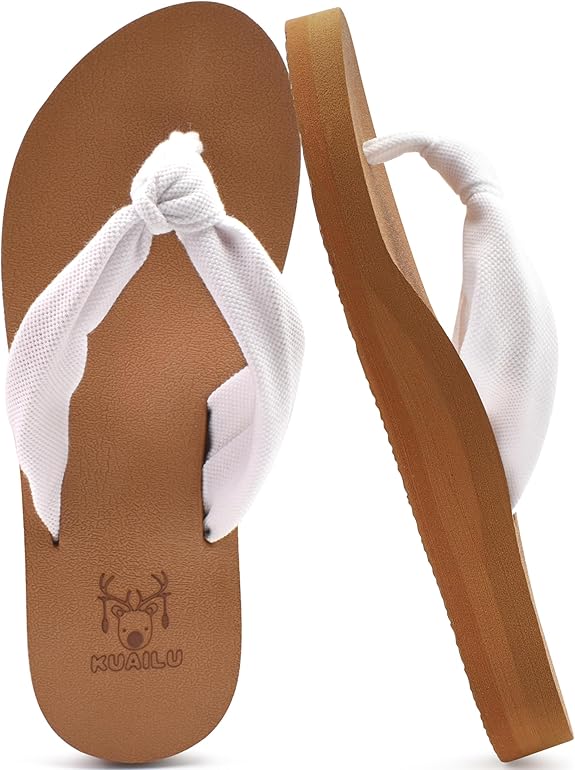
KuaiLu
Flip Flops with Arch Support
Cushioned, lightweight sandals with supportive arch design—a practical choice for beach trips, errands, and long summer walks.
Shop the sandals
baleaf
Athletic One-Piece Swimsuit
A functional one-piece with adjustable straps and moderate coverage, designed for swimming, training, surfing, and active beach days.
Shop the swimsuit
Astylish
Linen-Cotton Button-Down Shirt
A relaxed cotton-linen shirt with a collared V-neck and roll-up sleeves—easy to style over swimwear or with denim and shorts.
Shop the shirt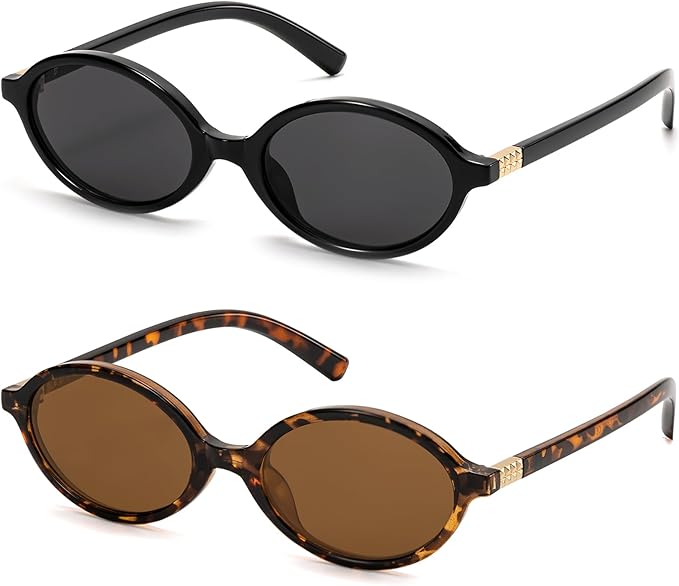
ViewJoy
Retro Oval Sunglasses
Small oval sunglasses with a 90s-inspired silhouette and UV400 lens protection—a quick way to add a vintage edge to everyday looks.
Shop the sunglasses
Affiliate disclosure: This section contains affiliate links. If you make a purchase through these links, I may earn a commission at no additional cost to you. Product selection, pricing, availability, and delivery terms may change—please review the current details on Amazon before purchasing.
As an Amazon Associate I earn from qualifying purchases.