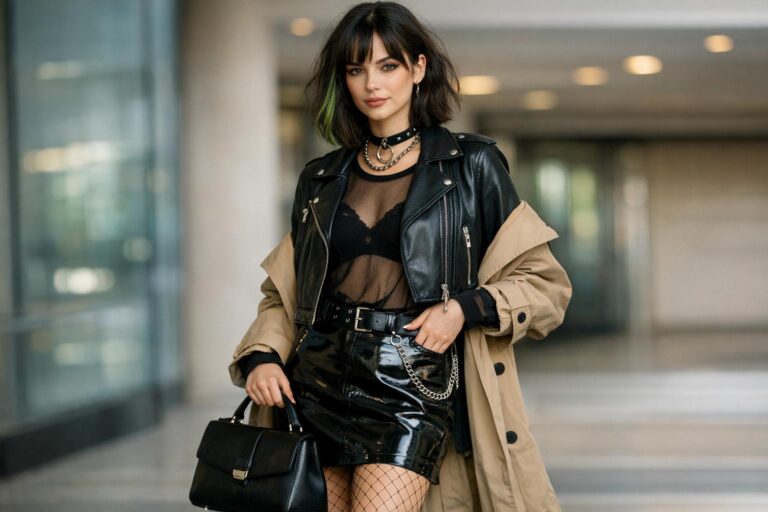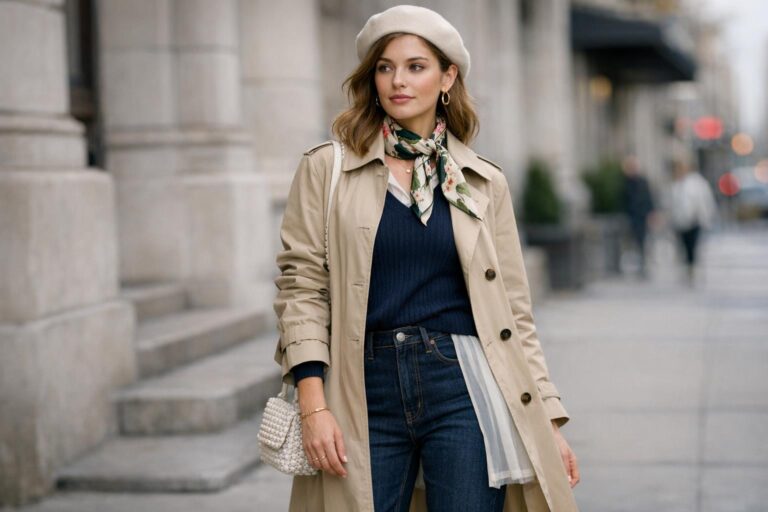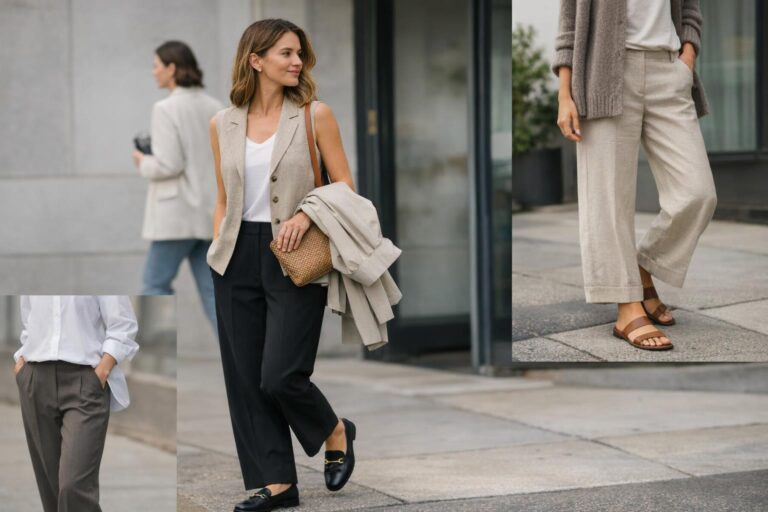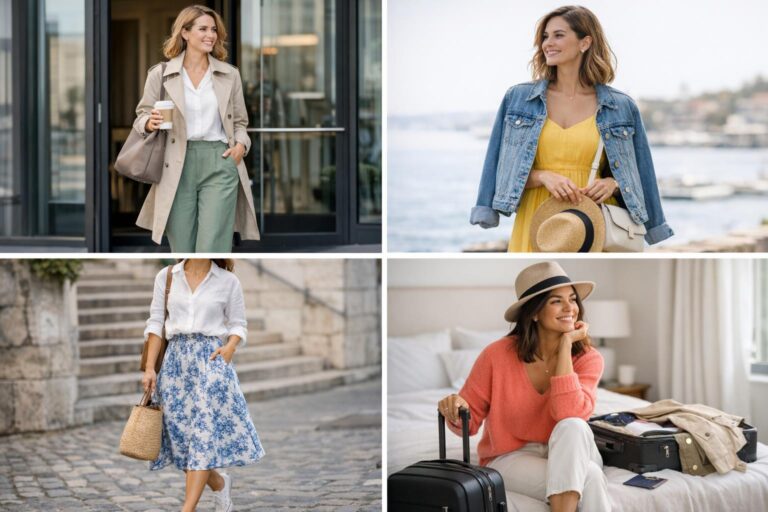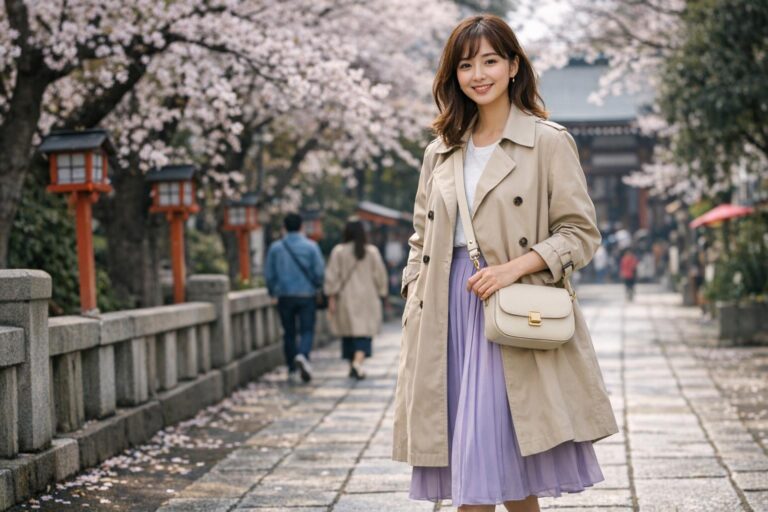
7 Spring Tone Outfits for Changeable US Weather (Polished)
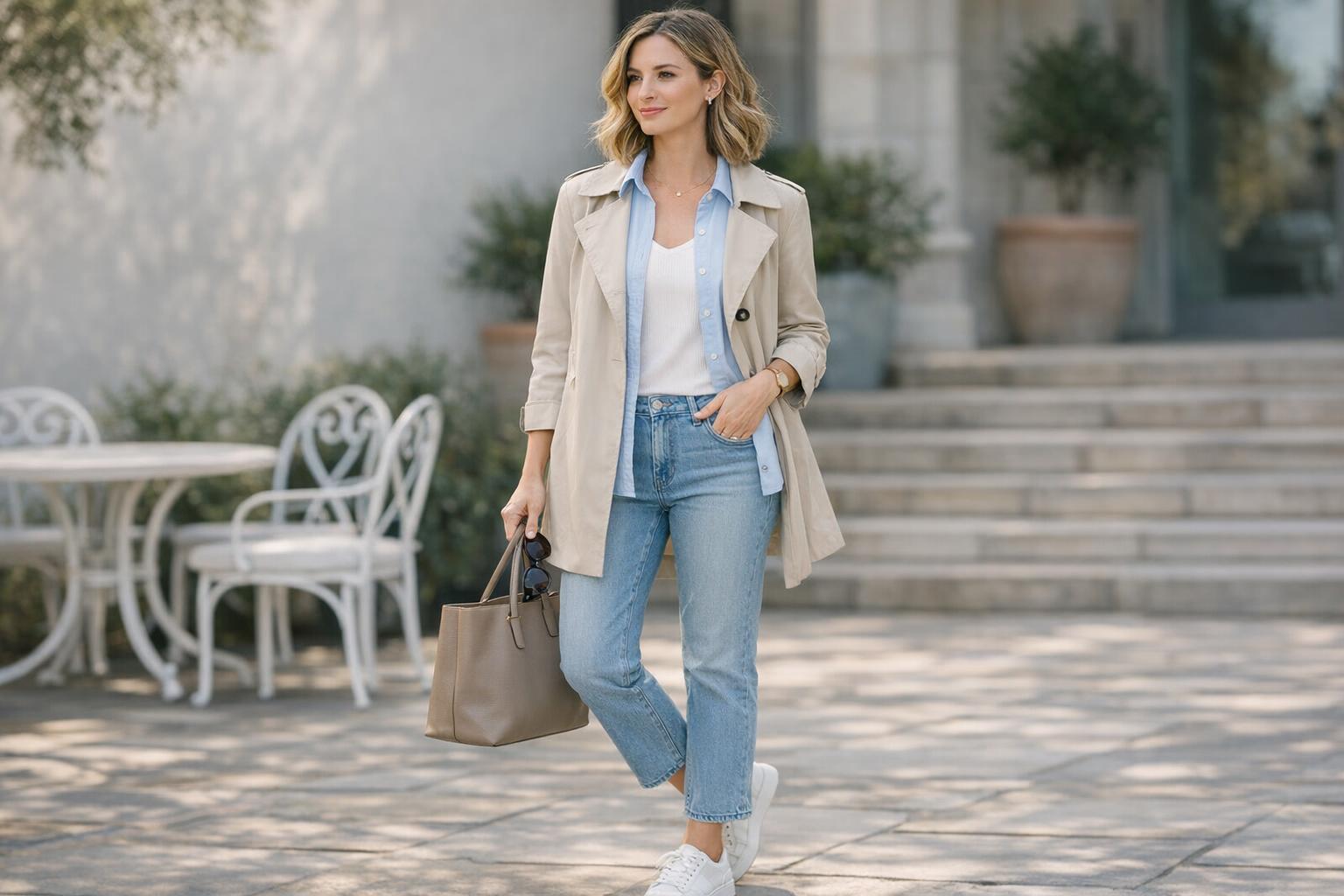
Spring Tone Outfits: A Practical Guide When You’re Not Sure Where to Start
This post may contain affiliate links. As an Amazon Associate, we earn from qualifying purchases.
Spring tone outfits are often treated like a specific “look,” but what most people actually want is simpler: clothes that feel fresh, lighter, and season-appropriate without feeling fussy. If you’re trying to dress for spring and keep running into the same questions—What colors work? How do I put outfits together? What do I wear when it’s warm at noon and cold at night?—this guide walks you through a straightforward approach to building outfits that read “spring” in an easy, wearable way.
This article focuses on building multiple outfit ideas you can mix and match, using spring-leaning tones and flexible layers. You’ll also find tips to avoid common styling pitfalls that can make spring outfits feel mismatched, overly bright, or impractical for day-to-day life.
The Fashion-Note Edit
Five effortless pieces to refresh your everyday wardrobe
A polished, practical edit for workdays, weekends, and everything in between.

The Drop
Women’s Blake Long Blazer
A longline, tailored blazer with a notched collar and a single-button closure—an easy layer for denim, dresses, or office-ready looks.
Shop the blazer
Amazon Essentials
Women’s Lightweight Crewneck
A soft, lightweight sweater with a clean crew neckline—the kind of reliable layer that works from cool mornings to air-conditioned spaces.
Shop the sweater
Amazon Essentials
Women’s Loafer Flat
A classic flat loafer that gives casual outfits a more polished finish and pairs naturally with tailored pants, skirts, and straight-leg jeans.
Shop the loafers
Levi’s
Women’s 501 90s Jeans
A relaxed, vintage-inspired take on the iconic 501 silhouette—made for an easy, lived-in look without the thrift-store search.
Shop the jeans
Colorfulkoala
High-Waisted 7/8 Leggings with Pockets
Soft, four-way-stretch leggings with side pockets and a high-rise waistband—designed for movement, errands, and off-duty comfort.
Shop the leggings
Affiliate disclosure: This section contains affiliate links. If you make a purchase through these links, I may earn a commission at no additional cost to you. Product selection, pricing, availability, and delivery terms may change—please review the current details on Amazon before purchasing.
As an Amazon Associate I earn from qualifying purchases.
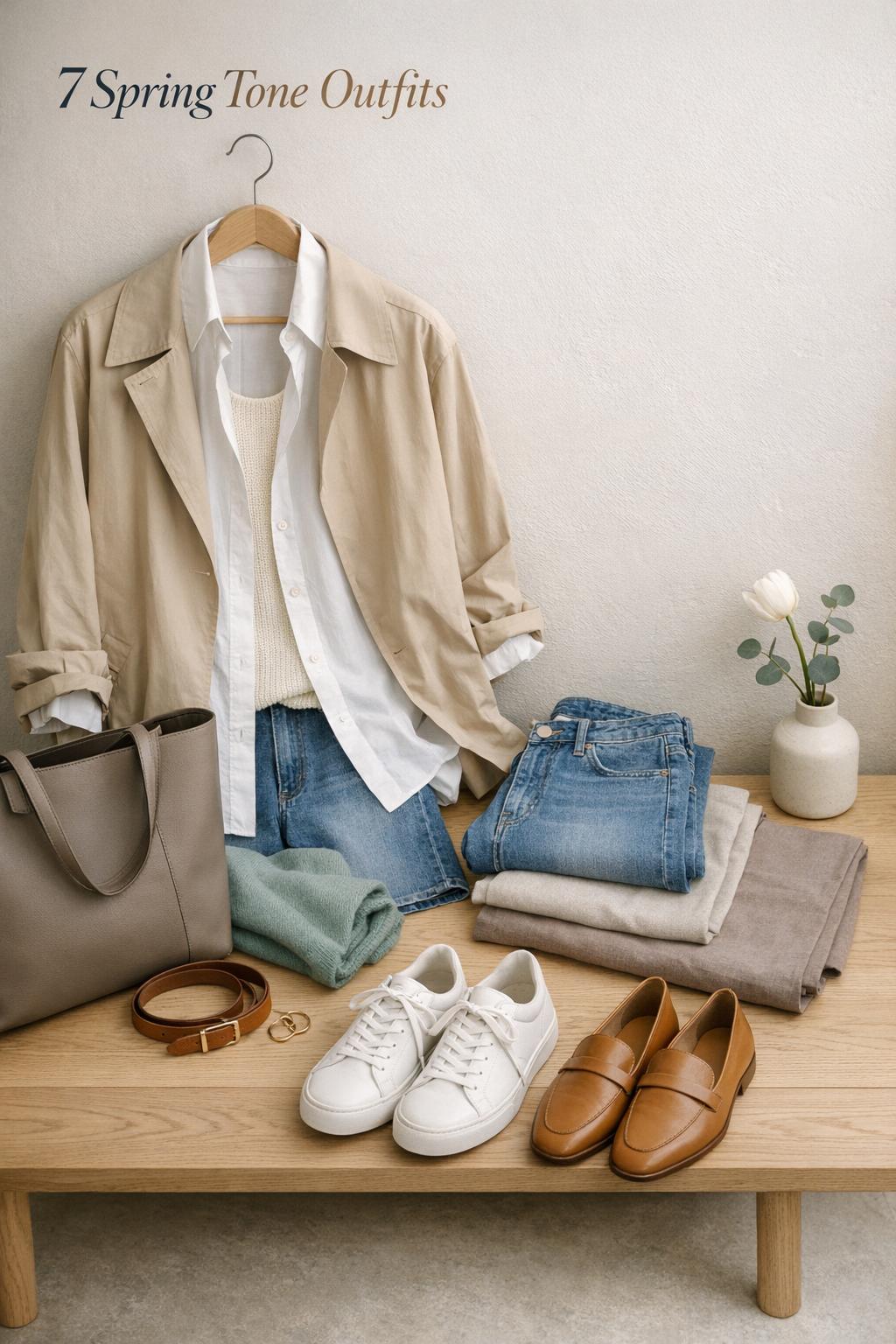
What “Spring Tones” Mean in Outfits
In everyday styling, “spring tones” generally describe a lighter, clearer, more upbeat feeling compared with deep winter colors or muted fall palettes. In outfit terms, that usually translates to clothing that looks airy, brightened, and seasonally fresh—without requiring you to overhaul your entire closet.
Your wedding style is personal.
Your plan should feel that way, too.
Zarellea keeps your guest list, budget, vendors, and every next step beautifully organized — so you can focus on the moments that feel like you.
Rather than treating spring tones as a strict rulebook, think of them as a direction: outfits that feel lighter than winter (less heaviness in color and fabric) and more polished than summer basics (more layering and structure).
How Spring Tone Outfits Read Visually
Spring tone outfits tend to look “lifted.” Even when you wear neutrals, you’ll see a lighter overall effect—through lighter washes, softer contrasts, and fabrics that move. This is why simple outfits like a light jacket plus jeans can feel spring-ready with the right tonal choices.
Tip: Use Tone Before You Worry About Trend
If you’re unsure what to buy or wear, prioritize tone first. A basic item in a spring-leaning tone often looks more seasonal than a trendy piece in a heavy, cold, or very dark color. Start by adjusting color and layering; then add trend details only if they fit your personal style.
Building Blocks for Spring Tone Outfits
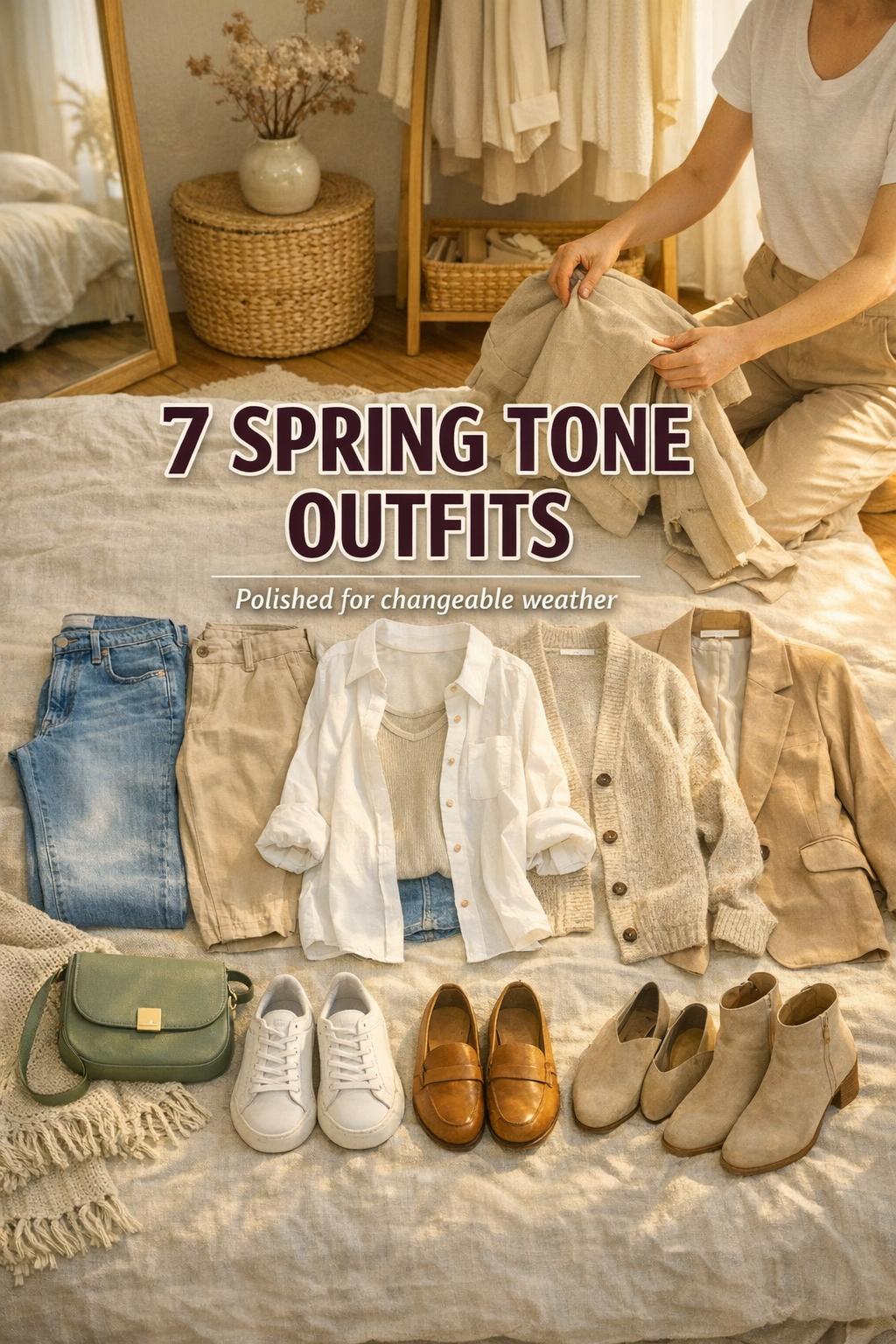
Most spring outfits can be built from a small set of practical staples: light layers, everyday bottoms, easy shoes, and a few pieces that add color without overpowering your look. The goal is to create multiple combinations that handle temperature swings and still look intentional.
Light Layering Pieces
Spring weather changes quickly, so layers do the heavy lifting. Choose pieces you can put on and take off without ruining the outfit’s proportions.
- Lightweight jacket (cropped or hip-length)
- Cardigan (structured enough to hold shape)
- Blazer (works for casual-to-work looks)
- Button-up shirt (as a top or a layer)
- Light knit sweater (for mornings and evenings)
Bottoms That Transition Easily
Spring tone outfits pair especially well with lighter denim and neutral bottoms that don’t feel heavy. Aim for options that work with both closed-toe shoes and lighter footwear as it warms up.
- Light-wash or mid-wash jeans
- Cropped trousers or ankle pants
- Skirts that can be worn with tights or bare legs
- Relaxed-fit pants in a lighter neutral
Footwear That Matches the Season
Shoes can make an outfit feel instantly seasonal. Heavy boots can pull spring tones downward visually, while lighter shoes keep the look “lifted.” You don’t need to abandon practicality—just choose styles that don’t look overly winter-coded.
- Clean sneakers
- Loafers or slip-ons
- Low-profile ankle boots (lighter in appearance)
- Simple flats
Tip: Keep One “Bridge” Shoe
If you only invest in one spring-transition shoe, pick a pair that works with both jeans and dresses. That single choice makes it much easier to wear spring tone outfits early in the season when you still need coverage and comfort.
How to Choose Colors for Spring Tone Outfits (Without Overthinking)
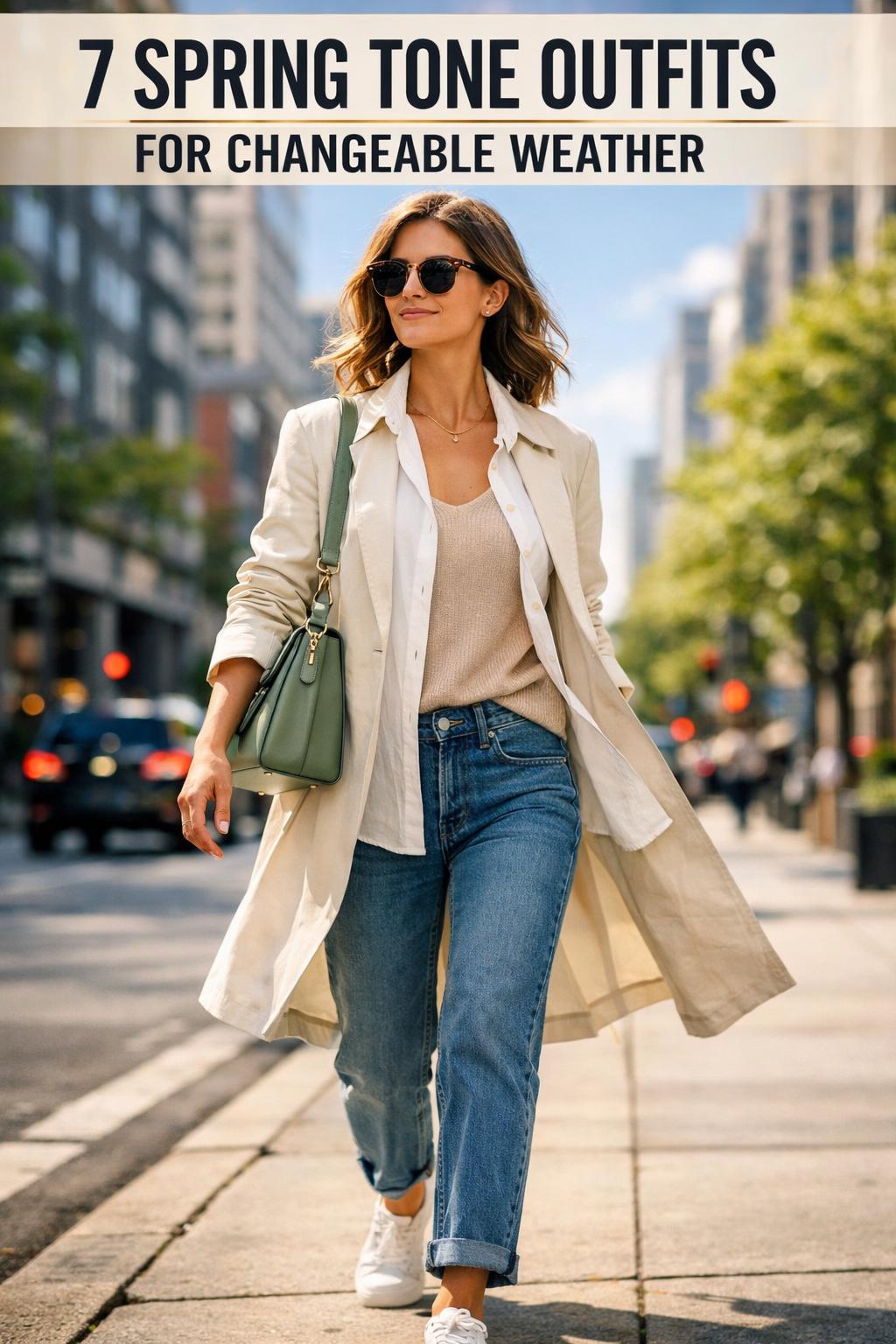
Color is often the main reason people search for spring tone outfits, but the most wearable spring looks don’t rely on head-to-toe color. Instead, they balance light neutrals with a few clear, fresh accents. If you prefer minimal outfits, you can stay mostly neutral and still look spring-appropriate by shifting to lighter tones and cleaner contrasts.
Start With a Light Neutral Base
A light neutral base helps spring accents look intentional rather than loud. It also makes mixing and matching easier across multiple outfits. The key is to build a base that doesn’t feel too heavy or too stark.
Add One Clear Accent (Not Five)
Many spring outfits fall apart when too many accents compete. A simple structure—neutral base plus one accent—creates a clean spring look. If you want to add more, repeat the accent color subtly (for example, a small accessory) so the palette looks deliberate.
Tip: Use “Distance Testing”
After you get dressed, step back and look at your outfit from a few feet away. Spring tone outfits usually look cohesive at a distance: the overall impression should feel light and fresh, not busy or choppy. If it looks visually noisy, remove one item (often an accessory or a competing layer) and reassess.
10 Spring Tone Outfit Ideas You Can Actually Repeat
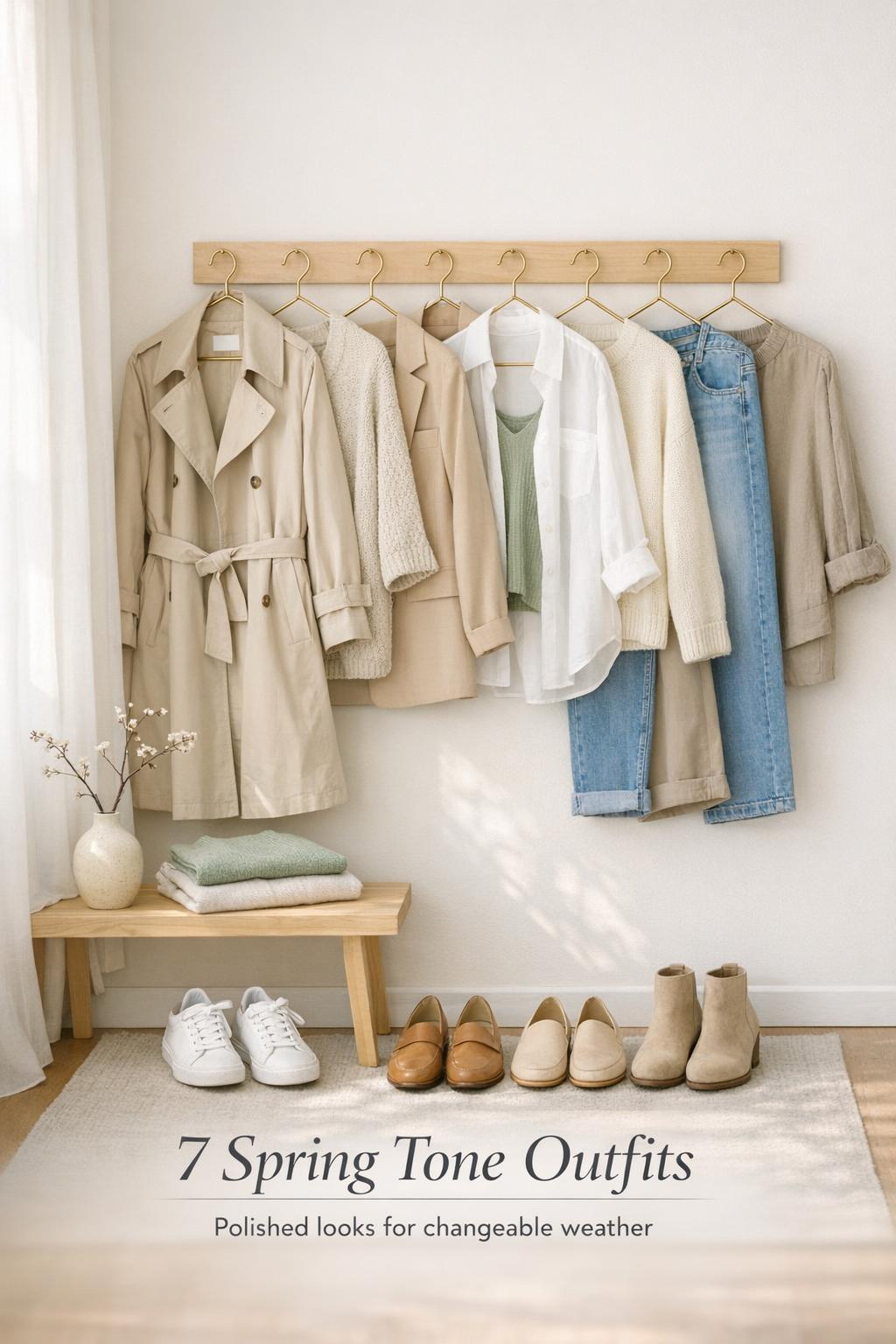
The outfit ideas below are designed to be repeatable rather than “one-time looks.” Each one is built around a simple silhouette and easy layers so you can rotate pieces throughout the season.
1) Light Jacket + Simple Top + Light-Wash Jeans
This is one of the easiest spring tone outfits because it relies on two spring signals: light outerwear and lighter denim. Keep the top simple and let the jacket shape the look. If your jacket is more structured, your top can be more relaxed; if the jacket is casual, a cleaner top can elevate it.
2) Cardigan Set With Straight-Leg Pants
A cardigan-based outfit reads spring instantly because it suggests light layering. Pair it with straight-leg pants for a clean line that works for casual plans or a low-key office setting. Keep the tones in the same family for a calm, polished effect.
3) Blazer Over a Simple Tee With Cropped Trousers
This is a spring tone outfit that looks intentional without feeling formal. The blazer adds structure, the tee keeps it relaxed, and cropped trousers show a little ankle—an easy seasonal shift even if the temperature is still cool.
4) Button-Up Shirt Worn Open as a Light Layer
Wear a button-up shirt open over a fitted tank or simple top. This gives you a breathable layer you can adjust throughout the day. Keep the base outfit streamlined so the open shirt doesn’t add bulk.
5) Monochrome Light-Neutral Outfit With One Accent
Start with a head-to-toe light neutral combination (top and bottom in a similar tone), then add one accent through a layer or accessory. This approach makes spring tones look sophisticated and wearable, especially if you’re not a bold-color person.
6) Easy Dress + Light Layer + Practical Shoe
Dresses are spring staples, but the layer and shoe choice determine whether it feels early-spring or late-spring. Add a cardigan or light jacket for coverage and choose a practical shoe that matches the outfit’s level of polish.
7) Skirt + Lightweight Knit + Clean Sneaker
A skirt paired with a lightweight knit balances spring softness with enough warmth for cooler days. The clean sneaker keeps the look grounded and comfortable, making it easier to wear for errands, travel days, or casual meetups.
8) Relaxed Pants + Fitted Top + Layer for Shape
If you prefer relaxed bottoms, spring tone outfits can still look sharp by adding shape up top. Pair relaxed pants with a more fitted top, then add a layer (like a blazer or cardigan) to keep the silhouette balanced.
9) Simple Top + Jeans + Accent Through Accessories
When you want minimal effort, keep the outfit basics consistent and shift the “spring tone” feeling through accessories. A small accent—like a bag, scarf, or jewelry—can brighten the look without requiring a colorful garment.
10) Layered Neutrals With One Light Statement Piece
For a slightly more styled approach, layer neutrals and let one piece carry the spring impression. This could be a lighter jacket, a standout knit, or a crisp button-up. Keep everything else quiet so the outfit doesn’t feel overbuilt.
How to Dress for Early Spring vs. Late Spring
One of the most common frustrations with spring tone outfits is that the calendar says “spring,” but the weather doesn’t cooperate. The solution is to keep the tone spring-like while adjusting coverage and fabric weight.
Early Spring: Keep the Tone Light, Keep the Coverage
In early spring, you can still wear long sleeves and closed-toe shoes while shifting your overall palette lighter and choosing layers that look less winter-heavy. Focus on swapping out your darkest items first: a lighter jacket instead of a heavy coat, lighter denim instead of dark denim, and cleaner-looking shoes rather than bulky winter styles.
Late Spring: Reduce Layers, Keep the Structure
As temperatures rise, spring tone outfits can lose shape if you remove too many layers at once. Keep at least one element that adds structure—like a blazer, button-up, or a slightly more tailored bottom—so the outfit still looks styled rather than thrown together.
Tip: Plan for the Coldest Part of Your Day
Instead of dressing for the warmest moment, dress for the coldest part of your schedule and build in a removable layer. That one habit makes spring outfits far more comfortable and prevents you from defaulting back to winter clothes that don’t match the season.
Common Mistakes That Make Spring Tone Outfits Feel “Off”
Even with good pieces, spring outfits can feel slightly wrong—either too dull, too loud, or not cohesive. Fixing these issues usually requires small adjustments, not a new wardrobe.
- Too many competing accents at once, which makes the look feel busy
- Keeping winter-heavy footwear that drags down an otherwise spring-leaning palette
- Mixing layers with clashing levels of structure (for example, an overly slouchy layer over an already loose outfit)
- Wearing spring colors without balancing them with calmer neutrals
- Choosing layers that are visually heavy even if the fabric is light
Tip: Fix One Variable at a Time
If an outfit feels off, change only one element first—shoes, outer layer, or accent color—then reassess. Spring tone outfits become cohesive through small, controlled choices, not multiple big changes at once.
Outfit Formulas You Can Save and Reuse
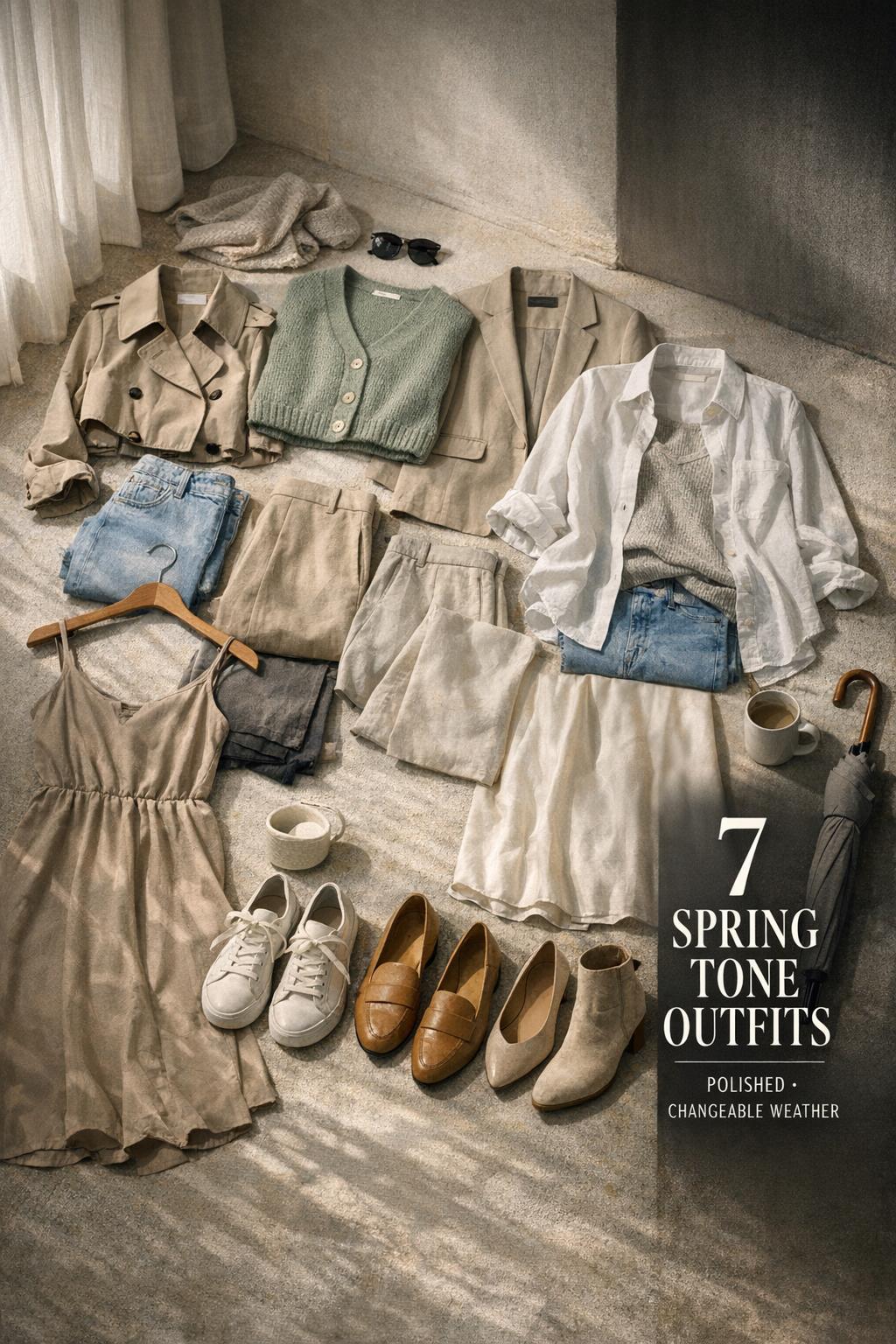
Outfit formulas make spring dressing easier because you can repeat the structure while rotating colors and pieces. Use these as templates: once you find a formula that works for your body type and lifestyle, you can recreate it quickly.
- Layer + simple top + straight-leg jeans + clean sneaker
- Blazer + tee + cropped trouser + loafer
- Cardigan + fitted top + relaxed pant + flat
- Button-up layer + tank + skirt + sneaker
- Dress + light jacket + practical shoe
Tip: Keep a “Default” Color Pair
Choose one color pairing you know looks good together and feels spring-ready. When you’re in a rush, build your outfit around that pair and vary the third piece (layer, shoe, or accessory). This reduces decision fatigue and keeps your outfits consistent.
Spring Tone Outfits for Different Settings
Spring doesn’t happen in a vacuum—you still need outfits that match your plans. The same spring tone concept can be adjusted for casual weekends, workdays, and events by changing structure and accessories rather than reinventing everything.
Casual: Comfortable, Light, and Clean
For casual spring tone outfits, keep the look simple and focus on clean lines. Light layers, lighter denim, and easy shoes carry most of the seasonal message. Add one accent if you want a brighter spring feel, or keep it tonal if you prefer understated outfits.
Work: Polished Layers With Spring-Friendly Tones
Work-appropriate spring tone outfits typically rely on a blazer, structured cardigan, or crisp button-up. Keep the palette lighter and more open than winter outfits, but maintain enough structure to look professional. If you want color, use it in a controlled way—one piece or a small accent—rather than multiple competing items.
Event-Ready: Elevated but Still Spring
For events, the easiest way to look spring-appropriate is to keep the silhouette clean and the tones fresh. A simple dress with a light layer can look finished without heavy styling. If the event runs into evening, plan a layer that still matches the outfit rather than grabbing a random extra piece at the last minute.
Tips for Shopping Your Closet First
You don’t need a full seasonal wardrobe reset to wear spring tone outfits. Often, the best starting point is identifying what you already own that can be shifted toward spring through pairing and layering.
- Pull all lighter tops and layers into one place and test combinations
- Set aside your heaviest-looking items and see what outfits remain
- Try the same outfit with a lighter shoe to see the difference
- Use one accent item you already have and build around it
- Create two or three repeatable formulas so you don’t start from scratch each morning
Tip: Aim for “More Wear,” Not “More Pieces”
If you do decide to add something, choose an item that multiplies outfits—like a versatile light layer or a shoe that works across casual and more polished looks. The most useful spring purchases are the ones you can wear constantly, not the ones you can only style one way.
FAQ
What are spring tone outfits?
Spring tone outfits are outfits that feel light, fresh, and season-appropriate, usually achieved through lighter overall tones, clean neutrals, and simple layers that work with changing spring temperatures.
How can I make my outfit look like spring when it’s still cold?
Keep your coverage (long sleeves, closed-toe shoes, and layers) but shift the overall look lighter by choosing lighter outerwear, lighter denim or pants, and a cleaner, less winter-heavy shoe.
Do I need bright colors to wear spring tone outfits?
No—spring tone outfits can be mostly neutral; the key is a lighter, fresher overall effect, which you can achieve with light neutrals and a single controlled accent instead of multiple bold colors.
What’s the easiest spring outfit formula to repeat?
A reliable formula is a light layer plus a simple top, light-wash or mid-wash jeans, and a clean sneaker or loafer, with one optional accent through an accessory.
Why do my spring outfits sometimes look mismatched?
They often look mismatched when there are too many competing accents, when shoes feel overly winter-coded, or when layers clash in structure, so simplifying to one accent and one main layer usually fixes the issue.
How do I choose a spring layer that works with many outfits?
Pick a light jacket, cardigan, or blazer that you can put on and take off easily and that fits over your most common tops without adding bulk, so it works across casual, work, and event outfits.
What shoes work best for spring tone outfits?
Shoes that look lighter and cleaner—like sneakers, loafers, slip-ons, simple flats, or low-profile ankle boots—tend to support a spring feel better than bulky winter footwear.
How can I add spring tone style without buying new clothes?
Shop your closet by pulling lighter layers and tops together, pairing them with lighter denim or neutral bottoms, and using a single accent accessory to brighten the look while keeping the outfit cohesive.
Finish the look
The little extras that make a summer outfit feel complete
From beach days to city weekends, these easy pieces bring comfort, texture, and a polished finishing touch.

FENBEN
Straw Hobo Crossbody Bag
A handwoven straw bag with both short and crossbody straps—an effortless finishing touch for vacation looks and warm-weather outfits.
Shop the bag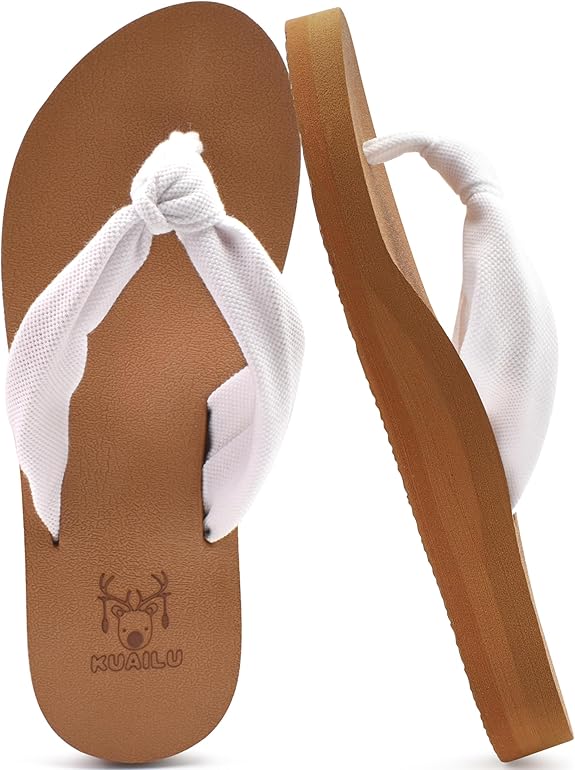
KuaiLu
Flip Flops with Arch Support
Cushioned, lightweight sandals with supportive arch design—a practical choice for beach trips, errands, and long summer walks.
Shop the sandals
baleaf
Athletic One-Piece Swimsuit
A functional one-piece with adjustable straps and moderate coverage, designed for swimming, training, surfing, and active beach days.
Shop the swimsuit
Astylish
Linen-Cotton Button-Down Shirt
A relaxed cotton-linen shirt with a collared V-neck and roll-up sleeves—easy to style over swimwear or with denim and shorts.
Shop the shirt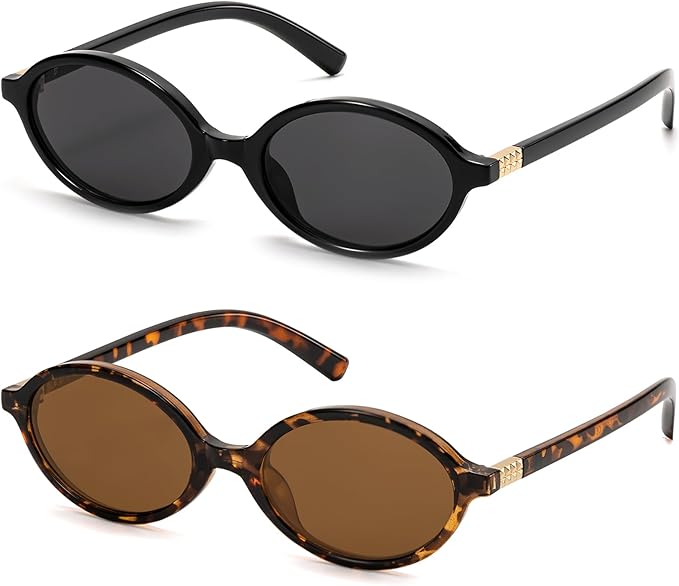
ViewJoy
Retro Oval Sunglasses
Small oval sunglasses with a 90s-inspired silhouette and UV400 lens protection—a quick way to add a vintage edge to everyday looks.
Shop the sunglasses
Affiliate disclosure: This section contains affiliate links. If you make a purchase through these links, I may earn a commission at no additional cost to you. Product selection, pricing, availability, and delivery terms may change—please review the current details on Amazon before purchasing.
As an Amazon Associate I earn from qualifying purchases.