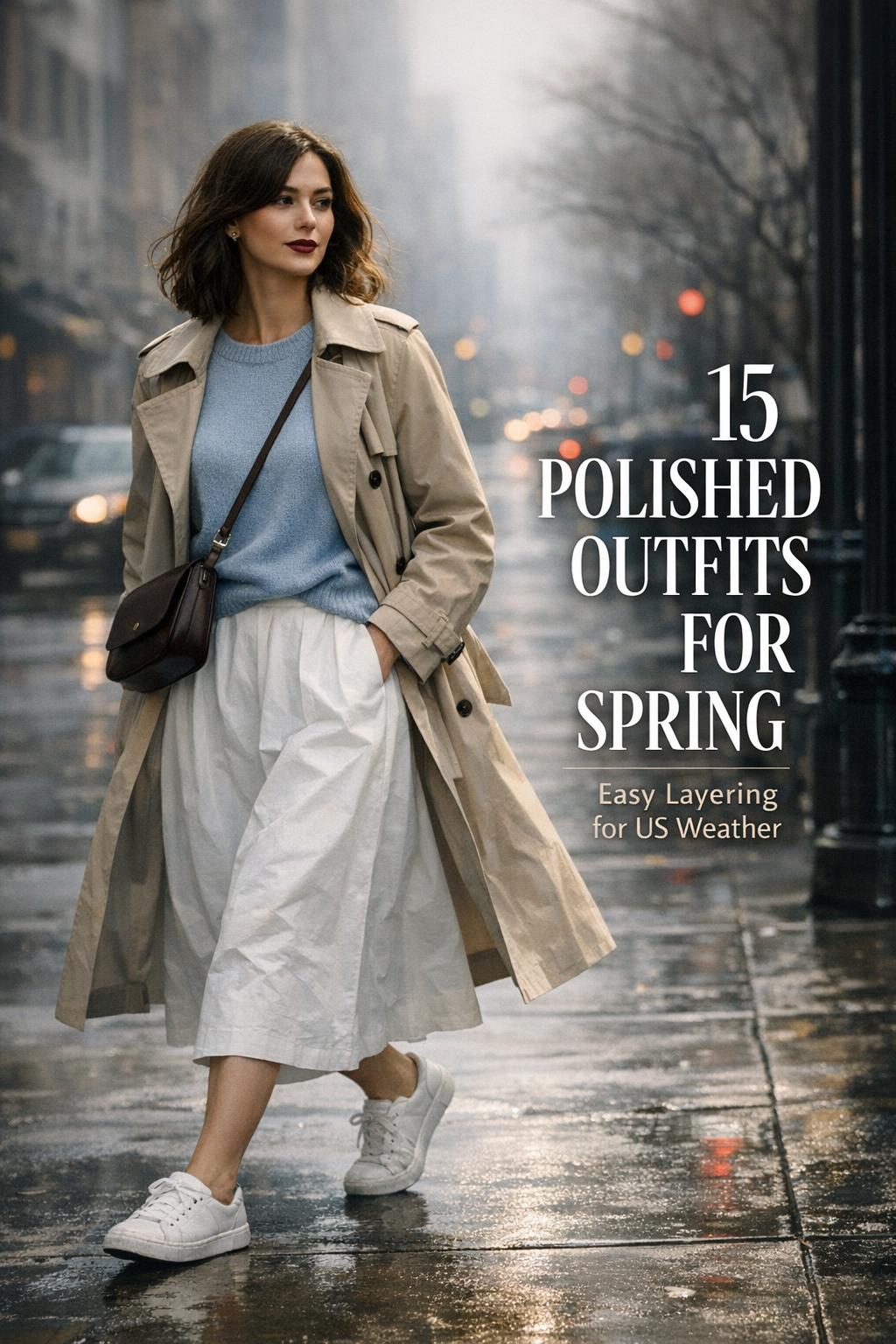
15 Polished Outfits for Spring: Easy Layering for US Weather
Outfits for Spring: Essential Ideas, Styles, and Shopping Guides for 2026
This post may contain affiliate links. As an Amazon Associate, we earn from qualifying purchases.
Spring outfits aren’t difficult because of style — they’re difficult because of temperature swings. One moment it feels like summer, the next you need a jacket again.
This guide focuses on layering formulas that keep outfits polished without overthinking. Instead of random combinations, you’ll see structured ways to build outfits that work across changing conditions.
The Fashion-Note Edit
Five effortless pieces to refresh your everyday wardrobe
A polished, practical edit for workdays, weekends, and everything in between.

The Drop
Women’s Blake Long Blazer
A longline, tailored blazer with a notched collar and a single-button closure—an easy layer for denim, dresses, or office-ready looks.
Shop the blazer
Amazon Essentials
Women’s Lightweight Crewneck
A soft, lightweight sweater with a clean crew neckline—the kind of reliable layer that works from cool mornings to air-conditioned spaces.
Shop the sweater
Amazon Essentials
Women’s Loafer Flat
A classic flat loafer that gives casual outfits a more polished finish and pairs naturally with tailored pants, skirts, and straight-leg jeans.
Shop the loafers
Levi’s
Women’s 501 90s Jeans
A relaxed, vintage-inspired take on the iconic 501 silhouette—made for an easy, lived-in look without the thrift-store search.
Shop the jeans
Colorfulkoala
High-Waisted 7/8 Leggings with Pockets
Soft, four-way-stretch leggings with side pockets and a high-rise waistband—designed for movement, errands, and off-duty comfort.
Shop the leggings
Affiliate disclosure: This section contains affiliate links. If you make a purchase through these links, I may earn a commission at no additional cost to you. Product selection, pricing, availability, and delivery terms may change—please review the current details on Amazon before purchasing.
As an Amazon Associate I earn from qualifying purchases.
Why Spring Outfits Often Look Unfinished
Most spring outfits fail not because of the pieces, but because of how they’re combined.
Your wedding style is personal.
Your plan should feel that way, too.
Zarellea keeps your guest list, budget, vendors, and every next step beautifully organized — so you can focus on the moments that feel like you.
- Too many light pieces → no visual structure
- No outer layer → outfit feels incomplete
- Wrong shoe weight → proportions feel unbalanced
- Mixing seasons incorrectly → outfit looks random
Spring styling works best when you combine at least one structured piece with lighter elements.
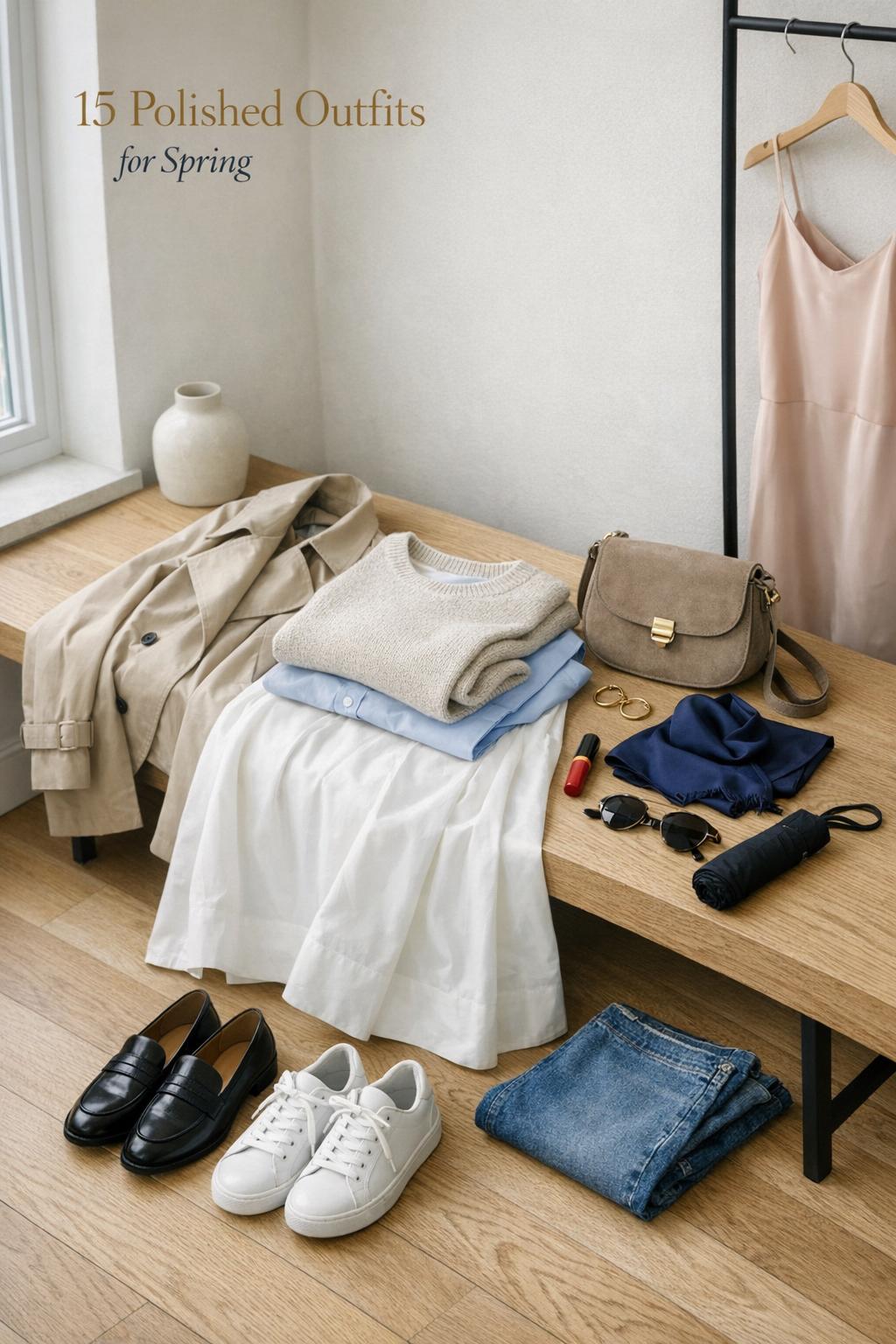
Spring Wardrobe Essentials: The Core Pieces You’ll Reach for All Season
Spring style gets much easier when you have a tight set of reliable building blocks. Across spring fashion coverage, the same staples show up repeatedly because they solve the real problems of the season: layering, comfort, and looking pulled together with minimal effort. Start with a core set of essentials, then rotate colors, textures, and accessories to create variety.
Tip: If you want a simple capsule approach, focus on pieces that can be layered (lightweight knits, a breathable shirt), pieces that can anchor outfits (denim, a skirt), and shoes that can handle mixed weather. Once those are set, statement details—like florals, fringe, or a bold color—become optional add-ons rather than requirements.
White poplin skirt and lightweight knits
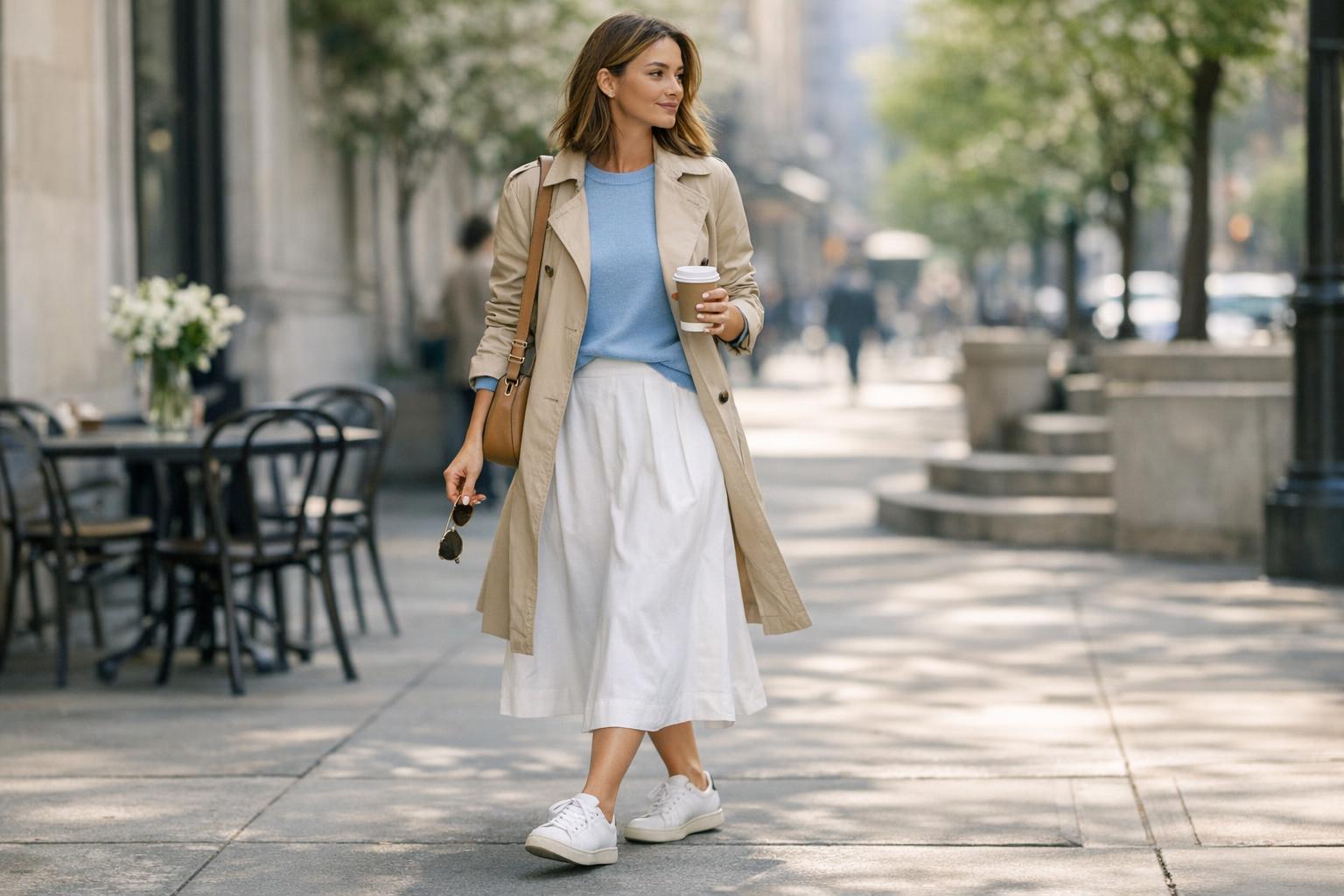
A white poplin skirt is a spring staple that reads clean, crisp, and season-appropriate, especially when paired with soft, lightweight knits. It can feel minimalist with neutrals or trend-forward with bolder color accents. The key is contrast: structured poplin looks best with relaxed or subtly fitted knit textures so the outfit feels balanced rather than stiff.
- Pair a white poplin skirt with a lightweight knit in a neutral shade for an effortless tonal look.
- Add interest through texture (poplin + knit) instead of relying only on prints.
- Use a belt to define the waist when you want the outfit to read more tailored.
Tip: If you’re unsure about white on a busy day, keep the rest of the outfit understated and let accessories do the work—sunglasses, a structured bag, or minimal jewelry can elevate the look without making it feel precious.
Lightweight jackets and layering pieces
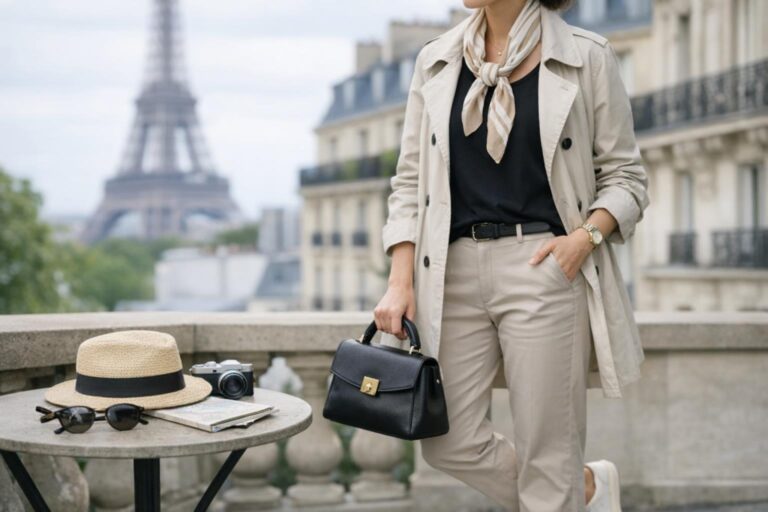
Transitional outerwear is the quiet hero of spring outfits. A lightweight jacket lets you re-wear your favorite basics across temperature swings, and it’s the easiest way to shift an outfit from casual to polished. While trench variations are common spring standbys, spring layering also includes other light options that don’t overwhelm the outfit.
- Keep at least one lightweight jacket that works with denim, skirts, and dresses.
- Use layering to create dimension: a crisp shirt under a light jacket, or a thin knit under an outer layer.
- When the weather warms, drape the jacket over your shoulders to keep the look intentional.
Tip: Spring layering looks best when your base outfit is relatively streamlined. If you’re wearing wide-leg denim, choose a more fitted top; if you’re wearing a voluminous skirt, keep the jacket light and not too bulky.
Footwear foundations for spring
Spring shoes should cover three needs: walking comfort, breathability, and weather flexibility. Many spring outfit ideas are built around easy, everyday footwear—think sneakers styled with relaxed tailoring, loafers for polished days, and sandals when temperatures allow. If you’re navigating rainy spring days, prioritize options that feel weather-ready without looking heavy.
- Sneakers for everyday spring outfits, especially when paired with tailored separates for contrast.
- Loafers as an instant “polish” upgrade for denim, skirts, or work outfits.
- Sandals for warm spring days, styled with dresses, tonal outfits, or linen-like textures.
Tip: When the forecast is unpredictable, build outfits from the ground up—pick shoes first, then match hemlines and outer layers. This prevents the common spring problem of a great outfit that doesn’t work with the day’s conditions.
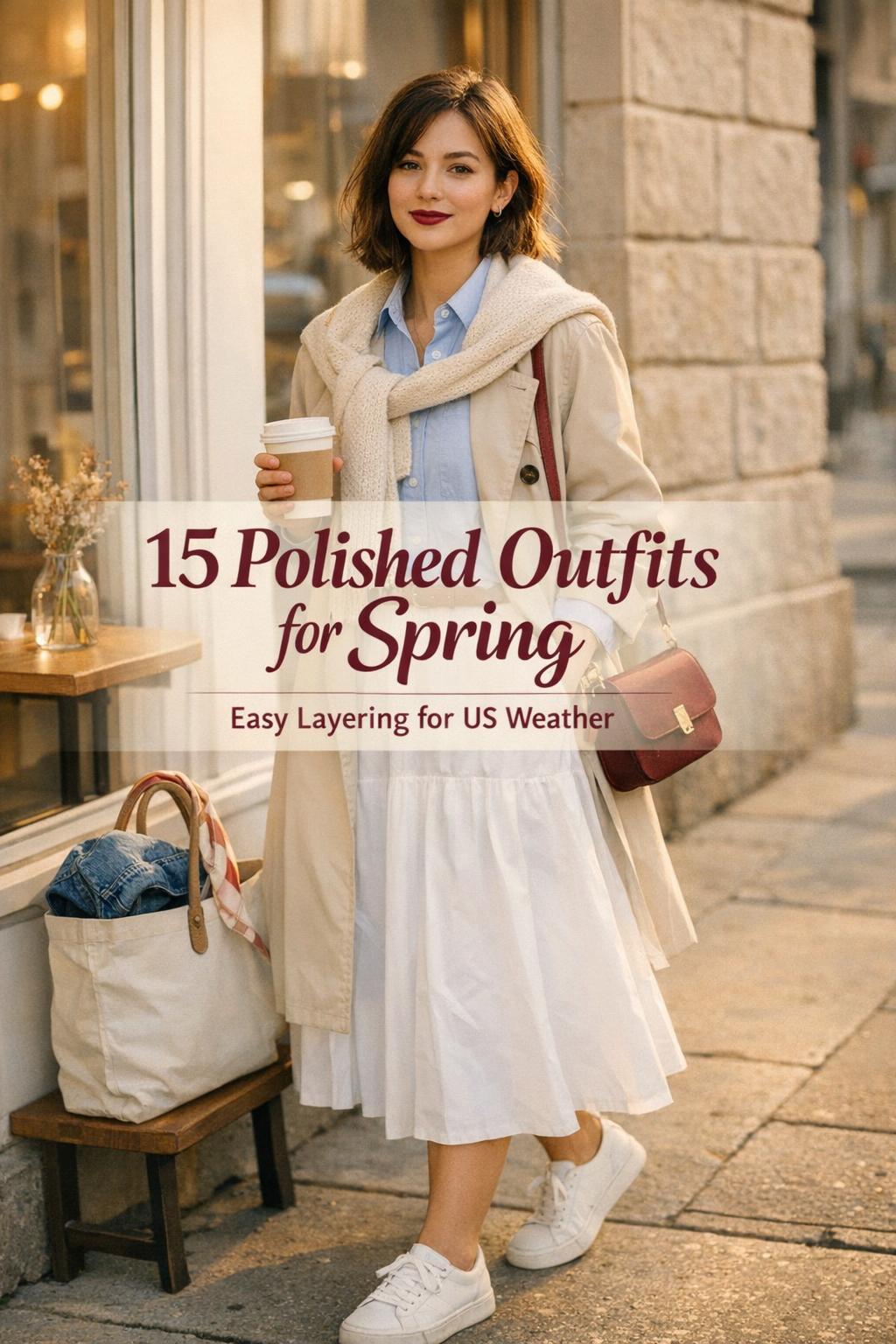
Color Palettes and Textures for Spring
Spring dressing is as much about fabric and texture as it is about color. The season’s most wearable looks mix familiar staples with a few strategic shifts: lighter materials, brighter accents, and fresh combinations that still feel grounded. Pastels are a classic spring shorthand, but the strongest wardrobes also use neutrals and occasional bold shades to keep outfits from looking overly themed.
Pastels, brights, and neutrals: balancing the palette
A balanced spring palette gives you flexibility. Neutrals create a clean base; pastels soften the look; brights add energy. If you want your spring outfits to feel current but not costume-like, treat color as a proportion game: one main color family and one accent is often enough.
- Use neutrals (including crisp whites) as your foundation for repeatable outfits.
- Add pastels when you want a softer, more seasonal mood.
- Bring in brights as a single statement: a top, a bag, or a shoe can carry the whole look.
Tip: If you’re experimenting with color, do it in items that don’t require perfect fit—accessories, lightweight layers, or an easy top. You’ll get the seasonal impact without the commitment.
Texture play: linen, silk, poplin, suede
Texture is what makes simple spring outfit formulas look styled rather than basic. Poplin reads crisp and polished; silk brings a subtle sheen; suede and leather-like textures add depth; and lightweight, breathable fabrics keep outfits comfortable. Mixing textures also helps when you’re wearing a neutral palette—your outfit still looks intentional because the surfaces catch light differently.
Tip: A practical way to style texture is to pick one “clean” fabric (like poplin) and one “soft” fabric (like knit or silk). That contrast creates dimension without needing extra patterns or layers.
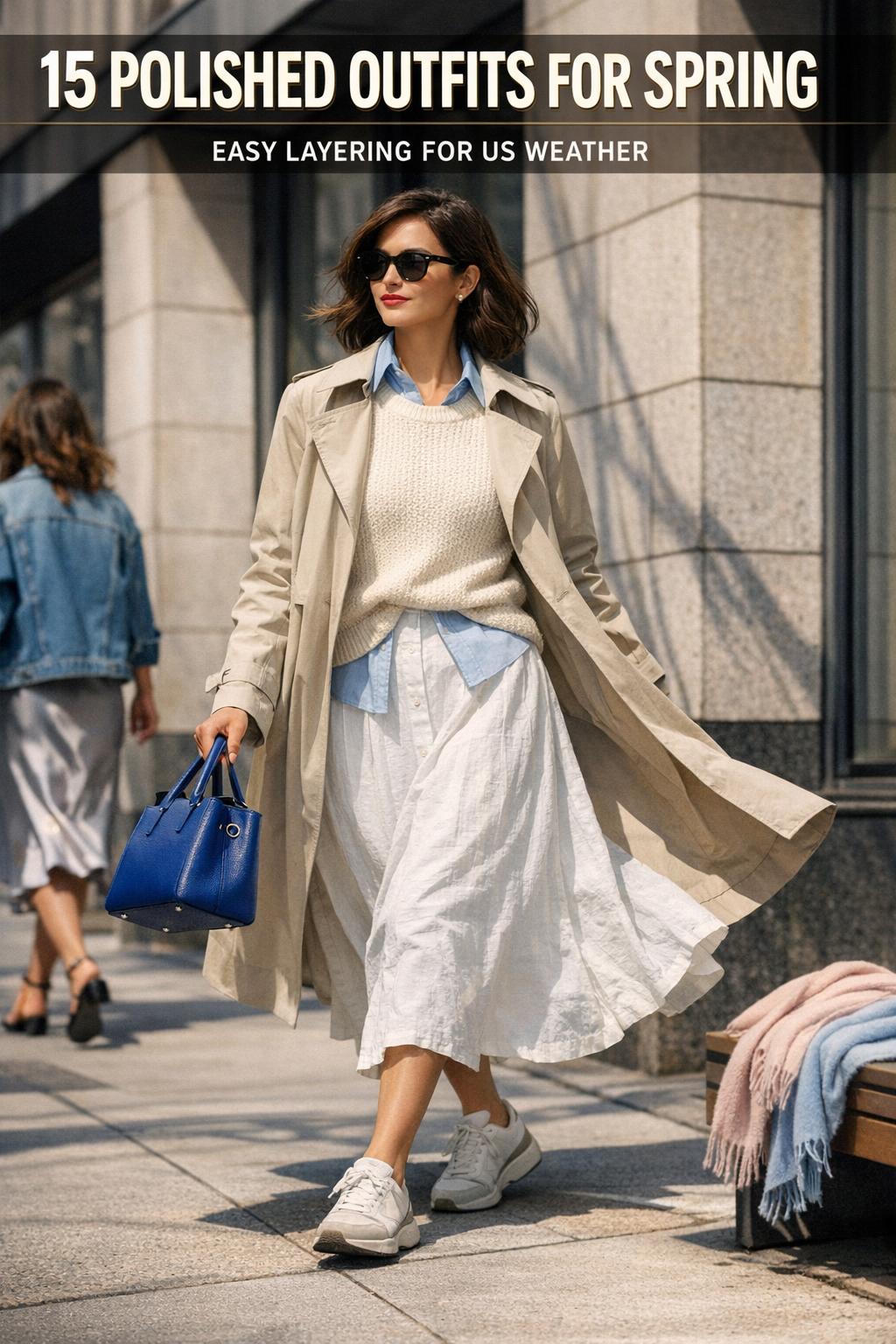
Outfit Formulas: 10 Trusted Spring Looks You Can Recreate
Outfit formulas are repeatable combinations that remove guesswork. The best spring outfit ideas rely on a few consistent building blocks—light layers, denim, crisp shirts, easy dresses, and shoes that bridge casual and polished. Use these looks as templates, then adjust color, print, and accessories based on your style and schedule.
1) Flowy dress + lightweight jacket
A flowy dress is a one-step outfit that instantly feels like spring, and a lightweight jacket makes it wearable across temperature swings. Keep the silhouette easy: the dress provides movement, while the jacket adds structure. Finish with simple footwear and minimal accessories so the look stays effortless.
Tip: If you want the look to feel less “occasion,” choose understated accessories and keep the jacket casual in vibe. If you want it to feel more elevated, opt for cleaner lines and a more polished bag.
2) Tailored separates + sporty sneakers
Relaxed tailoring paired with sneakers is one of the most wearable spring combinations because it balances comfort with sharpness. The contrast is the point: tailored pieces make the outfit look intentional, while sneakers keep it practical for everyday.
- Start with tailored separates as your base.
- Add sporty sneakers to make the look daytime-friendly and comfortable.
- Keep accessories clean and minimal so the tailoring stays the focus.
3) Denim + crisp shirt + light layer
Denim anchors spring outfits because it works in casual and polished settings depending on styling. Pair it with a crisp shirt for structure, then add a light outer layer when needed. This formula is also a strong base for experimenting with color through accessories.
Tip: If you’re wearing wide-leg jeans, keep the shirt either neatly tucked or intentionally styled to avoid a shapeless silhouette.
4) Linen-like textures + denim for casual weekends
Pairing denim with breathable, spring-friendly textures is a simple way to look seasonal without wearing a full “spring” print. This outfit formula is ideal for errands and casual days because it reads relaxed but put together, especially when the fabrics feel light.
5) Slip dress + lightweight jacket for day-to-night
A slip dress is a versatile spring piece that can shift from daytime to evening with small changes. Add a lightweight jacket for coverage and warmth, then adjust accessories depending on the occasion. The clean lines of a slip dress also make it a great canvas for texture—think suede-like or leather-like accents through outerwear or a bag.
6) All-white or tonal ensemble
A tonal outfit—especially in white or soft neutrals—feels crisp and spring-forward. The trick is to vary textures so the look doesn’t appear flat: poplin with knit, or a smooth fabric with something more structured. Tonal dressing also makes it easier to look polished quickly because the palette does the coordination for you.
Tip: If you’re hesitant about head-to-toe light colors, try tonal dressing within a neutral range (soft beige to white, or light gray tones) and keep one darker accessory for grounding.
7) Florals as a focused accent
Florals are a spring classic, but they feel most modern when used with intention. Instead of building an outfit entirely around the print, use florals as one element and keep the rest clean. This works especially well with minimalist outfits where a floral piece becomes the focal point.
- Wear one floral piece and keep the rest of the outfit neutral.
- Balance a romantic floral with a structured item like a crisp shirt or tailored layer.
- Let accessories stay simple so the print doesn’t compete with extra details.
8) Minimalist base + bold accessory
Minimalist spring outfits become instantly more interesting with one bold choice—like a statement bag, standout sunglasses, or a bright shoe. This formula is especially helpful if you prefer neutrals but still want your outfits to feel seasonal and fresh.
Tip: Keep the silhouette clean when you add a statement accessory. A simple outfit creates space for the accent to look deliberate rather than random.
9) Polished-yet-comfortable street-style combo
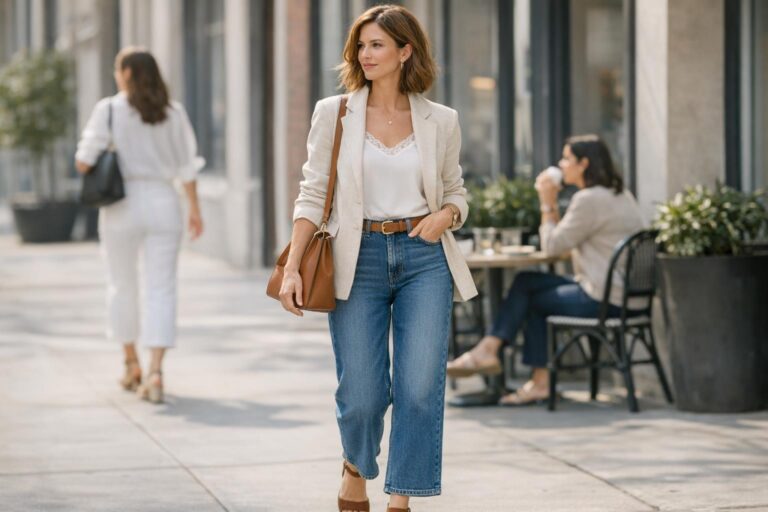
The most copied street-style spring looks are usually simple: comfortable denim, an easy top, and a light jacket with smart accessories. What makes the outfit feel “styled” is not complexity—it’s proportion and finish. Keep the base comfortable and then sharpen it with one polished element, like a structured bag or a clean shoe choice.
10) Transitional rain-friendly outfit
Rainy spring days call for outfits that can handle damp conditions while still feeling light and seasonal. The most practical approach is a streamlined base (denim or a skirt paired with a simple top), plus a lightweight outer layer you can keep on all day if needed. Choose footwear that feels weather-ready and avoid hems that will drag.
Tip: On wet days, keep your outfit visually bright through color accents or crisp neutrals. It’s an easy way to maintain a spring mood even when the weather feels gloomy.
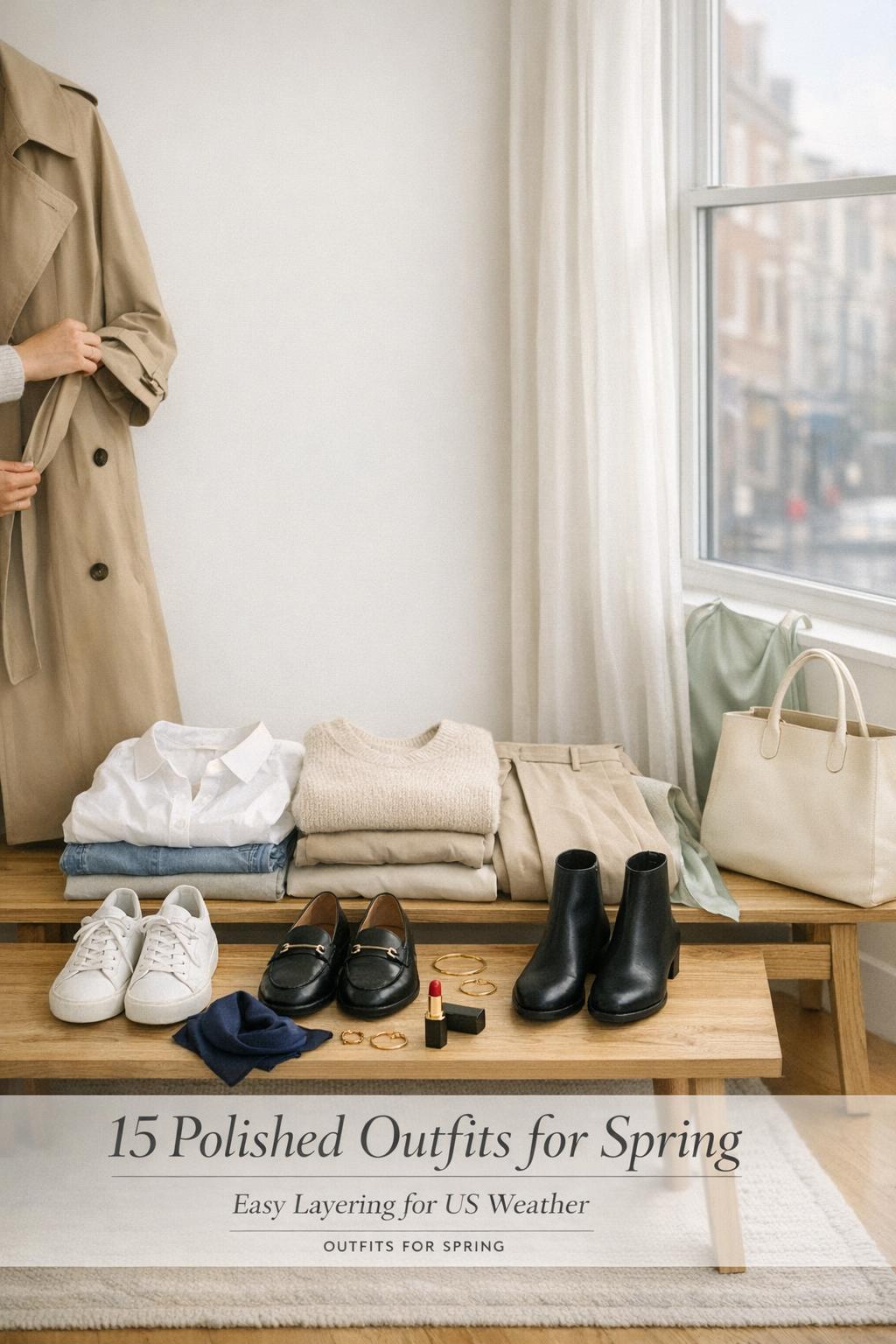
How to Adjust These Outfits for Changing Temperatures
Spring weather can shift throughout the day, so your outfit needs to adapt.
- Cool mornings (45–55°F): add a trench, blazer, or light coat
- Mild afternoons (60–70°F): remove outer layer, keep structured base
- Warm days (70°F+): switch to breathable fabrics and lighter layers
The goal is to build an outfit that still works after removing one layer.
How to Style Spring Outfits by Occasion
Spring wardrobes work best when they’re flexible across your real life: office days, weekends, dates, and travel. Instead of building completely different looks for every scenario, use a consistent base of spring essentials and shift the level of polish through tailoring, accessories, and footwear.
Office-appropriate spring ensembles
Spring work outfits are easiest when you focus on tailored separates, crisp shirts, and clean layers. Keep silhouettes streamlined and rely on subtle seasonal cues—like a lighter color palette, poplin, or a soft pastel accent—rather than overly casual pieces. If you like comfort-first dressing, lean into relaxed tailoring and finish with sharp accessories for balance.
- Tailored separates with a crisp shirt for structure.
- Lightweight jacket as a finishing layer for meetings and temperature shifts.
- Loafers or clean sneakers depending on your office dress expectations.
Tip: To keep office outfits spring-appropriate without feeling too bright, use neutrals as the base and add one seasonal color in a small area, such as a bag or belt.
Weekend casuals and errands
For weekends, spring outfit ideas should prioritize comfort while still looking intentional. Denim remains the anchor, but you can make it feel seasonal by swapping heavy layers for lightweight jackets and choosing breathable tops. This is also the best time to experiment with trend details like fringe or tie-dye in a low-pressure way.
Tip: If you want an easy “uniform,” rotate two pairs of denim, two lightweight tops, and one dependable jacket. Change the vibe with sneakers versus loafers, or with a brighter accessory.
Date-night spring looks
Date-night spring outfits work best when they feel light but elevated. Slip dresses, tailored separates, and clean tonal outfits are reliable foundations. Add interest through texture—silk-like sheen, suede-like depth, or crisp poplin—then keep accessories intentional rather than excessive.
- Slip dress plus a lightweight jacket for a balanced silhouette.
- Tonal outfit in neutrals or pastels for an understated but polished mood.
- Floral accent as a single statement piece paired with minimal accessories.
How to Make Casual Pieces Look Polished
The easiest way to elevate a spring outfit is to mix one relaxed piece with one structured element.
- Jeans + blazer → instantly polished
- T-shirt + tailored pants → balanced look
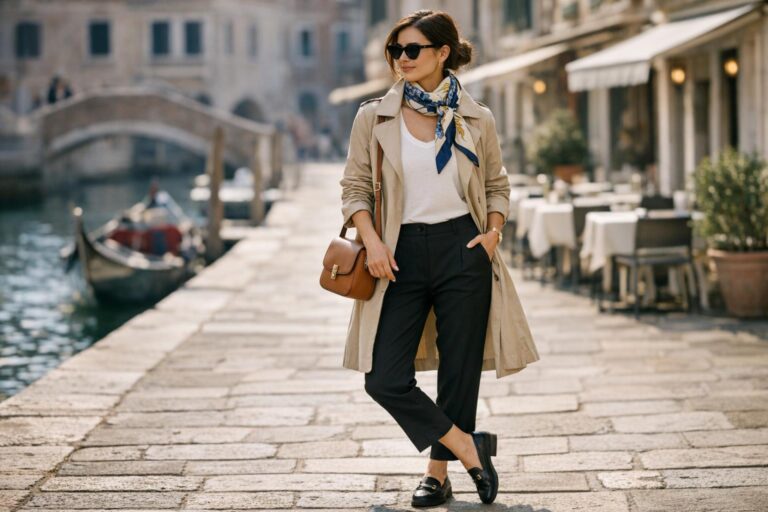
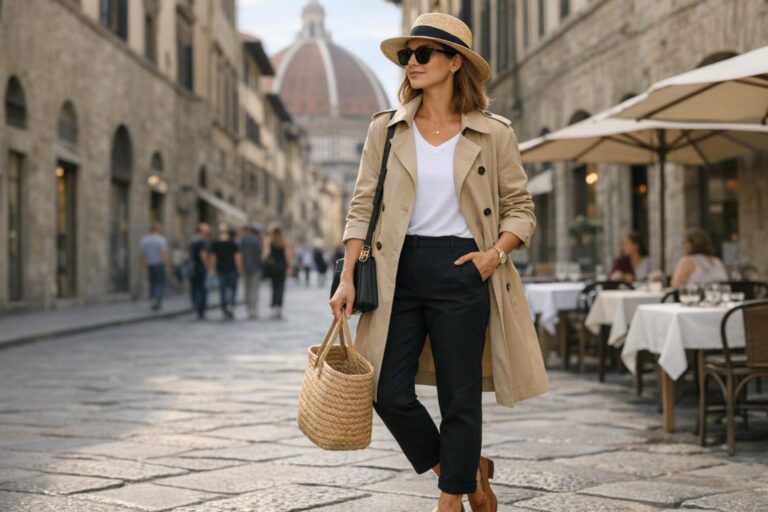
- Sneakers + trench → casual but refined
If everything is casual, the outfit loses structure. If everything is polished, it feels overdressed.
Travel-friendly outfits
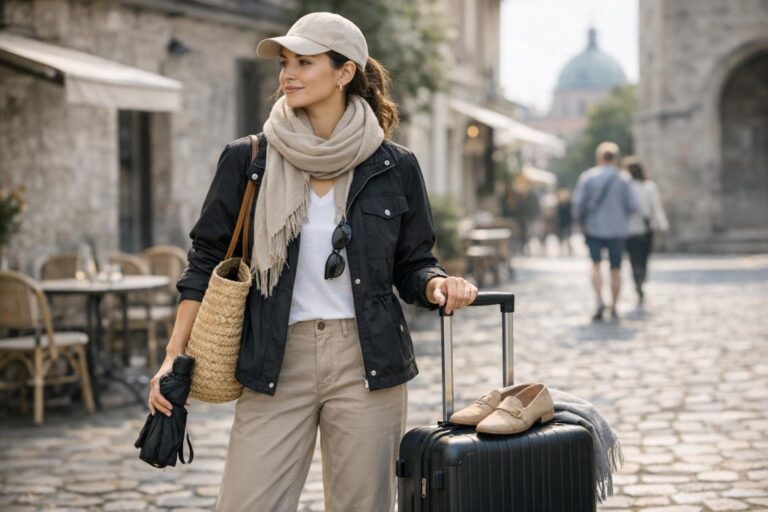
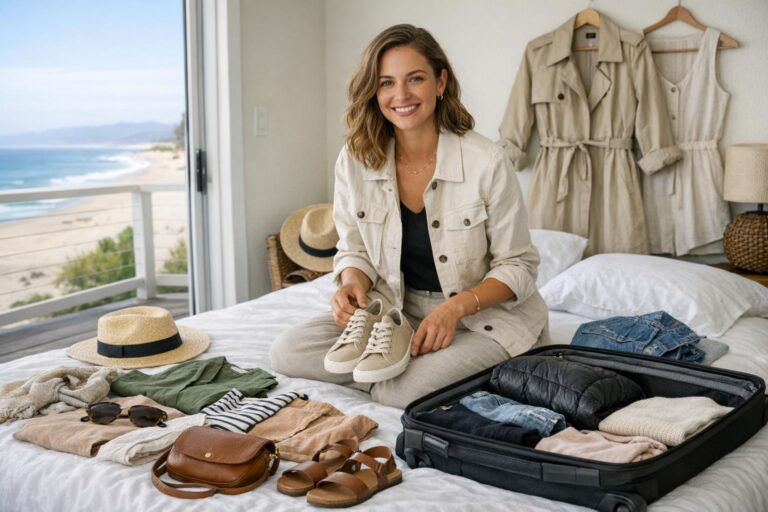
Travel spring outfits should be comfortable, repeatable, and adaptable to changing temperatures. Start with a base that layers easily—denim, a simple top, and a lightweight jacket—then use accessories to keep the look polished. A consistent color palette makes it easier to mix and match without overpacking.
Tip: For travel days, choose an outfit formula you already know works. Spring is unpredictable, so reliability matters more than experimenting in the moment.
Spring Color Combinations That Always Work
Spring outfits look best when colors are light but controlled.
- Neutrals + one soft color (beige + light blue)
- Monochrome with texture (all cream tones)
- Classic contrast (white + denim + tan)
Avoid mixing too many bright colors — it breaks the clean, polished effect.
Seasonal Color and Accessory Guide
Accessories are what turn a basic spring outfit into a finished look. They also help you adjust your style without buying a whole new wardrobe. If your closet is mostly denim, crisp shirts, and neutrals, accessories are the easiest way to bring in spring color trends and personality.
Bags, belts, and sunglasses
Think of these accessories as the “structure” of your styling. A bag can shift an outfit from casual to polished, a belt can make relaxed pieces look tailored, and sunglasses instantly add a confident, street-style finish. When your outfit is simple, these details carry the look.
- Use a belt to define shape in poplin skirts or relaxed tailoring.
- Choose sunglasses to add a sharp, minimal finish to softer spring colors.
- Let your bag be the color accent when your clothing palette is neutral.
Jewelry layering and minimalism
Spring jewelry is most effective when it complements the outfit’s mood. Minimalist looks pair well with subtle jewelry layering, while floral or bold outfits often look best with a quieter approach. The goal is balance: if your outfit has texture and color, keep jewelry simple; if your outfit is tonal and clean, jewelry can add dimension.
Tip: If you’re wearing a crisp shirt or poplin, choose jewelry that feels equally clean and intentional. If you’re wearing softer textures, a slightly more organic or layered feel can work without looking heavy.
Where to Shop: Shopping Roundups and Deals for Spring 2026
Spring shopping is most successful when you buy with outfit formulas in mind. Instead of collecting random “cute tops,” prioritize pieces that plug directly into the looks you want to wear: a lightweight jacket that works with dresses and denim, a crisp shirt you can repeat, or shoes that cover both casual and polished days. If you’re watching your budget, focus on high-rotation basics and look for seasonal deals to fill the gaps.
- Start with wardrobe essentials you can wear weekly (light layers, crisp shirts, denim, versatile skirts).
- Add one or two trend elements for freshness (like fringe, tie-dye, or a bright accent piece).
- Prioritize comfort and repeatability—spring outfits should work across many days, not just one moment.
Tip: Before you buy anything, write down three spring outfits you want to wear immediately. If a potential purchase doesn’t fit into at least one of those outfits, it’s less likely to earn real closet time.
Visual Inspiration: 10-Item Lookbook Gallery (Images With Alt-Text)
If you’re building a spring lookbook for yourself, keep it simple: a small set of “hero” pieces styled multiple ways. Below are ten lookbook concepts you can recreate and photograph (or save as outfit notes), each with suggested alt-text to keep the idea clear and easy to reference later.
- Look 1: White poplin skirt + lightweight knit + loafers (Alt-text: “White poplin skirt styled with a lightweight neutral knit and loafers for a polished spring outfit.”)
- Look 2: Floral dress + lightweight jacket + minimal jewelry (Alt-text: “Floral spring dress layered with a lightweight jacket and minimal accessories.”)
- Look 3: Denim + crisp shirt + trench-style layer (Alt-text: “Denim paired with a crisp shirt and light trench-style outerwear for transitional spring weather.”)
- Look 4: Relaxed tailoring set + sporty sneakers (Alt-text: “Relaxed tailored separates styled with sporty sneakers for a comfortable, polished spring street-style look.”)
- Look 5: Slip dress + lightweight jacket + structured bag (Alt-text: “Slip dress layered with a lightweight jacket and a structured bag for day-to-night spring styling.”)
- Look 6: Tonal neutral outfit with texture contrast (Alt-text: “Tonal spring outfit in soft neutrals featuring contrasting textures for dimension.”)
- Look 7: Minimalist base + bright accessory accent (Alt-text: “Minimalist spring outfit with a single bright accessory as a statement.”)
- Look 8: Denim + breathable top + sunglasses (Alt-text: “Casual spring outfit with denim, a breathable top, and sunglasses for an easy weekend look.”)
- Look 9: Floral accent top + neutral bottoms (Alt-text: “Spring outfit featuring a floral accent piece balanced by neutral bottoms and simple accessories.”)
- Look 10: Rain-friendly base outfit + lightweight layer + practical shoes (Alt-text: “Rain-friendly spring outfit with a streamlined base, lightweight outer layer, and weather-ready footwear.”)
Tip: For a cohesive lookbook, repeat the same shoes and outerwear across multiple outfits. This makes your wardrobe feel bigger and helps you spot which pieces truly do the most work.
Seasonal Sustainability and Styling Tips
A spring wardrobe refresh doesn’t have to mean constant buying. Some of the most effective spring styling comes from reworking what you already own—especially when you focus on fabric, layering, and accessories. For special events or trend experimentation, consider lower-commitment approaches like renting or shopping second-hand so you can try new silhouettes and textures without building clutter.
Tip: Start by “shopping” your own closet for spring-friendly textures and layers. A crisp shirt, a lightweight knit, and a versatile jacket can be styled dozens of ways before you add anything new.
- Upcycle styling: re-pair pieces you usually don’t wear together, such as a crisp shirt with a skirt you normally dress up.
- Try trend accents without overhauling your wardrobe by using accessories or a single statement piece.
- Rent or buy second-hand for occasional items like standout dresses or experimental textures.
Internal and External Validation
The most reliable spring style guidance is consistent across fashion editorial coverage: focus on repeatable outfit formulas, build around spring wardrobe essentials, and refresh the look with color, texture, and accessories rather than constant reinvention. If you’re unsure what direction to take, use these principles as your filter—does the piece layer well, does it work with denim and a crisp shirt, and can it fit into at least three outfits you’d actually wear?
Tip: When in doubt, simplify. Spring outfits look best when they feel light—visually and physically. Choose one focal point (a floral piece, a bold color accent, or a texture like poplin), and keep everything else clean and supportive.
FAQ
What are the best outfits for spring when the weather changes throughout the day?
Use a simple base outfit—like denim with a crisp shirt, or a dress—and add a lightweight jacket so you can adjust easily as temperatures shift without losing the look’s structure.
How do I style florals for spring without looking overly dressed up?
Make florals the single statement and keep everything else minimal, such as pairing a floral piece with neutrals, clean shoes, and understated accessories so the outfit feels modern and wearable.
What are easy spring outfit ideas I can recreate with basics?
Try repeatable formulas like denim plus a crisp shirt and a light layer, a tonal neutral outfit with texture contrast, or relaxed tailoring with sporty sneakers for a polished-but-comfortable combination.
What should I wear to the office in spring?
Build spring work outfits around tailored separates, crisp shirts, and lightweight outerwear, then use subtle seasonal color accents and polished accessories to keep the look fresh but professional.
How do I build a spring capsule wardrobe without buying too much?
Start with high-rotation essentials—lightweight layers, a crisp shirt, denim, a versatile skirt, and dependable shoes—then add only a couple of trend accents so most items can be mixed into multiple outfits.
What colors work best for spring outfits besides pastels?
Neutrals and crisp whites create a clean spring base, and you can add energy with a single bright accent through a top, bag, or shoes while keeping the overall palette balanced and wearable.
How can I make an all-white or tonal outfit look interesting?
Vary the textures—such as poplin with knit or smooth fabrics with more structured pieces—and keep the silhouette intentional so the outfit has depth without needing heavy patterns.
What are practical spring outfits for rainy days?
Choose a streamlined base outfit with a lightweight outer layer you can keep on, avoid hems that drag, and prioritize weather-ready footwear while using crisp neutrals or a color accent to maintain a spring feel.
Styling Insight: The “One Layer Rule”
Every spring outfit should have one removable layer that completes the look — like a blazer, trench, or light jacket.
Without it, outfits often look unfinished. With it, even simple combinations feel intentional.
Final Thought
Spring outfits don’t need more pieces — they need better combinations.
Focus on structure, balance, and layering flexibility, and even simple outfits will look polished and intentional.
Finish the look
The little extras that make a summer outfit feel complete
From beach days to city weekends, these easy pieces bring comfort, texture, and a polished finishing touch.

FENBEN
Straw Hobo Crossbody Bag
A handwoven straw bag with both short and crossbody straps—an effortless finishing touch for vacation looks and warm-weather outfits.
Shop the bag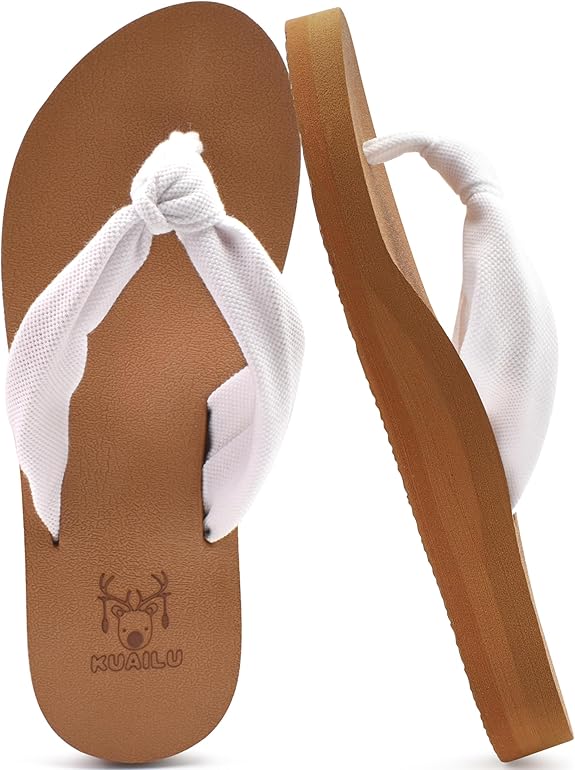
KuaiLu
Flip Flops with Arch Support
Cushioned, lightweight sandals with supportive arch design—a practical choice for beach trips, errands, and long summer walks.
Shop the sandals
baleaf
Athletic One-Piece Swimsuit
A functional one-piece with adjustable straps and moderate coverage, designed for swimming, training, surfing, and active beach days.
Shop the swimsuit
Astylish
Linen-Cotton Button-Down Shirt
A relaxed cotton-linen shirt with a collared V-neck and roll-up sleeves—easy to style over swimwear or with denim and shorts.
Shop the shirt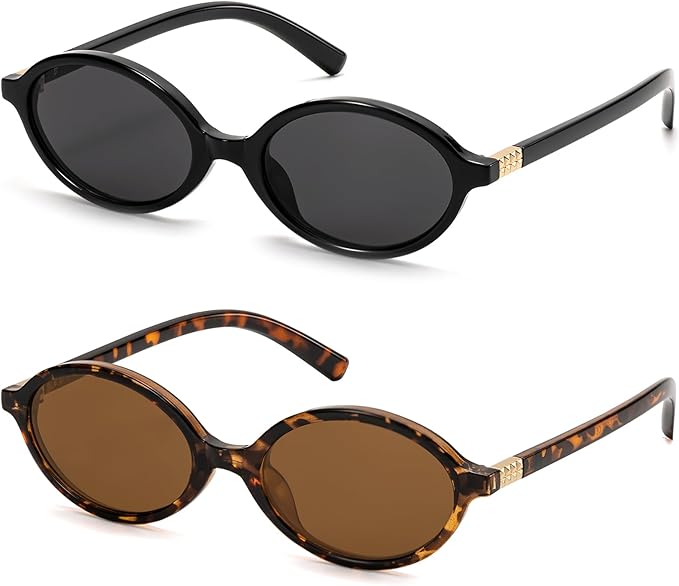
ViewJoy
Retro Oval Sunglasses
Small oval sunglasses with a 90s-inspired silhouette and UV400 lens protection—a quick way to add a vintage edge to everyday looks.
Shop the sunglasses
Affiliate disclosure: This section contains affiliate links. If you make a purchase through these links, I may earn a commission at no additional cost to you. Product selection, pricing, availability, and delivery terms may change—please review the current details on Amazon before purchasing.
As an Amazon Associate I earn from qualifying purchases.