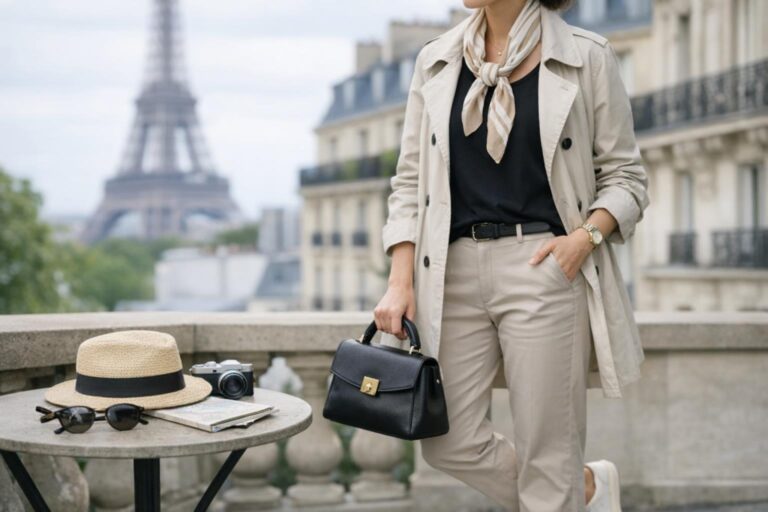
12 True Spring Outfits: Warm, Bright Capsule Formulas for US Spring
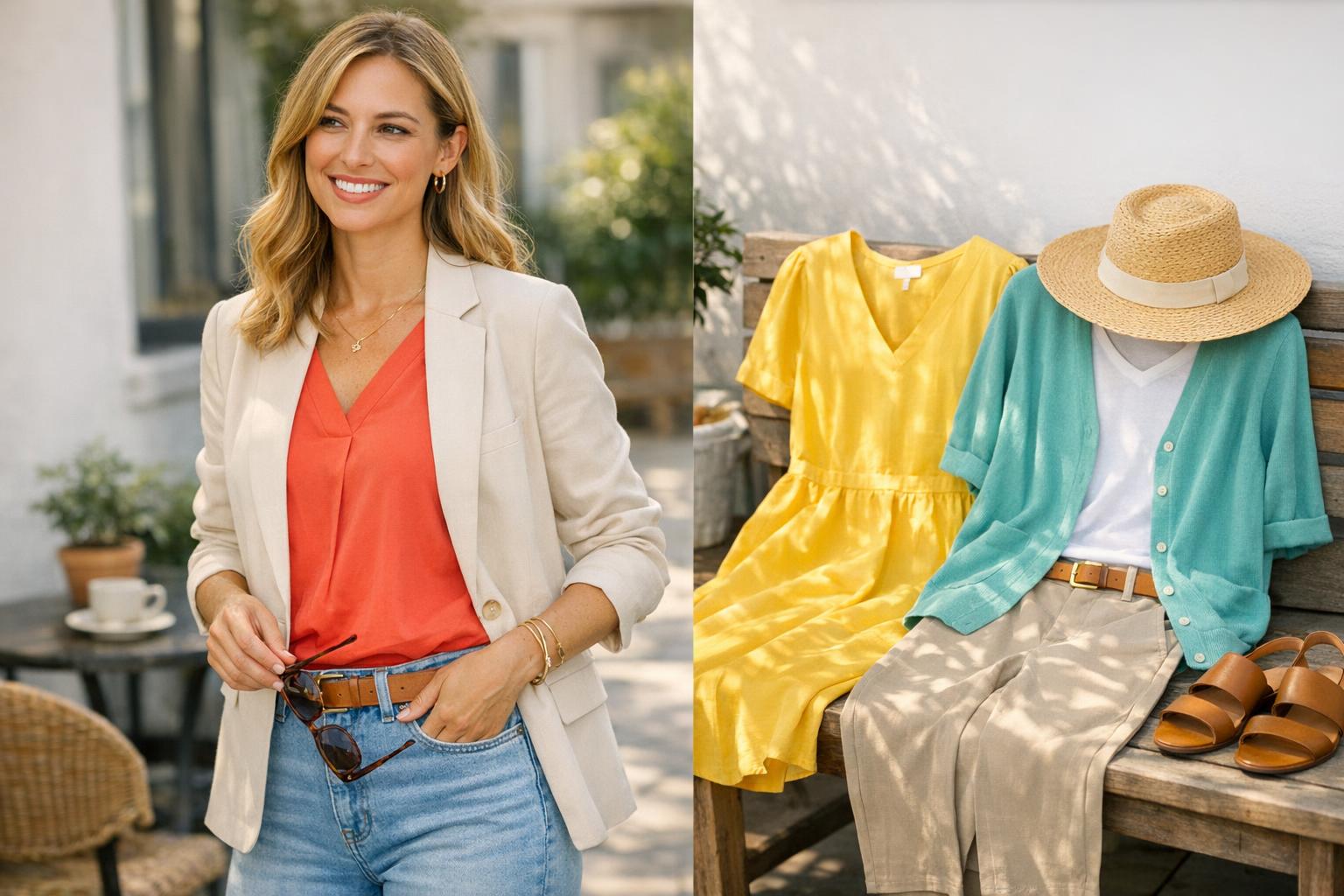
What “True Spring” Style Actually Looks Like
This post may contain affiliate links. As an Amazon Associate, we earn from qualifying purchases.
When spring fully arrives and temperatures finally become consistently warm, many wardrobes shift away from heavy layers toward lighter fabrics, brighter colors, and more relaxed silhouettes.
This stage of the season — often called “true spring” — usually brings comfortable daytime temperatures, longer sunny afternoons, and the chance to wear outfits that feel fresh and breathable.
The Fashion-Note Edit
Five effortless pieces to refresh your everyday wardrobe
A polished, practical edit for workdays, weekends, and everything in between.

The Drop
Women’s Blake Long Blazer
A longline, tailored blazer with a notched collar and a single-button closure—an easy layer for denim, dresses, or office-ready looks.
Shop the blazer
Amazon Essentials
Women’s Lightweight Crewneck
A soft, lightweight sweater with a clean crew neckline—the kind of reliable layer that works from cool mornings to air-conditioned spaces.
Shop the sweater
Amazon Essentials
Women’s Loafer Flat
A classic flat loafer that gives casual outfits a more polished finish and pairs naturally with tailored pants, skirts, and straight-leg jeans.
Shop the loafers
Levi’s
Women’s 501 90s Jeans
A relaxed, vintage-inspired take on the iconic 501 silhouette—made for an easy, lived-in look without the thrift-store search.
Shop the jeans
Colorfulkoala
High-Waisted 7/8 Leggings with Pockets
Soft, four-way-stretch leggings with side pockets and a high-rise waistband—designed for movement, errands, and off-duty comfort.
Shop the leggings
Affiliate disclosure: This section contains affiliate links. If you make a purchase through these links, I may earn a commission at no additional cost to you. Product selection, pricing, availability, and delivery terms may change—please review the current details on Amazon before purchasing.
As an Amazon Associate I earn from qualifying purchases.
Instead of complicated layering, true spring outfits focus on simple combinations of versatile pieces that work throughout the day. Lightweight jackets, breathable fabrics, and balanced color palettes make it easy to build outfits that feel polished without becoming overly styled.
Your wedding style is personal.
Your plan should feel that way, too.
Zarellea keeps your guest list, budget, vendors, and every next step beautifully organized — so you can focus on the moments that feel like you.
You’ll see a common pattern across spring outfit content: editorial inspiration and beautiful product edits are everywhere, but the day-to-day “how do I build outfits for my real life?” guidance is often thinner—especially for transitional weather and workwear. The goal here is to give you a cohesive system: understand your palette, build a core closet, and then use outfit formulas that make getting dressed simple.
The Difference Between Early Spring and True Spring
Early spring outfits usually require heavier layers and weather protection. True spring, however, allows outfits to become lighter and more relaxed.
Typical elements of true spring style include:
- lightweight jackets instead of heavy coats
- breathable fabrics such as cotton and linen
- brighter seasonal colors
- relaxed tailoring and softer silhouettes
- versatile footwear like sneakers or loafers
Because temperatures remain comfortable throughout the day, outfits often rely on capsule-style combinations that can easily be repeated and mixed.
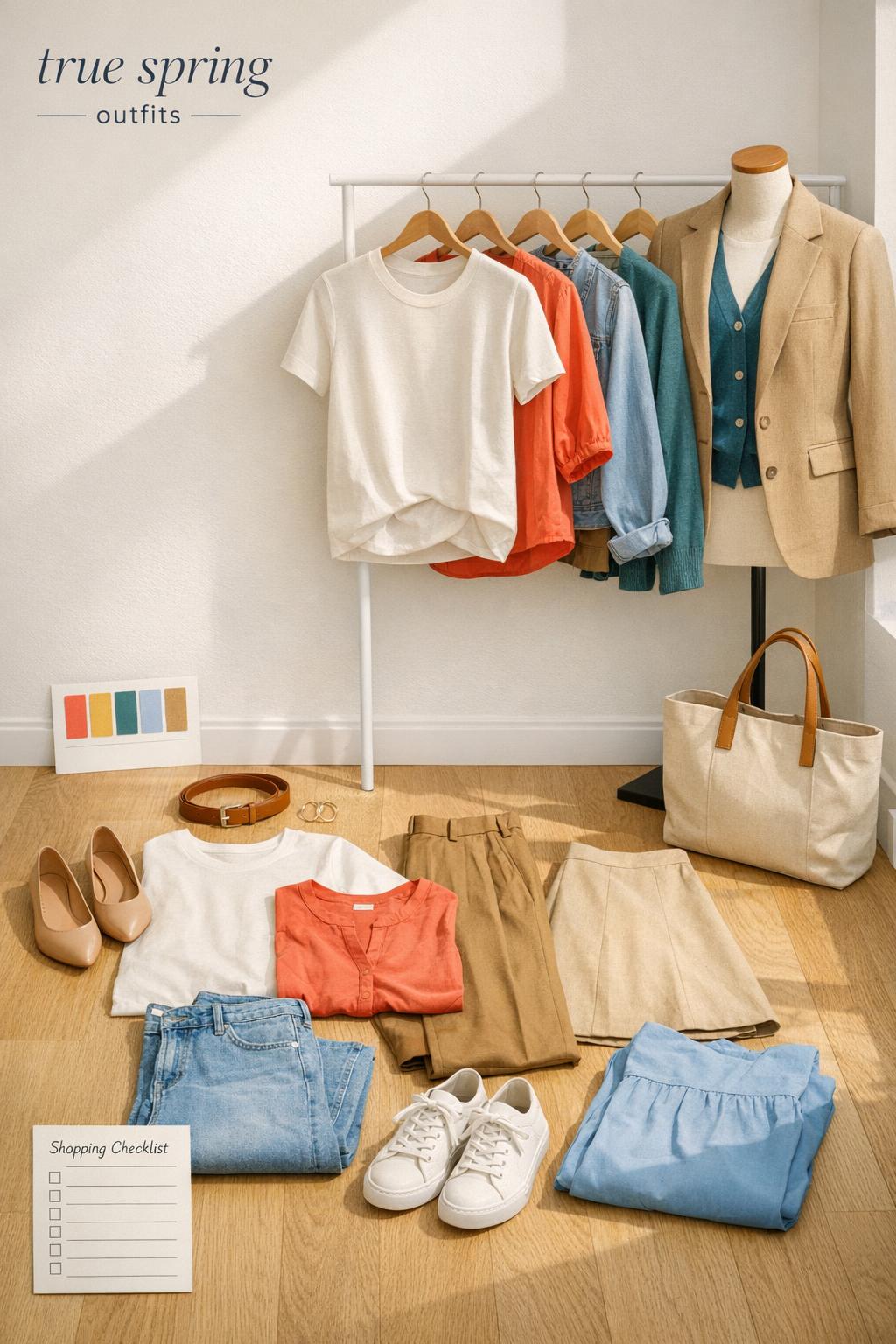
Core Pieces That Build Multiple Outfits
Instead of packing or buying many different outfits, it’s easier to start with a small capsule wardrobe that mixes well together.
A practical true spring capsule often includes:
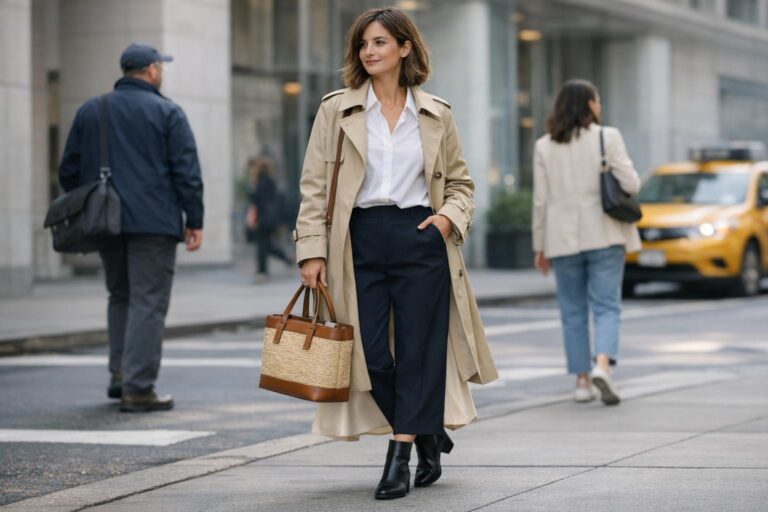
- a lightweight trench coat
- straight-leg jeans
- relaxed tailored trousers
- a breathable midi dress
- cotton shirts or blouses
- lightweight knit sweaters
- minimalist sneakers or loafers
These items create a foundation for building multiple outfits without overcomplicating your wardrobe.
What Is a True Spring Palette?
The True Spring palette is defined by colors that read warm, bright, and clear. In practice, that means hues that look sunny, fresh, and lively rather than muted, grayish, or cool-leaning. When your clothing colors match this profile, outfits tend to look more harmonious and intentional, even when the pieces are simple.
Core Characteristics of True Spring
When you’re dressing as a True Spring, think warmth first, then clarity, then brightness. True Spring colors generally look clean and “lit from within,” and they hold up well next to each other because they share that same clear warmth.
- Warm undertones: Colors feel golden or sun-warmed rather than icy or blue-based.
- Bright energy: Shades are lively and distinct, not dusty.
- Clear appearance: Colors look crisp rather than softened or smoky.
- Common pitfall to avoid: Overly muted or cool tones that drain the freshness out of the look.
Quick Color-Check Methods (At Home)
You don’t need a complicated setup to do a fast True Spring “color friendliness” check while you get dressed or shop your closet. The goal is to spot whether a color reads warm, clear, and bright—or whether it turns dull, overly cool, or grayish next to your face.
- Warmth check: Hold the item near your face and compare it to a clearly warm option you already own; if it suddenly looks cooler or slightly “off,” it may not be a True Spring match.
- Clarity check: Compare a crisp shade to a softened version of the same color; True Spring-friendly hues usually look cleaner and more defined.
- Brightness check: If the color looks “alive” rather than muted, it’s more likely to fit your palette.
- Outfit check: Combine two pieces; if the look feels fresh and cohesive without effort, you’re likely staying inside the palette.
Tip: If you’re stuck between two versions of a color, choose the one that looks clearer and warmer. True Spring outfits tend to look best when the color feels intentional and crisp rather than softened.
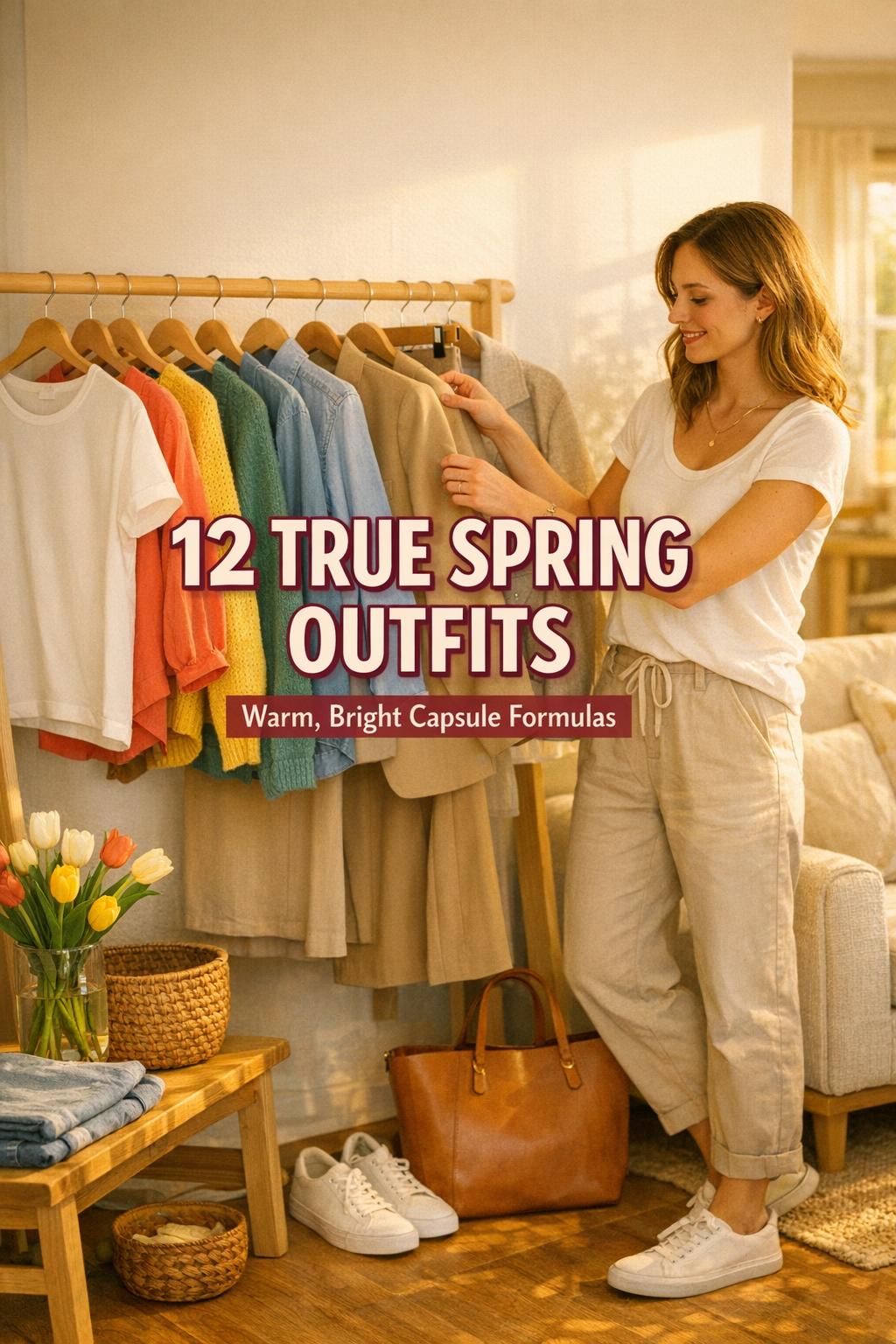
True Spring Capsule Wardrobe: The Core Pieces
A True Spring capsule wardrobe is a small set of repeatable essentials that mix easily because the colors and overall feel are consistent: warm, bright, and clear. Instead of buying random “spring fashion” pieces, you build a base that supports casual days, workwear, and dressier moments—then you add seasonal interest through color pops and accessories.
Think in two layers: (1) your foundation pieces (tops, bottoms, dresses, layering) and (2) the palette-driven elements that make your outfits unmistakably True Spring. The capsule below focuses on clothing categories commonly used in spring outfit content—light layers, wearable basics, and easy mix-and-match formulas—while keeping the True Spring palette at the center.
Tops (Blouses, Tees, Knitwear)
Tops do the most “color work” in a spring wardrobe because they sit closest to your face. For True Spring, look for warm whites and clear brights that feel sunny rather than sharp or muted. A small rotation of tees, blouses, and light knits gives you the variety of casual and polished options you need without clutter.
- Warm white tee or tank (your foundational neutral near the face)
- Coral blouse for instant brightness
- Sunny yellow top for a clean, cheerful pop
- Teal top that reads warm and clear
- Lightweight knit in a True Spring-friendly hue for chilly mornings
Tip: If you struggle with “too bright,” keep the top in a True Spring color but choose a simple cut. Clean lines plus clear color reads fresh, not loud.
Bottoms (Trousers, Skirts, Jeans)
Bottoms are where most people default to dark, heavy options that can feel out of sync with spring. For True Spring, the goal is to keep bottoms light enough for the season and compatible with warm, bright, clear tops. You don’t need many—just enough to rotate through work, weekend, and casual settings.
- Light denim (an easy spring staple that pairs with brighter tops)
- Warm neutral chinos or trousers
- A-line skirt option for quick outfit variety
- A skirt or bottom in a softer spring-leaning hue like peach, mint, seafoam, or a related clear light shade
Tips for everyday wear: If you want your outfits to look “wearable” rather than costume-like, anchor bright tops with light denim or warm neutral pants. This keeps the palette present while staying practical.
Dresses & Jumpsuits
Dresses are a shortcut to looking pulled together in spring. The True Spring approach is to pick a few options in warm, clear hues that can go day-to-night with a layering piece. You’ll get the most mileage from silhouettes that work with flats or low-key footwear and can be dressed up with accessories.
- A warm coral dress for easy polish
- A butter yellow dress for daytime brightness
- A sky-blue dress that still reads clear and spring-like
- A simple jumpsuit option in a palette-friendly shade for one-and-done outfits
Tip: When you want “white dress moments,” choose a warm white rather than a stark or cool white. It keeps your look aligned with the True Spring warmth.
Layering Pieces (Cardigans, Blazers, Transitional Layers)
Layering is the difference between a spring wardrobe that works for real weather and one that only works in perfect conditions. Many spring outfit guides focus on light layers in general; for True Spring, you’ll get better results if those layers also stay within warm, bright, clear territory. That way you can keep your outer layer on without losing the palette effect.
- Lightweight cardigan in a True Spring-friendly hue
- Blazer for workwear structure (choose a warm-leaning, clear option rather than a cool, muted tone)
- A simple transitional piece you can throw on over tees and dresses when mornings are chilly
Tips for transitional dressing: Use layering to manage temperature without defaulting to heavy, muted colors. If your outer layer is off-palette, it can dull the whole outfit, especially in early spring when you’re wearing it most of the day.
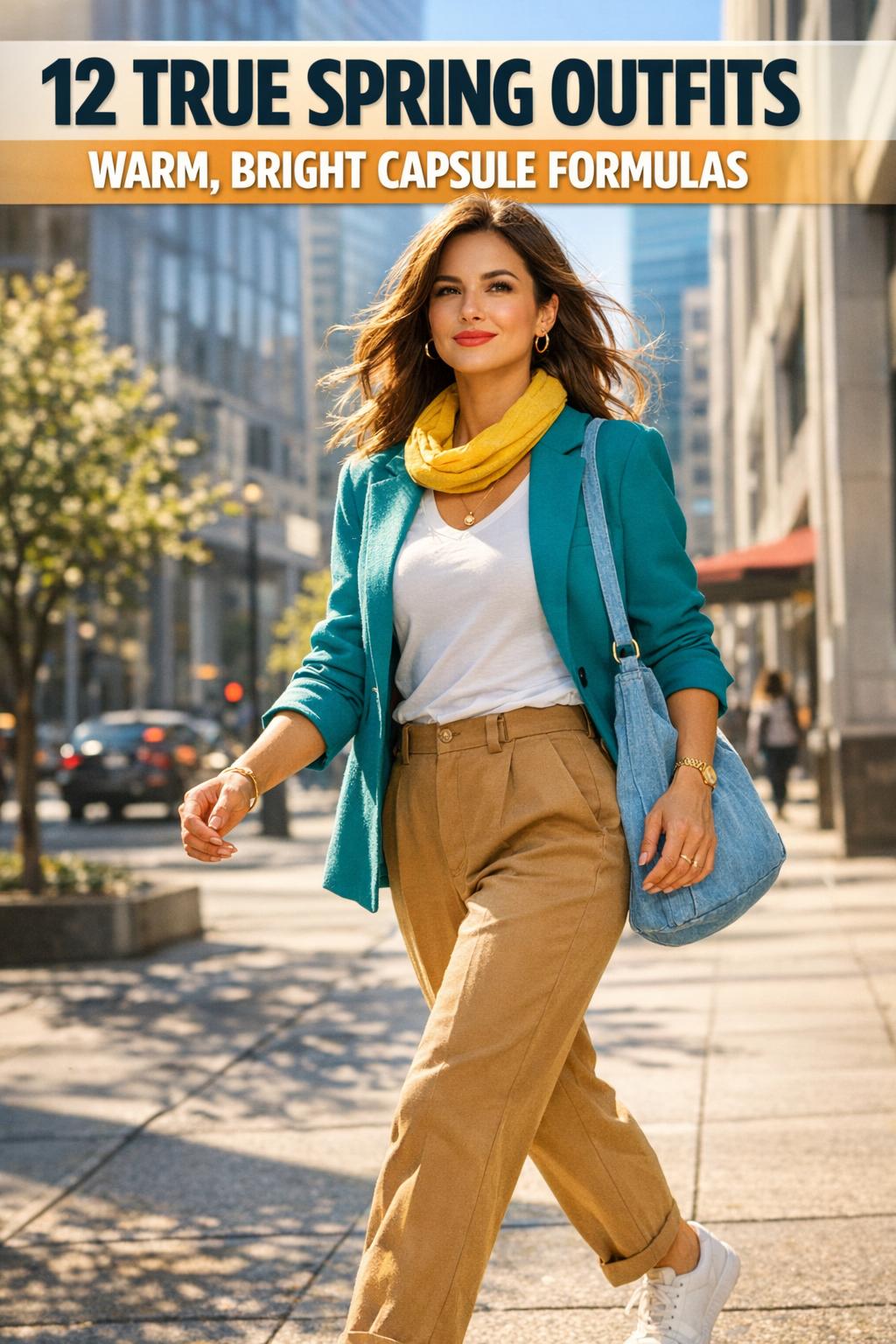
Outfit Formulas: 12 Ready-To-Wear True Spring Looks
Outfit formulas are the fastest way to make True Spring dressing feel effortless. Instead of staring at a closet full of pieces and hoping they work, you rely on repeatable combinations: a warm-white base, a bright top, a light bottom, and a clear layering piece. The outfits below are intentionally structured for real life—workwear, weekend casual, and dressier evenings—so you can rotate them without feeling like you’re repeating the same look.
Workwear Essentials (True Spring Outfits for Work)
True Spring workwear is about keeping polish while letting your palette show through. If your workplace leans conservative, use warm, clear color in one focal point (top or accessory) and build the rest from warm neutrals and clean, simple shapes.
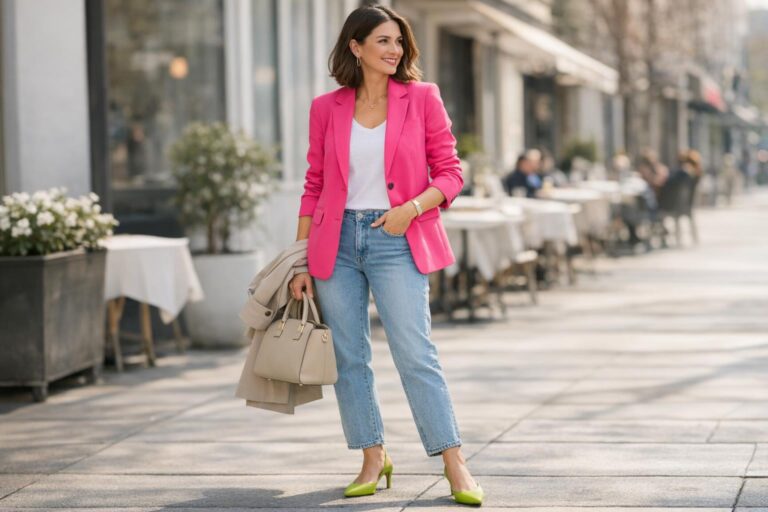
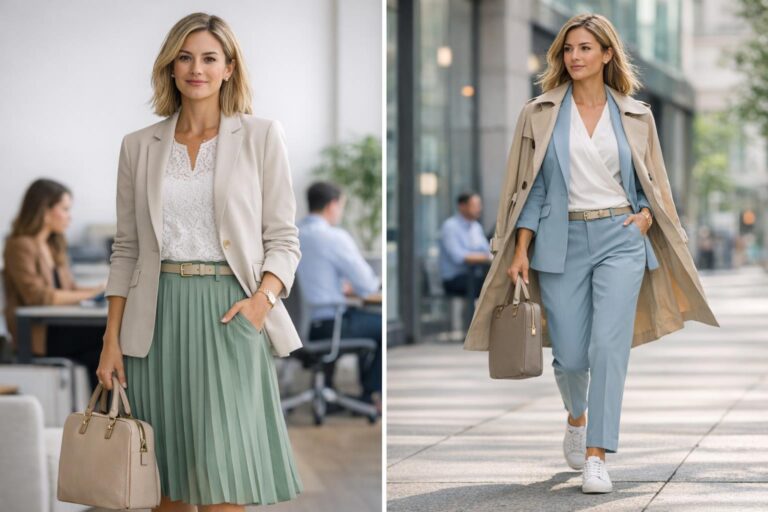
- Look 1: Warm white tee + blazer + warm neutral trousers (clean, simple, professional)
- Look 2: Coral blouse + light denim + structured layer (casual-office friendly when styled neatly)
- Look 3: Teal top + warm neutral trousers + light cardigan (balanced and crisp)
- Look 4: Sunny yellow top + A-line skirt + layering piece (bright, but controlled)
Tip: If you’re nervous about bright color at work, start with a True Spring top in a solid shade and keep everything else streamlined. Clarity plus simplicity reads “intentional,” not overwhelming.
Weekend & Casual (Wearable, Real-Life True Spring Outfits)
Weekend outfits need to handle errands, casual lunches, and spontaneous weather changes. This is where True Spring color pops look especially natural—spring casual style is often built around denim, tees, and light layers, which makes it easy to integrate warm, bright, clear shades.
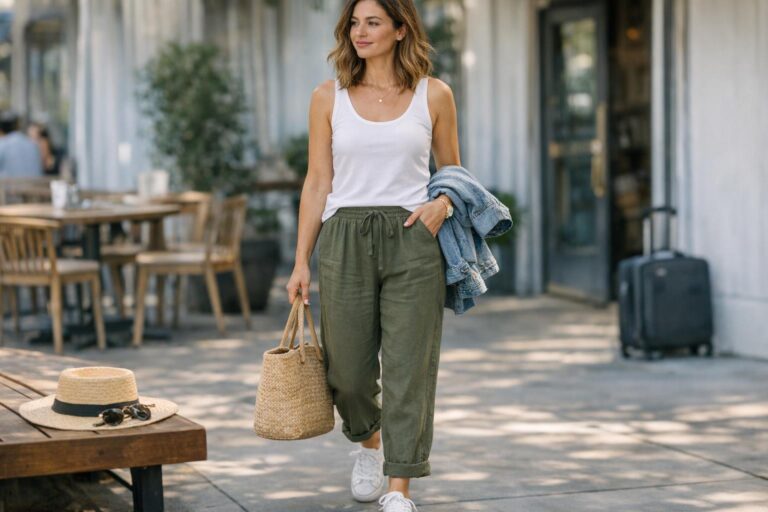
- Look 5: Warm white tee + light denim + cardigan in a True Spring hue
- Look 6: Coral tee + warm neutral bottoms + transitional layer
- Look 7: Teal top + light denim + simple accessories (a clean color-pop look)
- Look 8: Butter yellow knit + skirt option + light layer for changing temperatures
Tips for “realistic” outfits: If you want outfits that look good without feeling fussy, keep your base pieces consistent (light denim, warm neutrals, warm white) and rotate the True Spring color on top. This keeps decision-making easy and gives you mix-and-match flexibility.
Dressier Evenings (Clear Color With Subtle Glam)
Dressier True Spring outfits work best when you lean into color harmony and intentional contrast rather than turning everything up at once. A single clear, warm dress can carry the whole look, and a crisp layering piece keeps it seasonal. This section is about “subtle glam”—looking elevated while staying true to warm, bright, clear colors.
- Look 9: Warm coral dress + light layering piece
- Look 10: Butter yellow dress + structured layer for polish
- Look 11: Sky-blue dress + minimal accessories for a clean, fresh statement
- Look 12: Jumpsuit in a True Spring-friendly shade + blazer to sharpen the silhouette
Tip: When you want contrast, use it thoughtfully: pair a clear bright with a warm neutral or warm white. Too many competing brights can feel busy; one hero color often looks more refined.
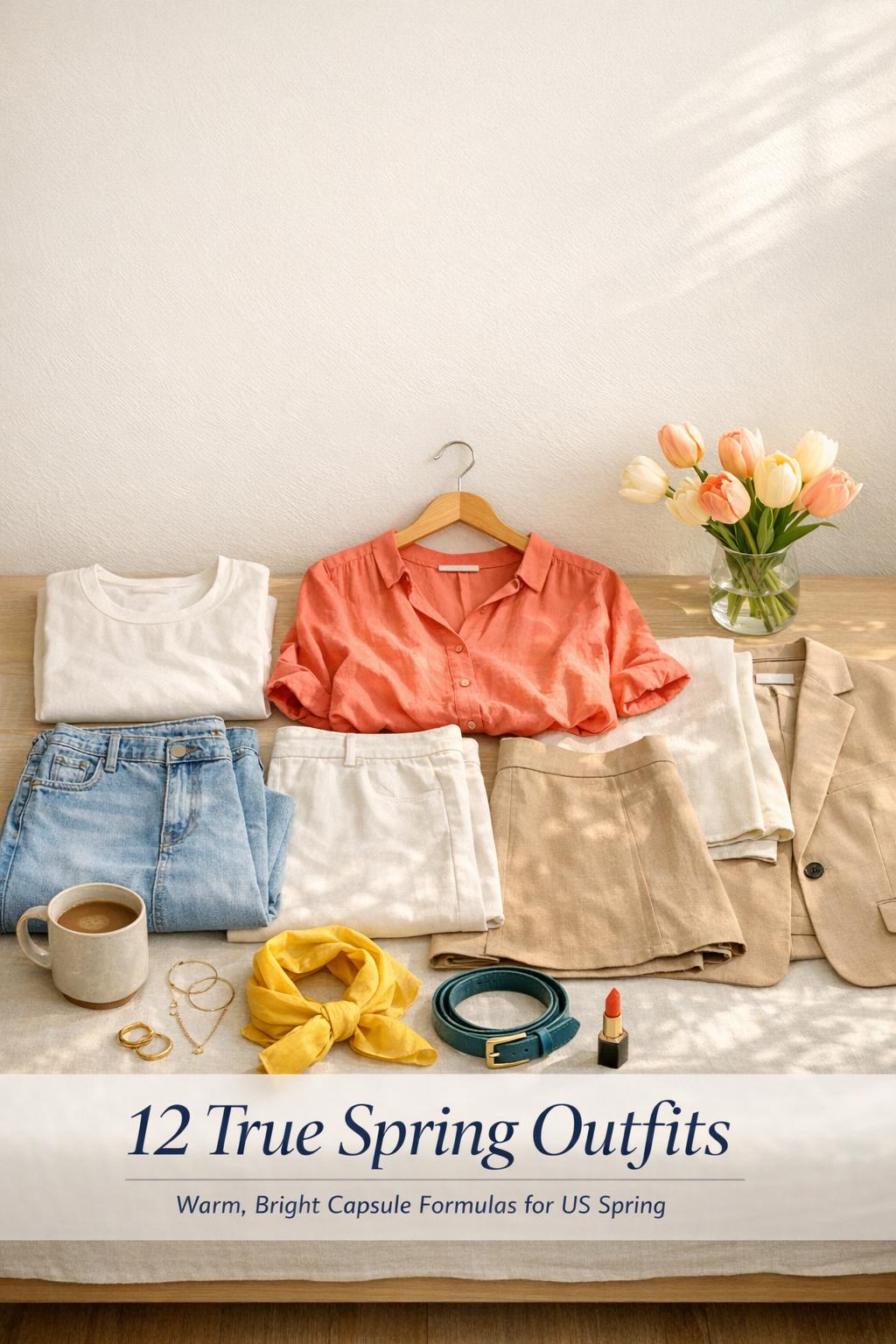
Easy Outfit Formulas for True Spring
Instead of presenting isolated outfits, it’s helpful to think in terms of simple outfit formulas that can be recreated with different pieces.
The Classic Spring Layer Formula
A reliable spring outfit starts with straight-leg jeans and a lightweight knit top. Adding a trench coat or relaxed blazer creates structure without adding too much warmth.
White sneakers or loafers complete the outfit while keeping it practical for everyday wear.
The Relaxed Tailoring Formula
Tailored trousers paired with a breathable cotton shirt create a polished but comfortable outfit.
Layering a light cardigan or blazer keeps the look balanced while still feeling appropriate for warmer weather.
Minimal sneakers or flats help maintain a relaxed but refined appearance.
The Effortless Midi Dress Formula
Midi dresses are one of the easiest ways to create a spring outfit.
Pair a breathable dress with a denim jacket or lightweight cardigan. Sneakers or flat sandals keep the outfit comfortable for walking.
This combination works especially well for weekends or casual gatherings.
The Soft Neutral Outfit Formula
Neutral color palettes are particularly effective during spring.
Combining beige trousers with a cream knit top and a light jacket creates a clean, polished look. Simple sneakers or loafers maintain the minimal aesthetic.
This type of outfit is easy to repeat with different colors or fabrics.
The Weekend Casual Formula
Relaxed jeans paired with a cotton shirt or lightweight sweater create an effortless outfit for casual days.
A cropped jacket or cardigan adds structure while remaining breathable.
Comfortable sneakers keep the outfit practical for errands or outdoor activities.
How to Shop True Spring: A Color-First Shopping Guide
Shopping for True Spring outfits gets dramatically easier when you prioritize palette alignment first and trend details second. Many shoppers end up with “almost right” colors that look fine on a hanger but don’t deliver that bright, clear, warm effect when worn. A color-first approach helps you filter faster and buy less, because your closet becomes more mixable.
Where to Look: Palette-Aligned Retailers and Curated Shops
In the US market, you’ll commonly see True Spring shopping guidance and curated collections from retailers and boutiques that organize products by season or offer color-tagged edits. These “shop by season: True Spring” approaches can be helpful when you want fewer guesses and faster browsing, especially if you’re building a capsule.
Tip: Use curated True Spring collections when you’re short on time, then cross-check the color against your own quick warmth/clarity/brightness tests. Even within seasonal edits, you’ll still find a range of tones, and your best matches will be the ones that look most warm and clear.
How to Integrate Color Analysis Into Shopping (A Simple Checklist)
The easiest way to shop with color analysis is to build a repeatable decision process. When you know you’re aiming for warm, bright, and clear, you can evaluate items quickly and avoid “maybe” purchases that don’t earn their place in your closet.
- Start with your capsule gaps: Identify what you need (top, bottom, dress, layer) before browsing.
- Check warmth first: If the color reads cool, it’s likely not your best True Spring option.
- Check clarity next: If it looks dusty or muted, keep looking.
- Choose simple shapes when testing brighter colors: Clean silhouettes make clear colors easier to wear.
- Prioritize mixability: Ask yourself if it pairs with warm white, light denim, and your warm neutral bottoms.
Tip: If you find a great cut in the wrong color, don’t force it. For True Spring, the right color is often what makes an outfit look expensive and cohesive, even if the pieces are budget-friendly.
Styling Tips to Make True Spring Outfits Look Effortless
True Spring style doesn’t require complicated layering or constant new purchases. The “effortless” look comes from repeating the same palette logic in every outfit: warm base, clear color, and consistent brightness. Once your closet is aligned, the styling becomes mostly about proportion and a few finishing choices.
Accessorizing for Contrast and Harmony
Accessories are where you can fine-tune the balance between harmony (everything feels like it belongs together) and contrast (the look has energy). If your outfit already has a hero color, keep accessories supportive. If the outfit is mostly warm neutrals and warm white, accessories can become your “color pop looks” moment.
Tip: If an outfit feels flat, add one clear, warm accent rather than layering on multiple competing elements. True Spring outfits often look best with one intentional point of brightness.
Footwear Options That Complement True Spring
Footwear can either keep an outfit light and spring-ready or unintentionally weigh it down. When you’re building spring outfits around warm, bright, clear colors, aim for shoes that don’t fight that freshness. A warm-leaning neutral shoe can quietly support your palette, while a color-pop shoe can echo the clarity of your top or dress.
Tip: If you only want one “goes with everything” choice, pick footwear that works with warm white, light denim, and warm neutral bottoms. That single decision makes your capsule much easier to wear.
Common Mistakes With True Spring Outfits (and How to Fix Them)
Even with a clear palette, it’s easy to end up with outfits that feel slightly off. The most common issues are usually not about the clothes themselves, but about slipping into colors that are too muted, too cool, or mismatched in intensity. Small adjustments—swapping a layer, changing a top color, or simplifying the outfit—often solve the problem immediately.
- Mistake: Wearing muted tones that make the outfit look dull. Fix: Replace one muted piece with a clearer version in the same color family.
- Mistake: Choosing cool-leaning “almost neutrals” that clash with True Spring warmth. Fix: Shift to warm white or warm neutrals as your base.
- Mistake: Overdoing brightness in every piece. Fix: Use one hero color and build the rest from warm neutrals and simple silhouettes.
- Mistake: Letting an off-palette outer layer dominate in transitional weather. Fix: Keep at least one layering piece within warm, clear tones for daily wear.
Tip: If you can’t tell what’s wrong, take a quick “swap test” approach: change only one element (usually the top or the outer layer) to a warmer, clearer option. If the outfit suddenly looks fresh, you found the issue.
Building a Practical, Day-to-Day True Spring Wardrobe (Work, Casual, Dressy)
A strong True Spring wardrobe works across your real calendar, not just photo moments. Many spring outfit ideas look great as one-offs, but the best wardrobe plan is one that supports repetition: you can wear the same core bottoms multiple times, rotate tops for variety, and rely on a few transitional layers. When the palette is consistent, the outfits stay cohesive even as you mix pieces differently.
To keep things simple, group your outfits into three lanes—workwear, weekend, and dressier—and make sure your capsule includes at least one reliable formula in each. That’s how you avoid the “I have clothes but nothing to wear” problem while staying true to warm, bright, clear colors.
Tip: If you’re rebuilding your closet, start with your most frequent scenario first (often workwear or weekend casual). Once that lane is covered, add pieces that bridge to the next lane, like a blazer that works over dresses and tops, or a dress that can be worn casually with a light layer.
Want More? Where to Find Palette-Aligned Inspiration and Shopping
If you want ongoing inspiration, look for sources that blend editorial spring styling (transitional pieces, white dress moments, and color-pop looks) with practical wearable outfit ideas and True Spring palette guidance. The most useful resources tend to do at least one of the following: show repeatable outfit formulas, offer shop-by-season browsing for True Spring, or provide palette-driven outfit ideas you can recreate with your own closet.
Tip: When you save outfit inspiration, label it by formula rather than by single items. “Bright top + light denim + warm layer” is more reusable than “buy this exact jacket.” This keeps your wardrobe flexible and aligned with True Spring dressing principles.
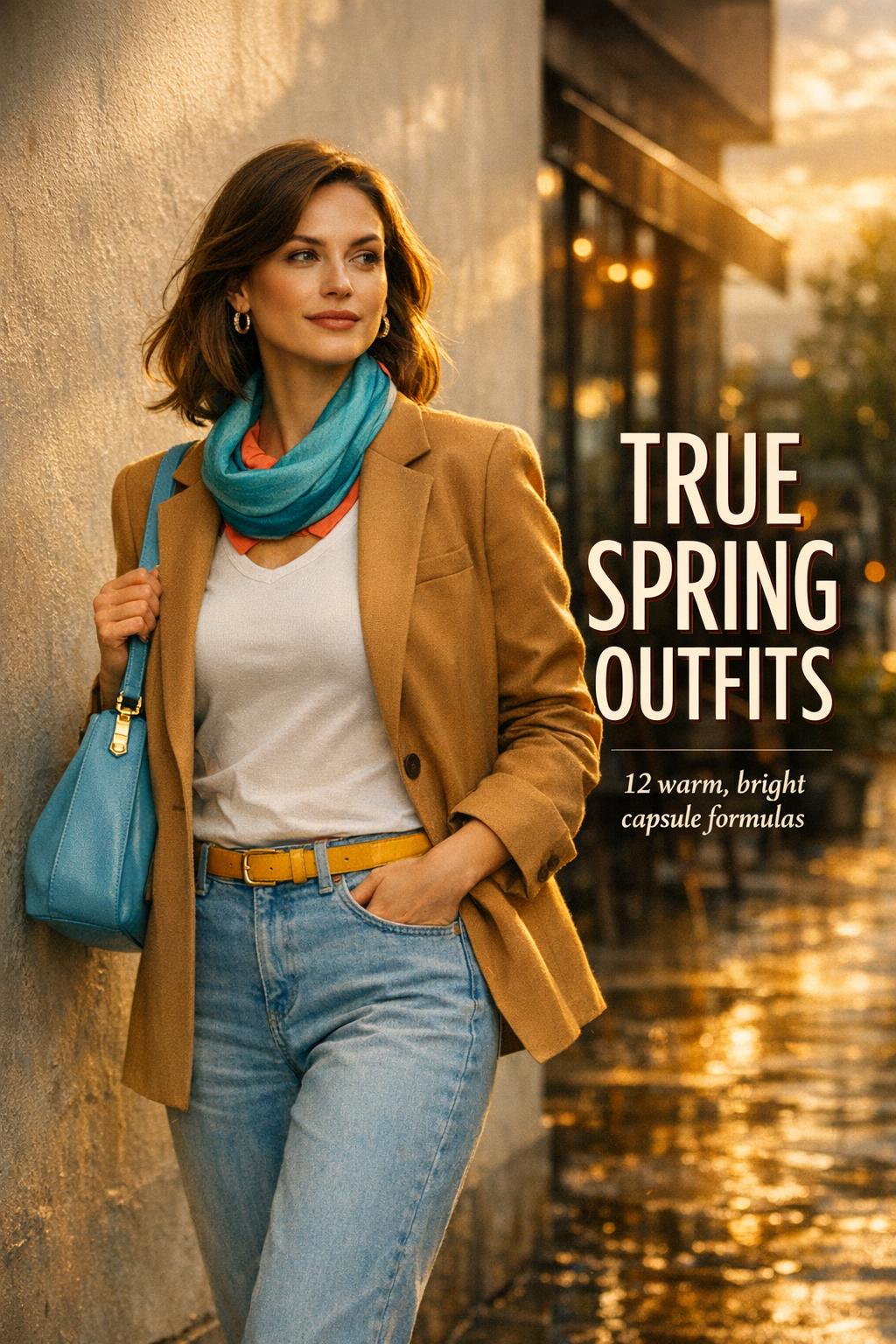
Small Adjustments That Improve Spring Outfits
Even simple outfits can look more polished with a few thoughtful details.
Helpful styling tips include:
- choosing breathable fabrics like cotton or linen
- balancing relaxed pieces with structured elements
- keeping accessories minimal
- using neutral colors to create flexible outfit combinations
These details help create outfits that remain stylish while still feeling effortless.
FAQ
What colors suit a True Spring palette?
True Spring colors are warm, bright, and clear, so the most flattering choices tend to look sunny and crisp rather than muted or cool; examples often used in True Spring styling include warm white, coral, sunny yellow, teal, and other clean spring-leaning hues.
How do I dress as a True Spring without wearing too much bright color?
Use one clear “hero” color at a time (often in a top or dress) and keep the rest of the outfit grounded with warm white, light denim, or warm neutral bottoms, plus simple silhouettes that let the palette look intentional instead of overwhelming.
What are easy true spring outfits for work?
Start with a polished base like warm neutral trousers or an A-line skirt, add a True Spring top such as coral, teal, or sunny yellow, and finish with a lightweight blazer or cardigan in a warm, clear tone to keep the outfit professional and cohesive.
How can I tell if a garment matches True Spring?
Do a quick check for warmth, clarity, and brightness by holding the item near your face and comparing it to a clearly warm and crisp piece you already own; if it looks cool, dusty, grayish, or muted by comparison, it’s less likely to be a strong True Spring match.
What should be in a True Spring capsule wardrobe?
A practical True Spring capsule includes a warm white top, a few clear bright tops like coral, sunny yellow, and teal, light denim and warm neutral bottoms, one or more dresses in warm clear hues, and lightweight layering pieces such as a cardigan or blazer that stay aligned with warm, bright, clear color principles.
How do I create True Spring outfits for transitional weather?
Rely on lightweight layers that you can add and remove, and try to keep at least one outer layer within the True Spring palette so your look stays warm, bright, and clear even when you need the layer on most of the day.
Are “spring outfits” and “true spring outfits” the same thing?
No—spring outfits are a broad seasonal category, while true spring outfits are specifically built around the True Spring color profile (warm, bright, clear), which guides which colors you choose and how you combine them into cohesive looks.
Where can I shop for True Spring-friendly clothing more easily?
Look for retailers and boutiques that offer shop-by-season browsing or color-tagged edits for True Spring, then use a simple warmth-and-clarity check to confirm the shades are warm, bright, and clear for your wardrobe.
What temperature counts as true spring weather?
True spring weather usually means daytime temperatures between 60–75°F (15–24°C) with relatively stable conditions.
Are trench coats still useful in warm spring weather?
Yes. Lightweight trench coats work well for cooler mornings or evenings.
What shoes work best for true spring outfits?
Minimalist sneakers, loafers, and flat sandals are among the most versatile options.
Creating Simple True Spring Outfits
True spring outfits work best when built around versatile capsule pieces and simple outfit formulas. By combining breathable fabrics, lightweight layers, and balanced colors, it becomes easy to create outfits that feel fresh, comfortable, and practical for everyday life.
With a small collection of flexible wardrobe staples, building stylish spring outfits becomes both simple and sustainable.
Finish the look
The little extras that make a summer outfit feel complete
From beach days to city weekends, these easy pieces bring comfort, texture, and a polished finishing touch.

FENBEN
Straw Hobo Crossbody Bag
A handwoven straw bag with both short and crossbody straps—an effortless finishing touch for vacation looks and warm-weather outfits.
Shop the bag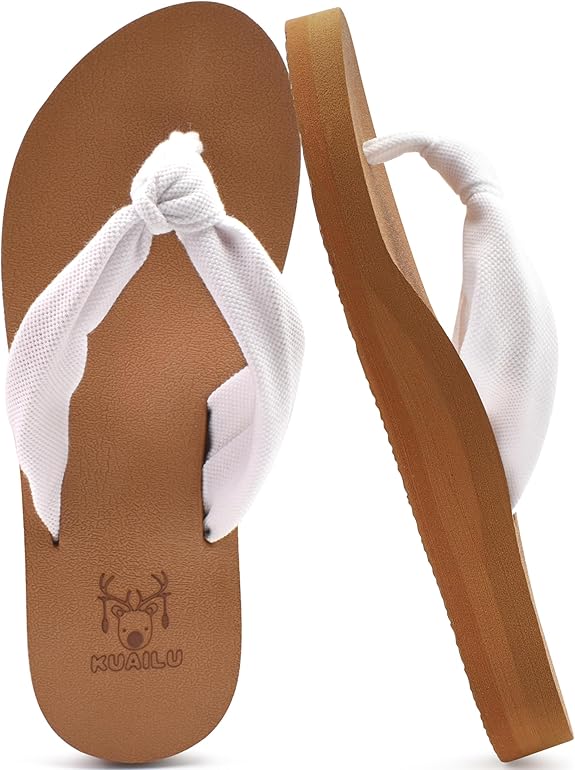
KuaiLu
Flip Flops with Arch Support
Cushioned, lightweight sandals with supportive arch design—a practical choice for beach trips, errands, and long summer walks.
Shop the sandals
baleaf
Athletic One-Piece Swimsuit
A functional one-piece with adjustable straps and moderate coverage, designed for swimming, training, surfing, and active beach days.
Shop the swimsuit
Astylish
Linen-Cotton Button-Down Shirt
A relaxed cotton-linen shirt with a collared V-neck and roll-up sleeves—easy to style over swimwear or with denim and shorts.
Shop the shirt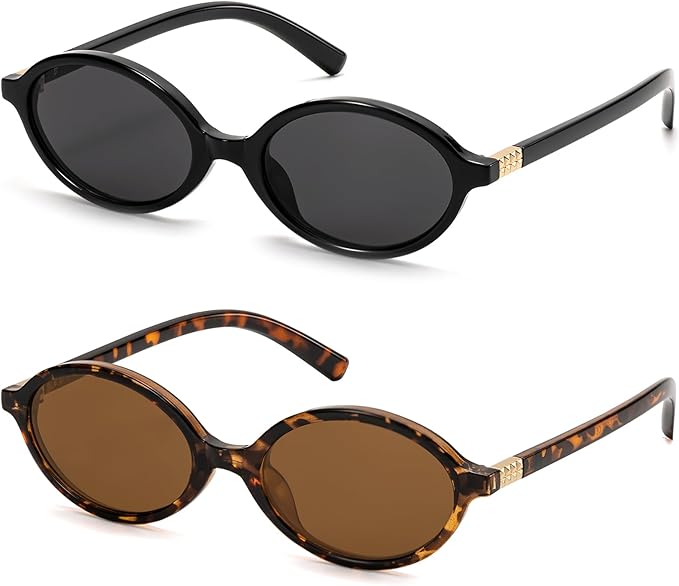
ViewJoy
Retro Oval Sunglasses
Small oval sunglasses with a 90s-inspired silhouette and UV400 lens protection—a quick way to add a vintage edge to everyday looks.
Shop the sunglasses
Affiliate disclosure: This section contains affiliate links. If you make a purchase through these links, I may earn a commission at no additional cost to you. Product selection, pricing, availability, and delivery terms may change—please review the current details on Amazon before purchasing.
As an Amazon Associate I earn from qualifying purchases.