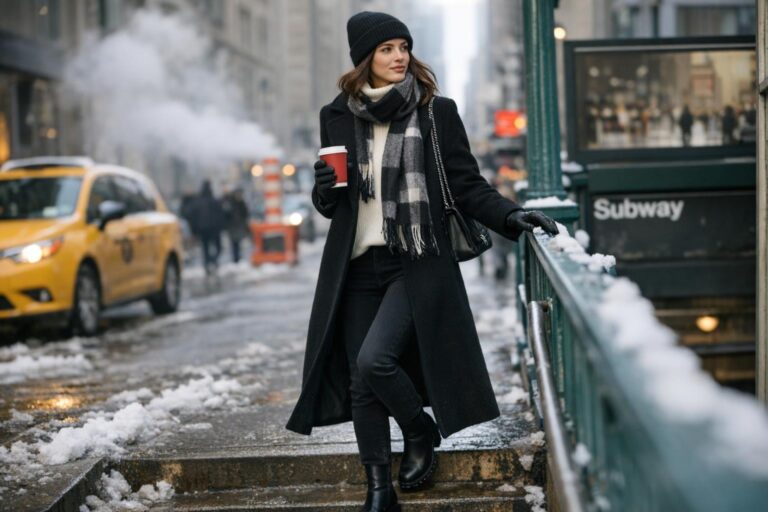
Cool Winter Outfits: Smart Layering Ideas for Effortless Style
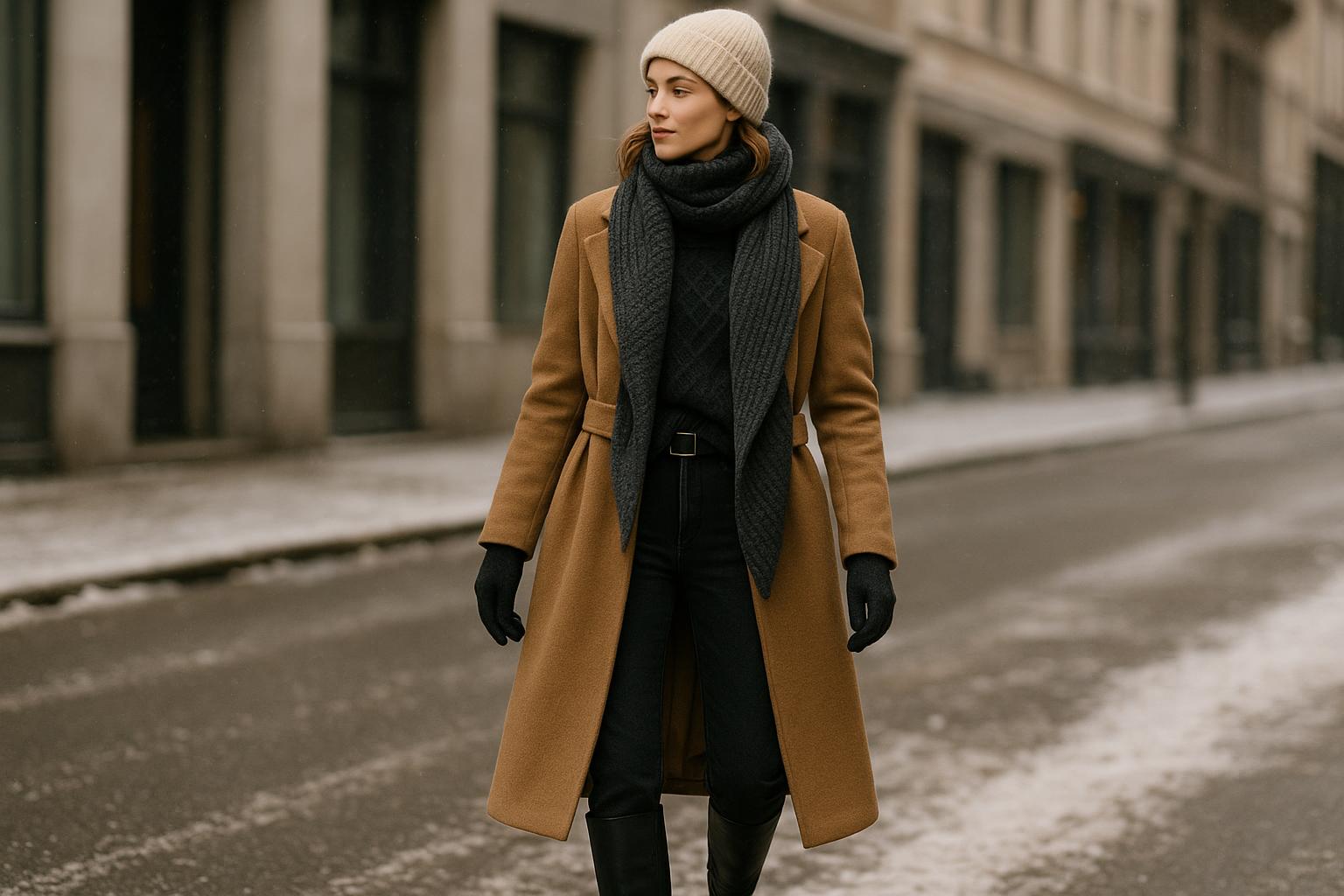
Cool Winter Outfits: How to Look Stylish and Stay Warm All Season
Cool winter outfits are about more than just throwing on a heavy coat and hoping for the best. When temperatures drop, your style does not have to go into hibernation. With the right pieces, smart layering, and a few styling tricks, you can build outfits that keep you warm, comfortable, and confidently put together from the first frost through the last snowstorm.
Looking for a complete guide? Read our Winter Outfit Ideas Guide.
This guide walks through practical ways to create outfits for different winter occasions and conditions, helping you balance function and style. You will find ideas for everyday looks, workwear, going-out ensembles, and casual off-duty combinations that feel current and wearable in real life.
The Fashion-Note Edit
Five effortless pieces to refresh your everyday wardrobe
A polished, practical edit for workdays, weekends, and everything in between.

The Drop
Women’s Blake Long Blazer
A longline, tailored blazer with a notched collar and a single-button closure—an easy layer for denim, dresses, or office-ready looks.
Shop the blazer
Amazon Essentials
Women’s Lightweight Crewneck
A soft, lightweight sweater with a clean crew neckline—the kind of reliable layer that works from cool mornings to air-conditioned spaces.
Shop the sweater
Amazon Essentials
Women’s Loafer Flat
A classic flat loafer that gives casual outfits a more polished finish and pairs naturally with tailored pants, skirts, and straight-leg jeans.
Shop the loafers
Levi’s
Women’s 501 90s Jeans
A relaxed, vintage-inspired take on the iconic 501 silhouette—made for an easy, lived-in look without the thrift-store search.
Shop the jeans
Colorfulkoala
High-Waisted 7/8 Leggings with Pockets
Soft, four-way-stretch leggings with side pockets and a high-rise waistband—designed for movement, errands, and off-duty comfort.
Shop the leggings
Affiliate disclosure: This section contains affiliate links. If you make a purchase through these links, I may earn a commission at no additional cost to you. Product selection, pricing, availability, and delivery terms may change—please review the current details on Amazon before purchasing.
As an Amazon Associate I earn from qualifying purchases.
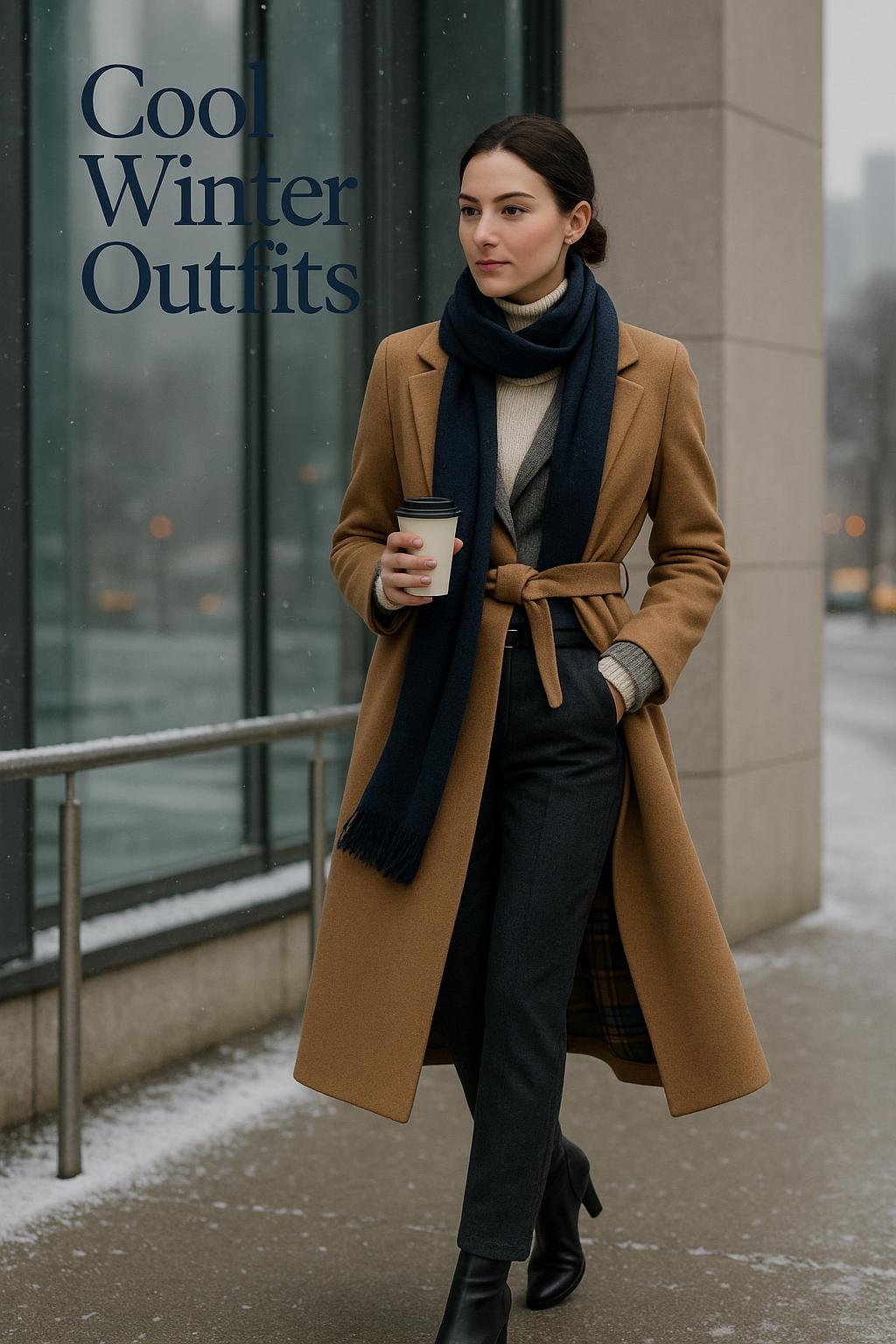
Winter Outfit Foundations: Fabrics, Fit, and Layering
Choose Warm, Comfortable Fabrics
The base of every cool winter outfit is the fabric. Prioritizing warmth and comfort does not mean sacrificing style; it simply means knowing which materials work hardest for you when the temperature dips.
Your wedding style is personal.
Your plan should feel that way, too.
Zarellea keeps your guest list, budget, vendors, and every next step beautifully organized — so you can focus on the moments that feel like you.
Natural fibers such as wool, cashmere, alpaca, and cotton blends are widely favored for winter because they help insulate while staying breathable. Wool and wool blends in particular are common in sweaters, coats, and trousers, offering structure and warmth that hold up well in daily wear. For pieces that sit close to the skin, soft cotton, modal, or performance fabrics designed to wick moisture can keep you comfortable all day.
Synthetic fabrics can be effective in outerwear and technical layers, especially when you need wind-resistant or water-resistant protection. Look for lined pieces, quilting, or insulated fills in jackets and parkas. Paying attention to linings, weight, and texture will help you choose garments that feel good as well as look good.
Layering Basics for Warmth and Style
Layering is the key skill behind almost every stylish winter look. Done well, it keeps you warm, adds dimension to your outfit, and lets you adapt to different indoor and outdoor temperatures throughout the day.
- Start with a base layer that sits close to your body and feels soft against your skin, such as a fitted long-sleeve tee, turtleneck, or lightweight knit.
- Add a middle layer for insulation and texture, like a chunky sweater, cardigan, vest, or flannel shirt.
- Finish with an outer layer that protects against wind and cold, such as a wool coat, puffer jacket, trench with lining, or parka.
Visually, layering works best when each piece contributes something different: a change in color, length, texture, or structure. For example, pairing a slim turtleneck with an oversized cardigan and a tailored coat creates contrast and balance instead of bulk.
Fit and Proportions in Winter Looks
Cold-weather clothing tends to be heavier and bulkier, so paying attention to fit and proportions is essential. If everything is oversized, you can disappear under your layers. Mixing fitted and relaxed silhouettes usually produces the most flattering result.
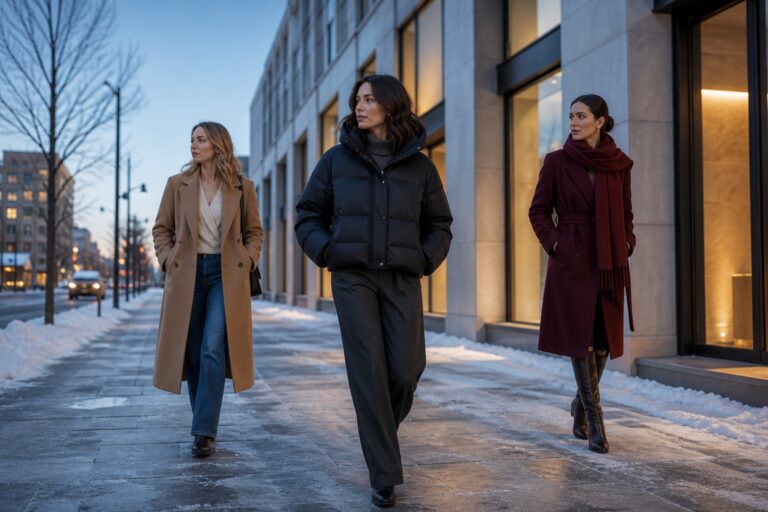
- If your coat or puffer is voluminous, try slimmer pants or jeans to balance the shape.
- If you love wide-leg trousers or relaxed jeans, a more fitted top, turtleneck, or cropped jacket helps create structure.
- Knee-high boots or sleek ankle boots can visually lengthen your legs when paired with long coats or midi skirts.
Sticking to proportions that feel balanced on your frame will keep your winter outfits looking intentional instead of overwhelming.
Casual Cool Winter Outfits for Everyday Wear
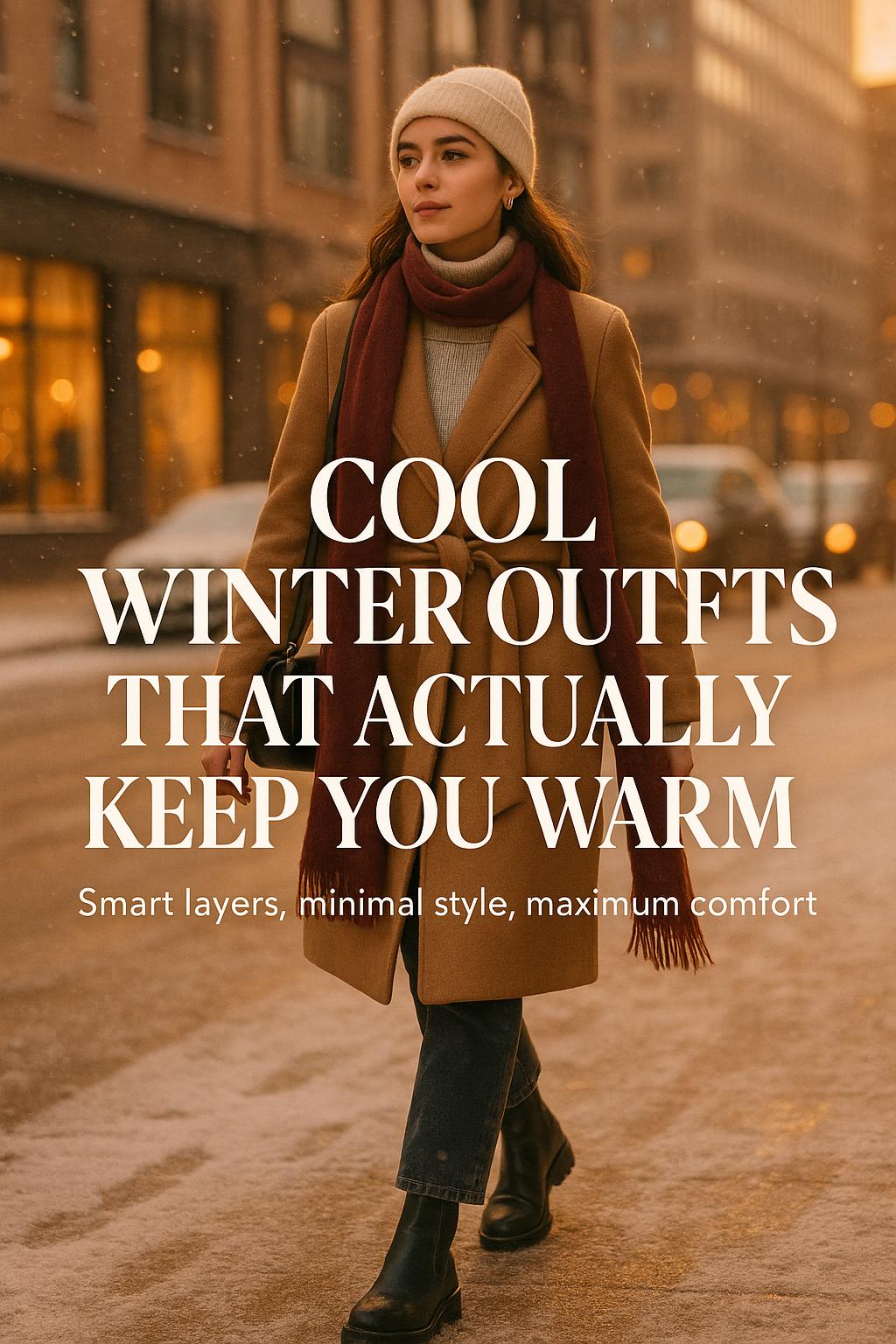
Jeans and Sweater Combinations That Always Work
The classic jeans-and-sweater outfit is a reliable base for many cool winter outfits. With smart updates, it can look polished, modern, and ready for almost anything on your daily schedule.
Straight-leg, slim, or relaxed jeans in medium to dark washes are versatile choices that pair well with most tops and outerwear. Chunky cable knits, ribbed turtlenecks, and soft crewnecks all work as main pieces, especially when you choose colors that flatter your skin tone and mix neutrals with richer shades.
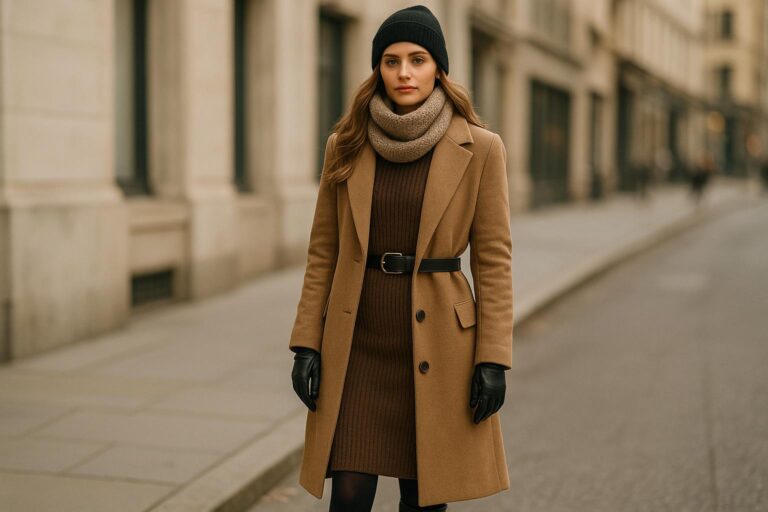
- For a clean, everyday look, combine a neutral turtleneck, dark straight-leg jeans, and a camel or black wool coat.
- For a relaxed weekend vibe, choose a slouchy sweater, light-wash jeans, and a cozy puffer jacket.
- For a slightly dressier spin, swap in a fitted knit with subtle details and heeled ankle boots.
Small changes in footwear, outerwear, and accessories let you repeat the same core pieces without your outfits feeling repetitive.
Stylish Loungewear and Athleisure in Winter
Cool winter outfits do not have to be dressy. Modern loungewear and athleisure sets can look intentional and pulled together, especially when you treat them like real outfits rather than just something you throw on.
Matching sweatsuits, knit sets, and joggers with coordinated hoodies or zip-ups can look sleek when the fit is right and the fabrics feel substantial. Neutral tones like black, gray, oatmeal, and deep green can make casual pieces look more refined. Layering a long coat or structured jacket over loungewear also elevates the overall effect.
- Try a monochrome sweat set under a long wool coat with chunky sneakers or lug-sole boots.
- Wear leggings or joggers with an oversized sweatshirt, quilted vest, and winter boots for errands or travel days.
- Combine a fitted performance top with a puffer jacket and wide-leg sweats for a sportier look.
Work-Ready Winter Outfits That Look Professional
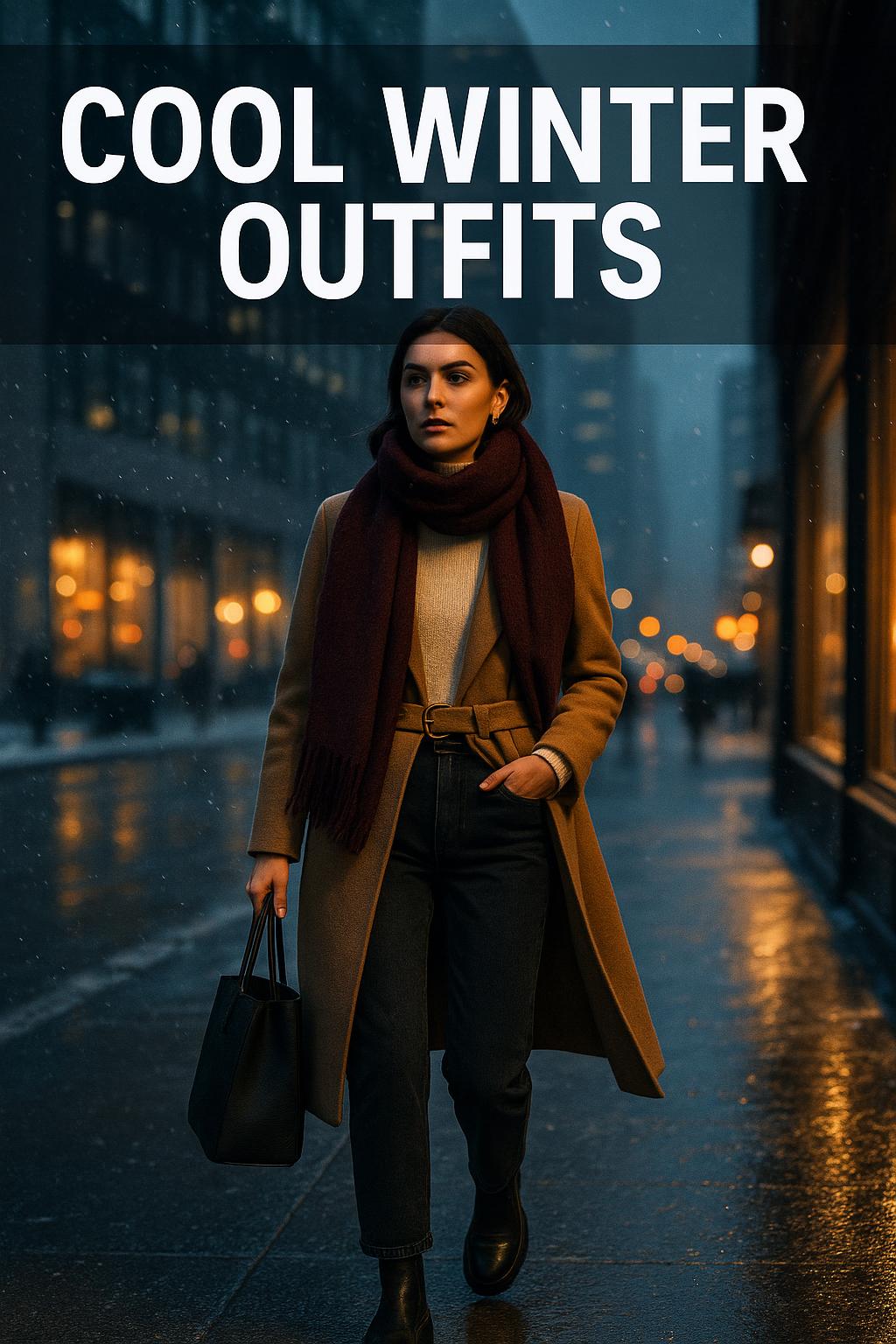
Layered Office Looks for Cold Commutes
Dressing for work in winter means balancing outdoor warmth with indoor comfort. You want to arrive at the office warm and dry, then be able to remove layers without wrinkling or overheating.
A straightforward formula is to pair a tailored base with warm but polished layers. For example, trousers or a midi skirt with a thin knit and blazer can be topped with a heavier coat or trench for the commute. Choosing non-bulky sweaters under blazers prevents your outfit from feeling tight or restrictive.
- Wear a fine-knit turtleneck under a blazer with straight trousers, then top with a structured wool coat for outdoor warmth.
- Try a sweater dress with opaque tights, knee-high boots, and a belt, adding a tailored coat for a professional finish.
- Combine a button-down shirt with a light sweater vest, wide-leg pants, and a long coat for a current, office-friendly look.
Neutral colors such as black, navy, gray, and camel anchor your work wardrobe and make it easier to mix and match pieces. You can introduce interest with textures like ribbed knits, subtle patterns, and soft scarves without compromising a professional impression.
Comfortable Yet Polished Video-Call Outfits
If you work from home or split your time between home and office, you might need cool winter outfits that look sharp on screen while remaining cozy off camera. Focus attention on what shows in the frame while ensuring you stay warm during long days at your desk.
- Choose fitted or mid-weight knits with clean necklines that frame your face, such as mock-necks, turtlenecks, or collared sweaters.
- Use cardigans, vests, or light jackets to add structure without feeling overdressed at home.
- Pair comfortable bottoms like leggings, knit pants, or relaxed trousers with tops that look refined on video calls.
Soft but structured layers, subtle accessories, and neat hair or headwear can pull everything together visually while you stay comfortable from morning to evening.
Going-Out and Dressy Cool Winter Outfits
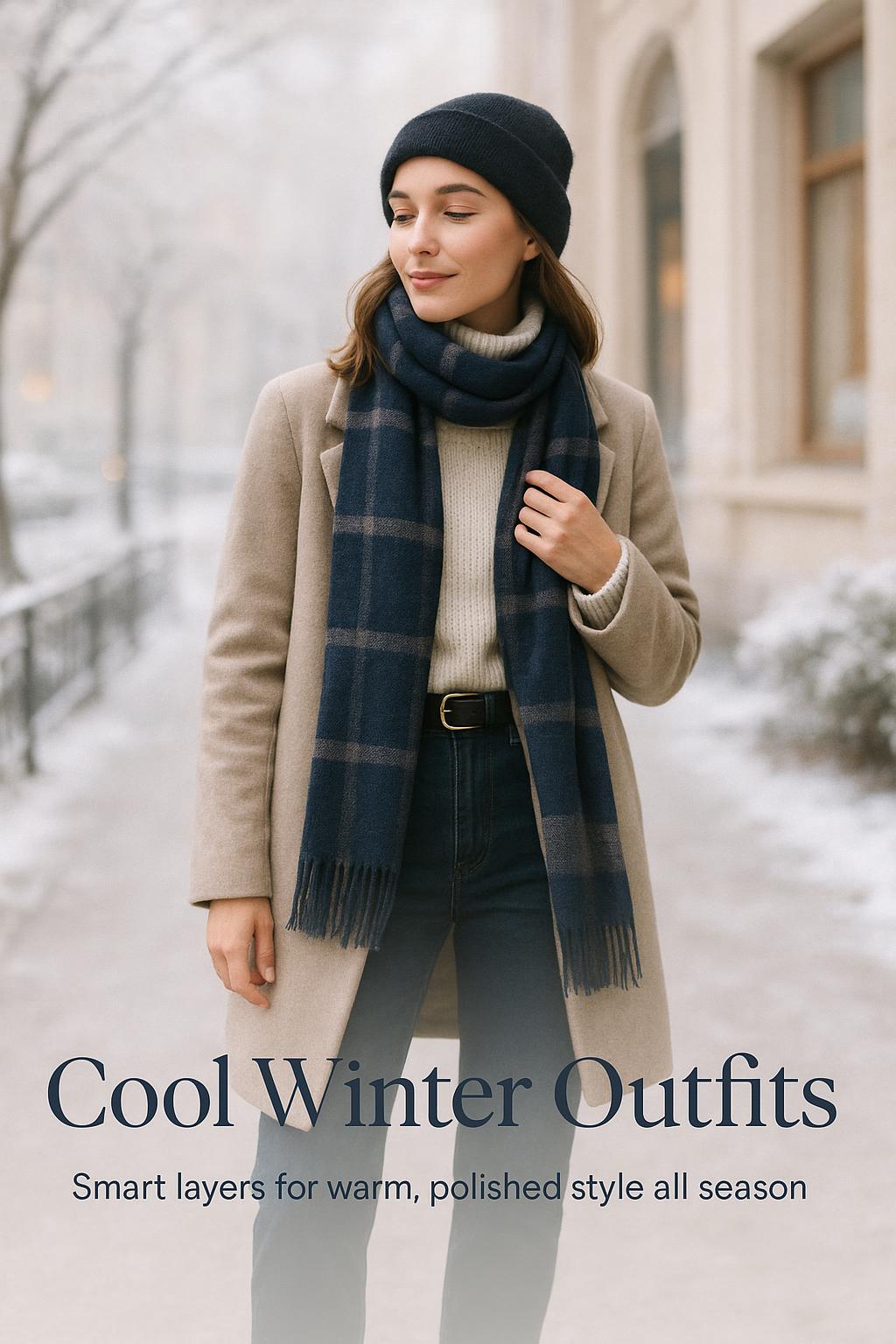
Evening Looks That Beat the Cold
Even when the temperature drops, you can put together cool winter outfits for dinners, parties, and nights out without freezing on the way to the venue. The key is strategic layering and choosing dressy pieces made from season-appropriate fabrics.
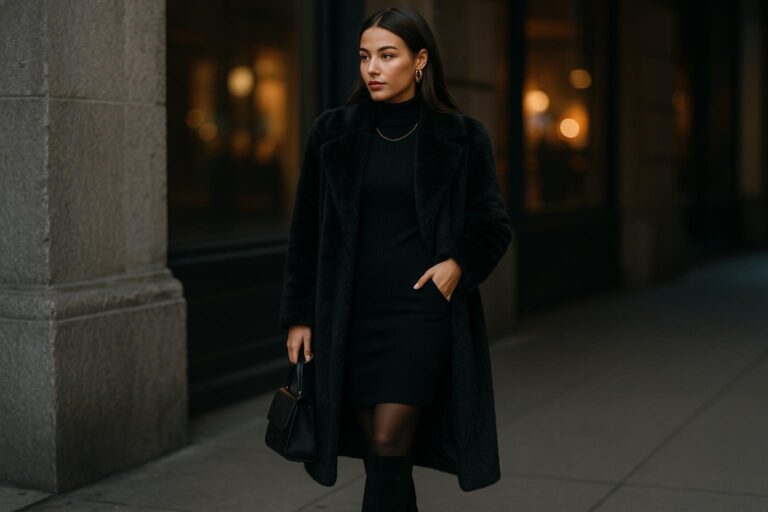
Sweater dresses, knit skirts, and tailored trousers are strong foundations for cold-weather evening looks. Pair them with heeled boots or polished loafers, and layer on warm outerwear that complements, not competes with, your outfit. Faux fur, textured wools, and rich colors can lend a festive feel.
- For a night out, combine a fitted knit dress with opaque tights, heeled ankle boots, and a statement coat.
- For a dressy dinner, wear tailored pants with a silk or satin top, then layer a long wool coat or wrap coat over the ensemble.
- For more casual evenings, try a leather or faux leather jacket layered over a chunky sweater and dark jeans with sleek boots.
You can also play with color to make cold-weather evening outfits feel special. Jewel tones, deep reds, forest green, charcoal, and winter whites all stand out nicely in low light and pair well with classic black.
Smart Layering for Events and Holiday Gatherings
Holiday parties and seasonal events often involve moving between outdoor chill and warm interiors, so flexible layering matters. You might want a top layer that looks good both on and off, in case you keep your coat or jacket on during parts of the event.
Consider coats with interesting textures or colors, wrap coats that define your waist even over bulkier outfits, and capes or ponchos that add drama while keeping you covered. A refined sweater with subtle sparkle or embellishment can feel festive while remaining practical for the season.
Outerwear Ideas for Cool Winter Outfits
Coats That Make the Outfit
In many parts of the country, your coat is the most visible part of your winter outfit. Investing in a few well-chosen outerwear options can completely change how your everyday clothing looks and feels.
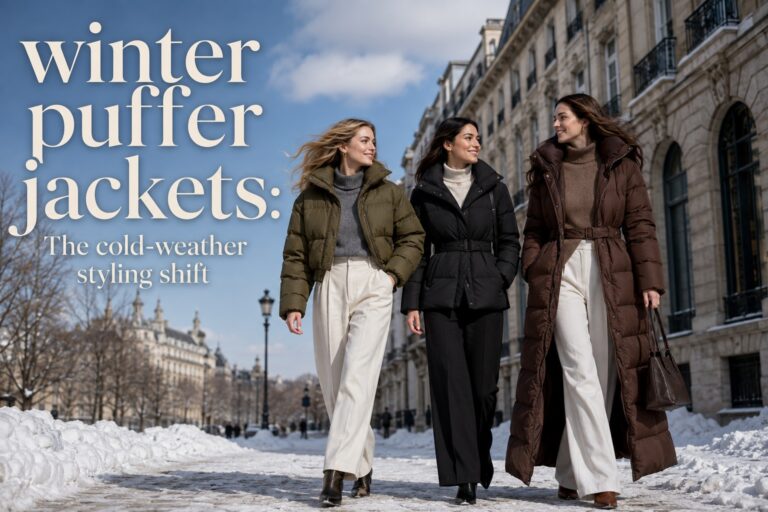
Long wool coats, tailored single- or double-breasted styles, parkas, and trench coats with warm linings are all widely used in winter wardrobes. Puffer jackets remain popular for good reason: they are warm, often lightweight, and come in lengths that suit different needs, from hip-length styles to longline, calf-grazing versions.
- A classic camel or black wool coat instantly elevates jeans, sweaters, and casual shoes.
- A knee-length puffer in a neutral or muted color pairs well with athleisure and everyday outfits.
- A belted coat or wrap coat adds shape at the waist, flattering many body types when worn over bulky layers.
Choosing outerwear in timeless colors makes it easier to wear with almost any outfit, while a bolder shade can become the focal point of a simpler look.
Jackets and Layering Pieces for Milder Winter Days
Not every winter day requires heavy outerwear, especially in milder climates or for quick trips between car and building. Lighter layers like quilted jackets, shackets, denim jackets lined with sherpa, and leather or faux leather pieces can be enough on their own or serve as mid-layers under a heavier coat when it is truly cold.
These pieces add texture and personality to cool winter outfits and often work well in transitional weather, too. Styling a leather jacket over a hoodie or thick sweater with jeans and boots, for example, creates an effortless look that still feels warm and seasonal.
Footwear for Style and Traction in Winter
Boots That Anchor Your Winter Wardrobe
Footwear can make or break winter dressing. You want shoes that keep your feet warm and dry, provide enough traction for wet or icy days, and complement the rest of your outfit. Boots are usually the go-to choice for cool winter outfits because they check all of these boxes when chosen thoughtfully.
- Ankle boots with low or block heels pair easily with jeans, trousers, and dresses, striking a balance between practicality and polish.
- Knee-high boots or tall boots work well over leggings, with skirts and dresses, or under wide-leg pants, adding both warmth and a lengthening effect.
- Chunky or lug-sole boots provide grip and a modern edge, especially when styled with more refined coats and tailored pieces.
Black and brown boots remain versatile choices, while white, taupe, or colored boots can bring a fashion-forward twist to otherwise simple looks. Matching your boot color roughly to your pants or tights can create a seamless line that makes your legs appear longer.
Sneakers and Other Shoes in Cold Weather
Sneakers can still be part of cool winter outfits, particularly on dry days or in milder climates. Leather or thicker-material sneakers hold up better than lightweight summer styles. Pair them with warm socks and substantial outerwear to keep the outfit seasonally appropriate.
For more formal needs, loafers and oxfords can work if you pair them with warm, high-quality socks and avoid prolonged time outside. When dress code and weather expectations collide, you can commute in weather-friendly boots and change into lighter shoes once you are indoors.
Accessories That Elevate Cool Winter Outfits
Scarves, Hats, and Gloves That Add Personality
Accessories are essential in winter both for warmth and for finishing your look. Scarves, hats, and gloves offer an easy way to introduce color, pattern, and texture into even the simplest outfit while protecting you from the cold.
- Chunky knit scarves or oversized wraps add coziness and can transform a basic coat into a statement.
- Beanies, berets, and structured wool hats each create a different vibe, from casual to classic.
- Leather gloves, knit mittens, or tech-friendly gloves keep hands warm and functional for everyday use.
Coordinating accessories with your coat or boots can create a cohesive look, while contrasting pieces draw the eye and add interest. For instance, a bold-colored scarf against a dark coat can become the focal point of the outfit.
Bags and Belts for Winter Styling
Bags and belts may not directly affect warmth, but they contribute significantly to how polished your winter outfit appears. In colder months, structured bags often look more intentional than slouchy styles, and crossbody bags can be worn comfortably under or over coats depending on their size.
Belts are especially useful for defining your shape under long layers. Adding a belt over a coat, cardigan, or sweater dress can create a flattering silhouette and turn a practical piece into a style statement. Thin belts work for subtle definition, while wider belts offer bolder contrast.
Color Palettes and Prints for Winter
Classic Winter Neutrals
Neutrals form the backbone of many cool winter outfits because they are easy to combine and rarely go out of style. Black, gray, navy, camel, cream, and winter white all layer beautifully and lend themselves to both casual and dressy occasions.
A primarily neutral wardrobe also helps highlight textures, such as ribbed knits, bouclé fabrics, leather, and wool. Wearing different shades of the same neutral color in one outfit can look especially sophisticated and cohesive, like multiple tones of beige or gray layered together.
Incorporating Color and Pattern
Winter does not have to mean dressing only in dark colors. Introducing rich hues and lively patterns keeps your outfits from feeling dull when the weather is bleak. Deep greens, burgundy, cobalt, rust, and mustard can bring warmth and energy to cold-weather looks.
Patterns like checks, plaids, houndstooth, and fair isle knits are closely associated with colder months and can add instant visual interest. Using patterned pieces sparingly—such as one patterned scarf, skirt, or coat per outfit—keeps the look balanced and wearable.
Building a Versatile Winter Wardrobe
Key Pieces to Mix and Match
Creating cool winter outfits becomes easier when you have a core collection of pieces that work well together. Focusing on versatility helps you build numerous outfits without needing an overstuffed closet.
- A long wool or wool-blend coat in a neutral color
- A practical puffer jacket for the coldest days
- Slim or straight-leg jeans and at least one pair of dark trousers
- A mix of lightweight and chunky sweaters, including at least one turtleneck
- A knit dress or sweater dress for dressier or office days
- Two or more pairs of boots that suit your lifestyle and climate
- Warm accessories like scarves, hats, and gloves you enjoy wearing
Once these staples are in place, you can add more distinctive pieces each season—like a statement coat, patterned knit, or bold-colored boots—to keep your winter style feeling fresh.
Tips for Shopping and Styling Winter Pieces
When you add new items, consider how they will work with what you already own. Prioritize fit, comfort, and how often you can realistically wear a piece. High-wear items like coats, boots, and everyday sweaters are often worth extra attention to quality and construction so they last through repeated seasons.
Tips for Creating Cool Winter Outfits
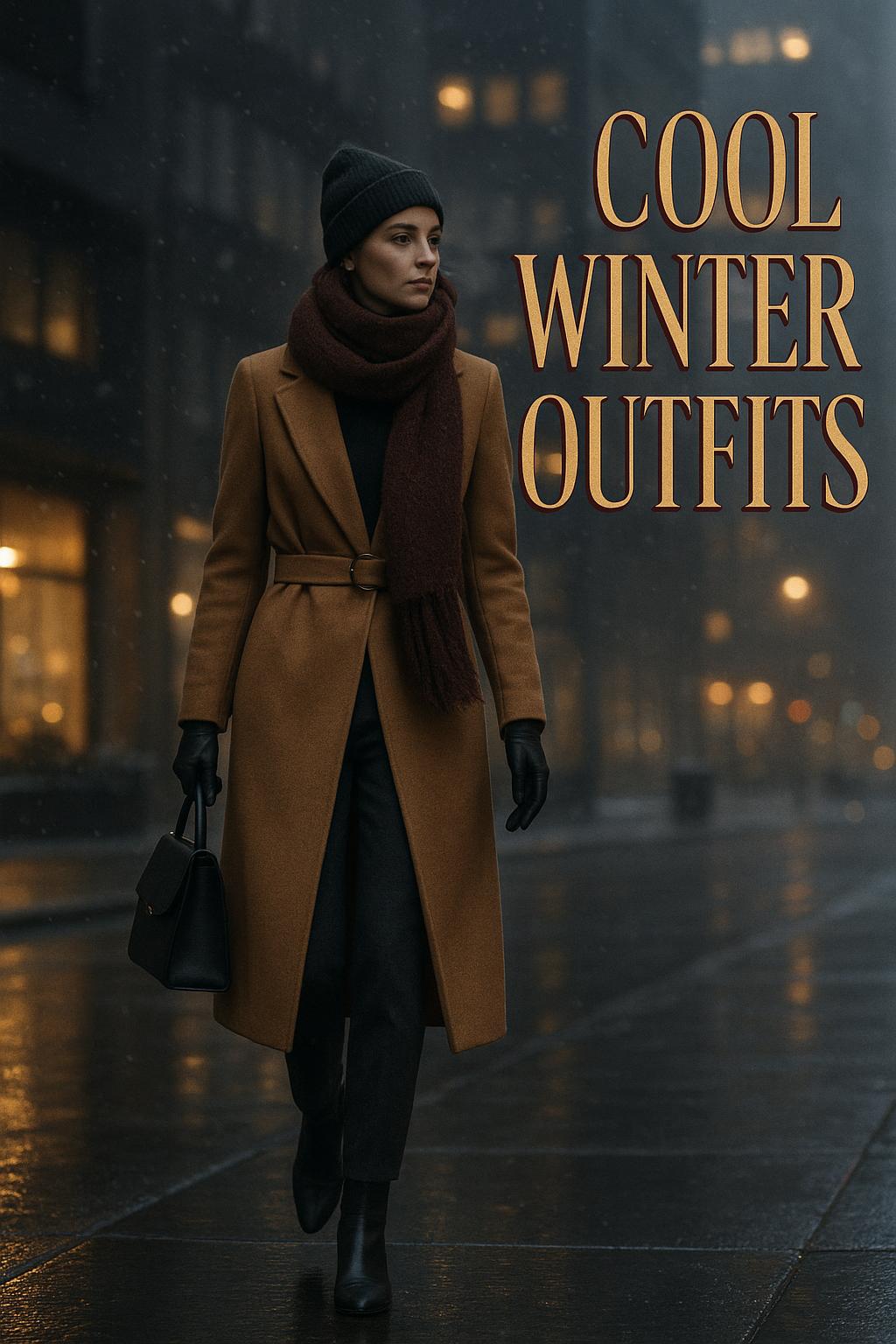
A few practical guidelines can simplify getting dressed on cold mornings while helping your outfits look intentional and modern.
- Plan from the outside in by choosing your coat and shoes first, then build the rest of the outfit around them.
- Use one statement piece at a time—such as a standout coat, bold boots, or special knit—and keep the rest of the look simple.
- Play with texture mixing (like leather with knitwear or denim with wool) to add depth without needing bright colors.
- Balance volume by pairing oversized pieces with something more fitted elsewhere in the outfit.
- Have a few go-to outfit formulas—like jeans, turtleneck, and coat—that you can customize with different colors and accessories.
Taking a few minutes to think through these elements can transform how you experience winter dressing, making it easier to stay warm while feeling like yourself in every setting.
FAQ
How can I look stylish in winter without being cold?
Focus on strategic layering with warm fabrics and balanced proportions. Start with a comfortable base layer, add an insulating middle piece like a sweater or cardigan, then top with a well-fitted coat or puffer. Choose boots that protect you from the elements and use accessories such as scarves, hats, and gloves for extra warmth and style. Mixing fitted and relaxed pieces prevents bulk while keeping you insulated.
What are some easy cool winter outfits I can wear every day?
Reliable everyday options include jeans with a turtleneck and long coat, a chunky sweater with straight-leg jeans and ankle boots, or a monochrome sweat set under a structured coat. You can rotate among these combinations by changing colors, accessories, and outerwear so your outfits feel fresh while still being quick to put together.
What kind of coat goes with most winter outfits?
A long wool or wool-blend coat in a neutral color like black, navy, camel, or gray is one of the most versatile options. It works over casual looks, office outfits, and eveningwear alike. A knee-length or slightly longer cut offers enough coverage for warmth while still flattering most silhouettes and pairing well with different footwear styles.
How do I style boots with jeans and trousers in winter?
Ankle boots generally pair well with straight-leg or slim jeans, which you can wear over the boots or slightly cuff to show a bit of ankle if the weather allows. With wide-leg trousers, opt for boots that have some height so the hem skims rather than drags. For a sleek look, match the color of your boots to your pants or tights to create a long visual line, especially in darker shades.
Can I wear sneakers in winter and still look put together?
Yes, sneakers can work in winter as long as conditions are dry and you style them with seasonally appropriate pieces. Leather or sturdier sneakers look more suited to cold weather than light canvas styles. Pair them with warm socks, structured outerwear like wool coats or puffers, and heavier fabrics such as denim or thick knits so the overall look matches the season.
How can I make my winter outfits more interesting if I mostly wear neutrals?
You can keep a neutral color palette and still create dynamic outfits by playing with texture, layers, and accessories. Combine smooth fabrics with chunky knits, mix matte and slightly shiny materials, and add scarves or hats in varied tones of the same color family. Introducing one rich accent color through a scarf, bag, or sweater can also add visual interest without overwhelming your neutrals.
What should I wear to work in winter to stay warm but professional?
For a professional winter look, start with tailored basics like trousers, midi skirts, or sweater dresses and layer fine knits or shirts underneath blazers. Add a tailored wool coat or neat puffer for your commute. Stick to structured pieces in neutral tones and use accessories like scarves and belts to personalize your look while maintaining a polished impression.
How do I dress up for a night out in very cold weather?
Choose dressy pieces made from warm fabrics, such as knit dresses, sweater sets, or tailored pants, and combine them with opaque tights and heeled boots instead of open shoes. A statement coat, faux fur piece, or rich-colored wool coat can keep you warm while complementing your outfit. Aim for layers you can comfortably remove indoors while still feeling put together.
What are some essential items for a winter wardrobe?
Core winter items include a warm long coat, a functional puffer, a few versatile sweaters, at least one turtleneck, straight-leg jeans, dark trousers, one or two pairs of boots, and cold-weather accessories such as scarves, hats, and gloves. With these basics, you can assemble numerous cool winter outfits by mixing and matching, then add more distinctive pieces over time.
Finish the look
The little extras that make a summer outfit feel complete
From beach days to city weekends, these easy pieces bring comfort, texture, and a polished finishing touch.

FENBEN
Straw Hobo Crossbody Bag
A handwoven straw bag with both short and crossbody straps—an effortless finishing touch for vacation looks and warm-weather outfits.
Shop the bag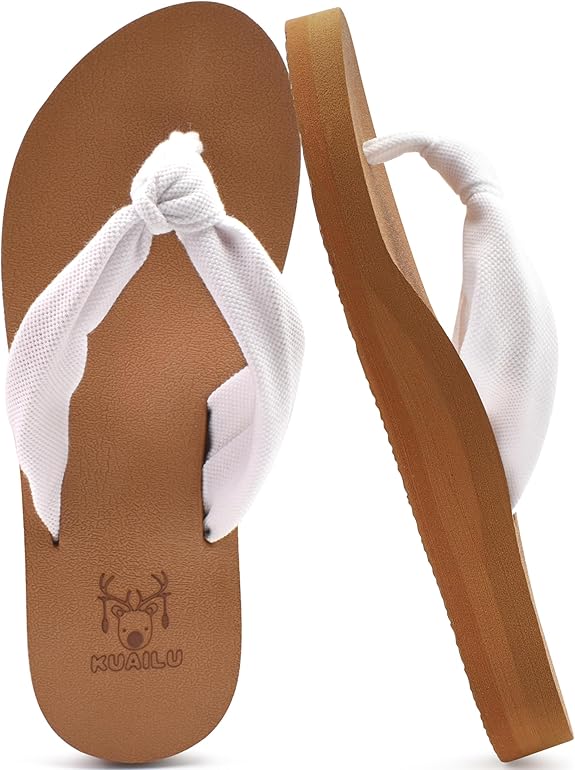
KuaiLu
Flip Flops with Arch Support
Cushioned, lightweight sandals with supportive arch design—a practical choice for beach trips, errands, and long summer walks.
Shop the sandals
baleaf
Athletic One-Piece Swimsuit
A functional one-piece with adjustable straps and moderate coverage, designed for swimming, training, surfing, and active beach days.
Shop the swimsuit
Astylish
Linen-Cotton Button-Down Shirt
A relaxed cotton-linen shirt with a collared V-neck and roll-up sleeves—easy to style over swimwear or with denim and shorts.
Shop the shirt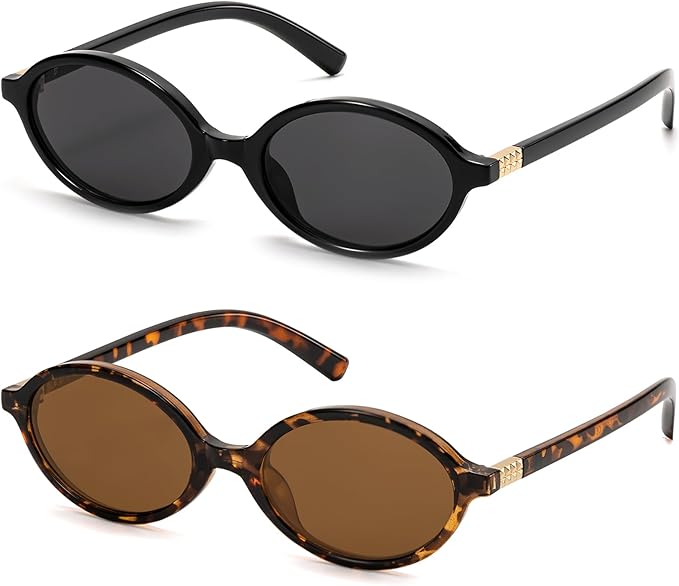
ViewJoy
Retro Oval Sunglasses
Small oval sunglasses with a 90s-inspired silhouette and UV400 lens protection—a quick way to add a vintage edge to everyday looks.
Shop the sunglasses
Affiliate disclosure: This section contains affiliate links. If you make a purchase through these links, I may earn a commission at no additional cost to you. Product selection, pricing, availability, and delivery terms may change—please review the current details on Amazon before purchasing.
As an Amazon Associate I earn from qualifying purchases.