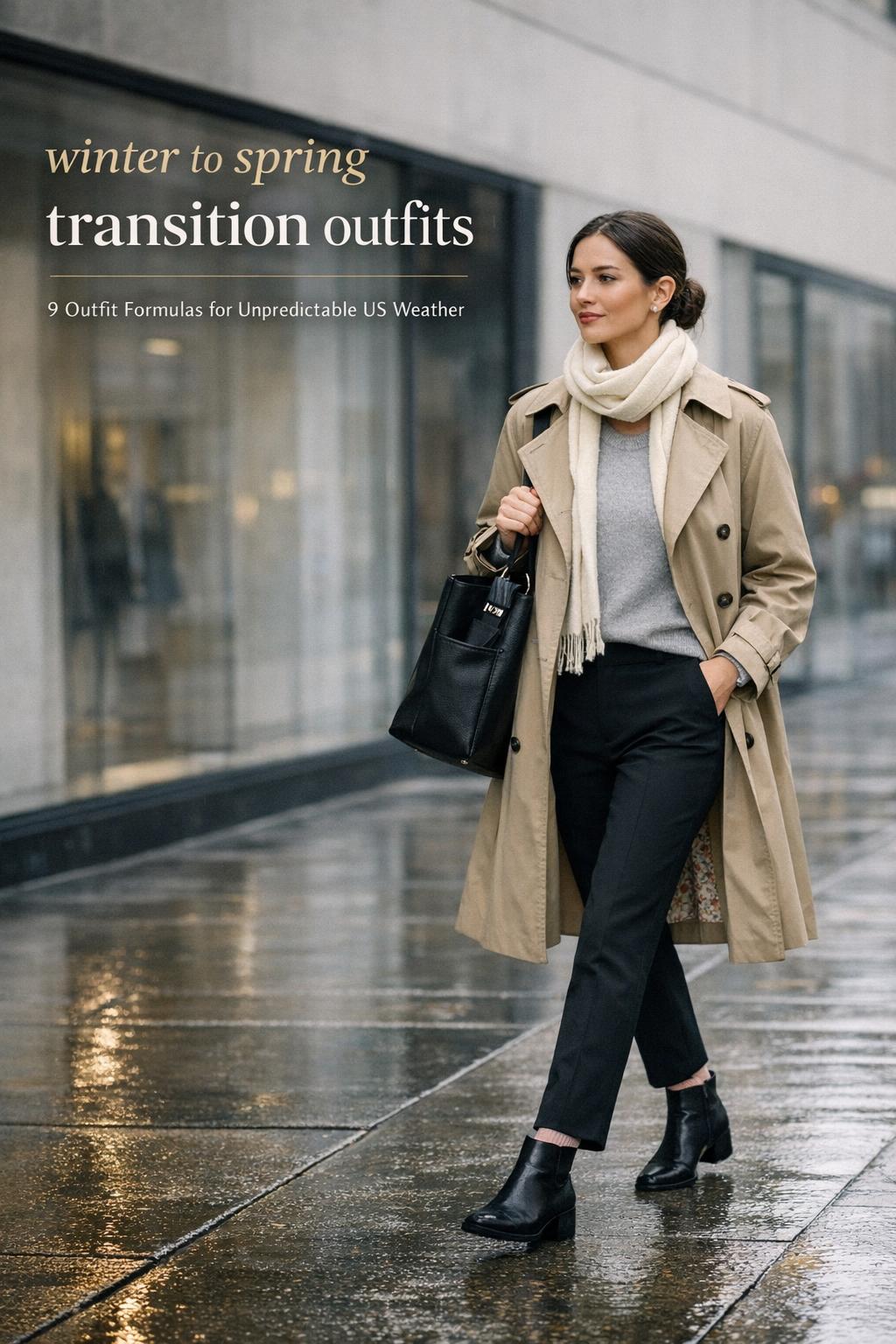
9 Winter to Spring Transition Outfits for Unpredictable US Weather
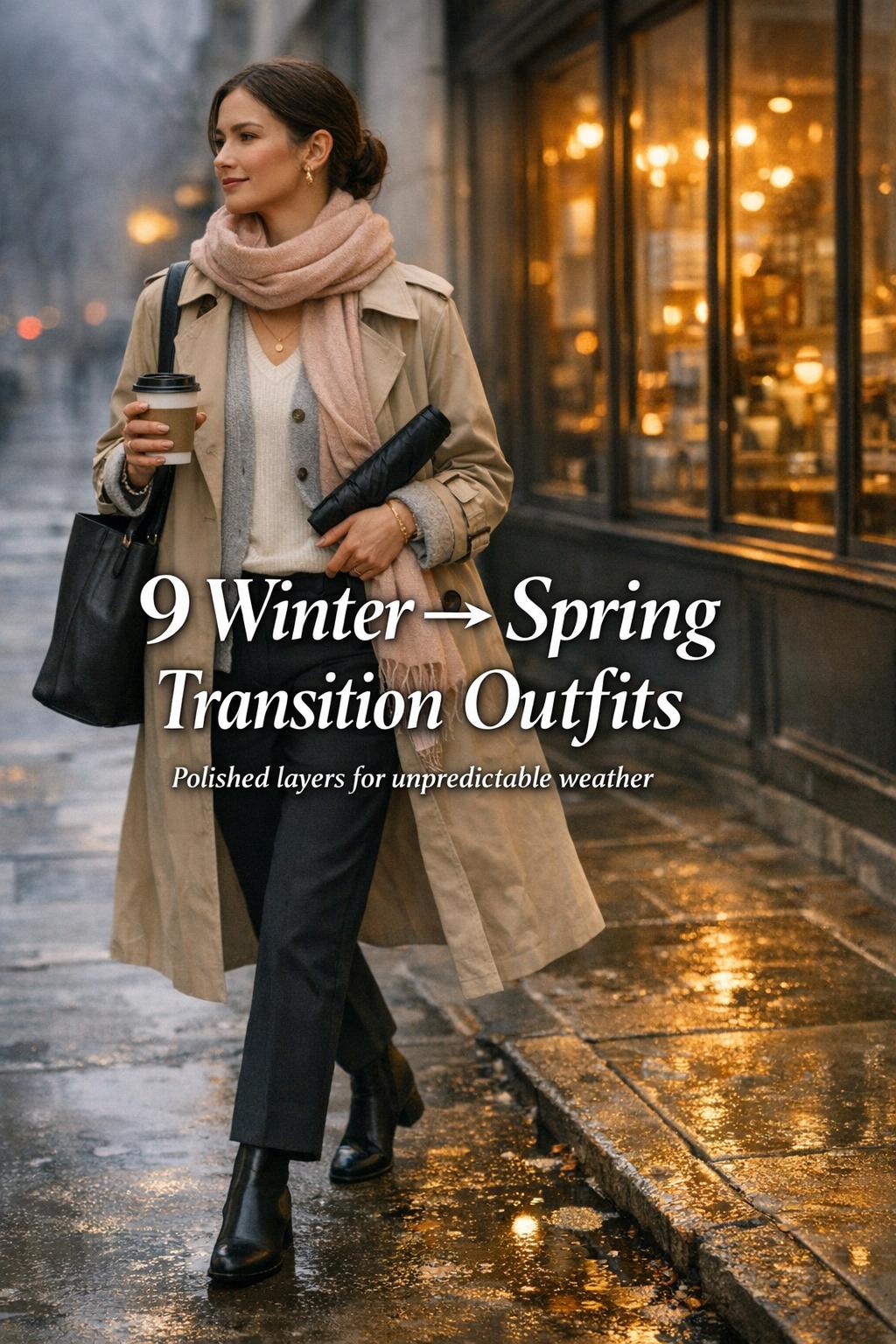
Winter to Spring Transition Outfits: Your Complete Guide to Layering Through In-Between Weather
Winter to spring transition outfits solve one of the trickiest style problems of the year: getting dressed for days that can start off cold, warm up by lunch, then turn windy or wet by evening. The goal isn’t to overhaul your wardrobe overnight—it’s to use transitional dressing strategies that keep you comfortable and polished while you bridge late winter and early spring.
This guide focuses on practical layering, outfit formulas you can repeat, and a capsule-style approach built around versatile pieces like cardigans, trench coats, knitwear, denim, boots, and rain-ready layers. You’ll also find weather-scenario outfits, regional adjustments across the U.S., and a quick-start checklist so you can get dressed faster on unpredictable days.
Understanding the Winter-to-Spring Transition
What “in-between weather” looks like in real life
Transitional weather is unpredictable by nature: cold mornings, mild afternoons, sudden rain, and temperature swings that make a single heavy coat feel like too much—or not enough. That’s why layering for transitional weather is the core strategy. You’re building outfits that can adapt: remove a layer when it warms up, add one back when the sun dips or the wind picks up.
Key pieces every transition wardrobe needs
You don’t need dozens of new items for winter-to-spring outfits; you need a small set of reliable layers that mix easily. Think of your closet as a system: base layers for warmth, mid-layers for comfort, and outer layers for weather protection.
- Layering basics: knit tops and lightweight knits that fit comfortably under outerwear
- Mid-layers: cardigans and knitwear that add warmth without bulk
- Outerwear heroes: trench coats, teddy coats, and rain jackets for shifting conditions
- Bottoms that anchor outfits: denim and tailored pants (including high-waisted silhouettes)
- Transition-friendly extras: tights and versatile dresses for days that feel almost spring
How to think about footwear during the transition
Footwear is where many winter-to-spring transition outfits succeed or fall apart. A look can feel instantly “too winter” or “too spring” based on shoes alone. Keeping a small rotation—boots for wet or cold days, sneakers for casual mild weather, and a dressier option when you need polish—makes transitional dressing much simpler.
Build a U.S.-Focused Winter-to-Spring Capsule Wardrobe
A capsule wardrobe approach is ideal for transitional dressing because it reduces decision fatigue and increases outfit repeatability. Instead of chasing a different look every day, you build around cohesive layers and re-style the same core pieces across late winter and early spring.
Start with a core neutral palette (then add a color story)
Neutrals make mix-and-match outfits effortless, especially when you’re layering. A neutral wardrobe also supports a chic, minimalist feel that works for everyday errands, office days, and weekends. From there, you can add a lighter “spring” note through softer tones.
- Core neutrals: black, white, cream, beige, gray, navy
- Spring-leaning accents: soft pastels or gentle color blocking (used in one piece at a time)
- Texture strategy: combine knitwear with denim or tailored pieces for contrast
The capsule list: 24–30 pieces you can rotate for weeks
This capsule is built around staples repeatedly seen in strong transitional outfit formulas: cardigans with jeans, knit dresses with boots, trench coats over casual sets, and rain-ready layers when the forecast turns. Use it as a blueprint and swap in what you already own.
- Tops (6–8): knit tops, lightweight knits, and a few easy layering basics
- Layerables (4–6): cardigans, versatile knitwear, and at least one polished mid-layer
- Bottoms (4–5): denim (at least one go-to pair), tailored pants, and a high-waisted option you can dress up
- Dresses/skirts (2–3): a knit dress and at least one “spring-forward” option like a floral frock style you can layer
- Outerwear (3–4): trench coat, teddy coat or cozy coat, and a rain jacket for wet days
- Legwear (1–2): tights in at least one opacity for early spring wear
- Footwear (3–4): boots (ankle or taller), puddle-proof rain boots, sneakers, and one dressier pair for suiting or elevated outfits
How to mix and match the capsule into 30+ outfits
The simplest way to multiply outfits is to rotate one “hero” per look: a trench coat one day, a cardigan the next, a dress with tights the next. Keep your base consistent (knit top + denim, or knit dress + boots), then change the outerwear, footwear, and one accent piece.
Tips: If your outfits feel repetitive, change just one element: swap boots for sneakers, switch a cardigan for a trench, or add tights under a dress. Transitional dressing rewards small changes because the layers do most of the work.
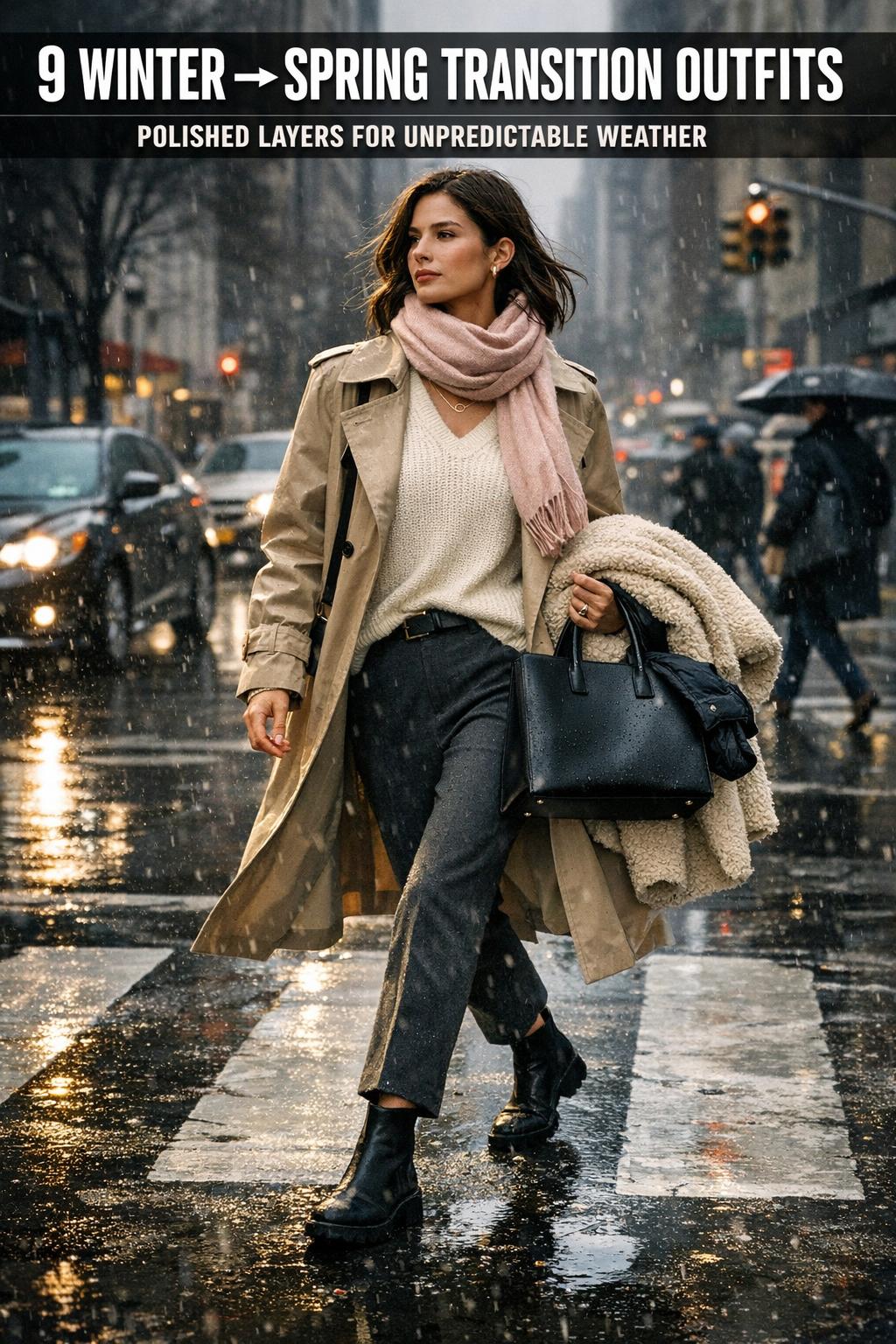
Outfit Ideas for Winter-to-Spring Transition Dressing
Below are ready-to-wear outfit ideas designed for in-between weather. Each one is built around classic transitional pieces—cardigans, trench coats, teddy coats, knitwear, boots, denim, rain layers, and tights—so you can recreate them with what you already own.
Cozy cardigan + jeans (the everyday transitional uniform)
A cardigan-and-denim look is a foundation for winter to spring transition outfits because it’s warm enough for chilly mornings but easy to lighten up by removing a layer later. It also works across style moods: minimalist, casual, or elevated with cleaner lines.
- Base: knit top + jeans
- Layer: cozy cardigan (wear open for a lighter feel)
- Shoes: boots for cooler days or sneakers when it’s mild
- Optional: swap denim for tailored pants to make it sharper
Knit dress + boots (polished, warm, and simple)
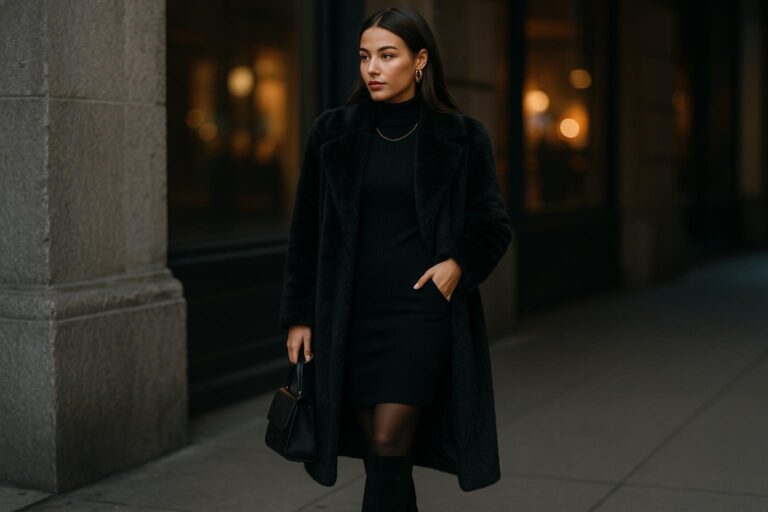
Knit dresses are one of the easiest transitional pieces: they read “spring” but still provide warmth. Pairing a knit dress with boots keeps the look grounded for late winter, and adding tights gives you flexibility when the temperature dips.
Tips: When a knit dress feels too warm by midday, the fix isn’t changing the dress—it’s adjusting the outer layer. Swap a teddy coat for a trench coat, or go without outerwear if the afternoon turns mild.
Teddy coat + knit top + jeans (late winter warmth, early spring styling)
Some days still call for real warmth. A teddy coat gives you that cozy outer layer while the rest of the outfit can stay spring-leaning: a knit top and jeans create a clean, modern base that works for errands, casual meetups, and everyday wear.
- Outerwear: teddy coat for insulation
- Base: knit top (choose a lighter knit if you run warm)
- Bottom: jeans
- Finish: boots to keep it weather-ready
Trench coat + sweatsuit (comfortable, modern, and surprisingly versatile)
For transitional weather days when comfort is non-negotiable, a trench coat layered over a matching sweatsuit creates a balanced look: casual underneath, structured on top. This formula is especially useful when you’re moving between indoor and outdoor temperatures throughout the day.
Tips: Keep the sweatsuit simple and let the trench do the “polished” work. If the day warms up, you can open the trench or remove it without your outfit feeling unfinished.
Spring suiting with transitional layers (for work and dressier plans)
Spring suiting is a smart bridge between seasons because it’s structured, easy to layer, and can be warmed up or down. For colder starts, add a coat on top; for mild afternoons, let the suit stand on its own. This is a strong option when you want a crisp look that still respects unpredictable weather.
- Base: suit (as a set or mixed tailored separates)
- Layering option: trench coat or a warmer coat when needed
- Footwear: boots for colder days, or a dressier shoe when temperatures rise
A floral frock with tights (the easiest “spring” signal)
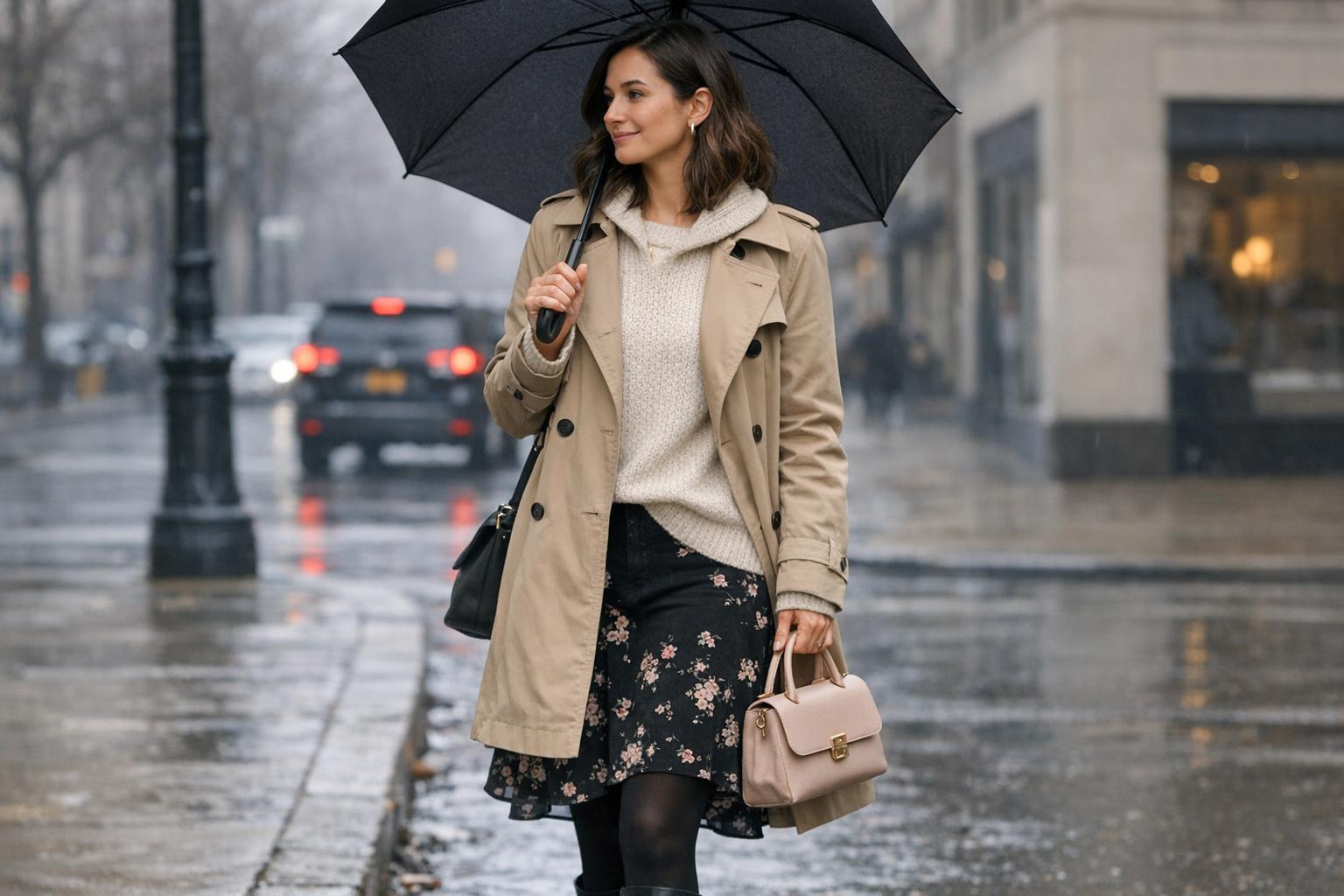
A floral frock or spring-forward dress instantly shifts your outfit toward spring—even if the weather hasn’t caught up. Tights are what make it wearable in early spring: they add warmth and help the outfit feel intentional rather than prematurely summery.
Tips: If you’re unsure whether a floral dress will feel too light, keep the rest grounded: choose boots and add an outer layer like a trench or warmer coat. The contrast is what makes transitional dressing look current.
Light outerwear + denim (simple formula for sunny-but-cool days)
On days that feel springlike but not warm, light outerwear is the difference between comfortable and cold. A trench coat is a classic choice, and a lighter jacket can serve the same function. Pair with denim and a knit top for a reliable, repeatable look.
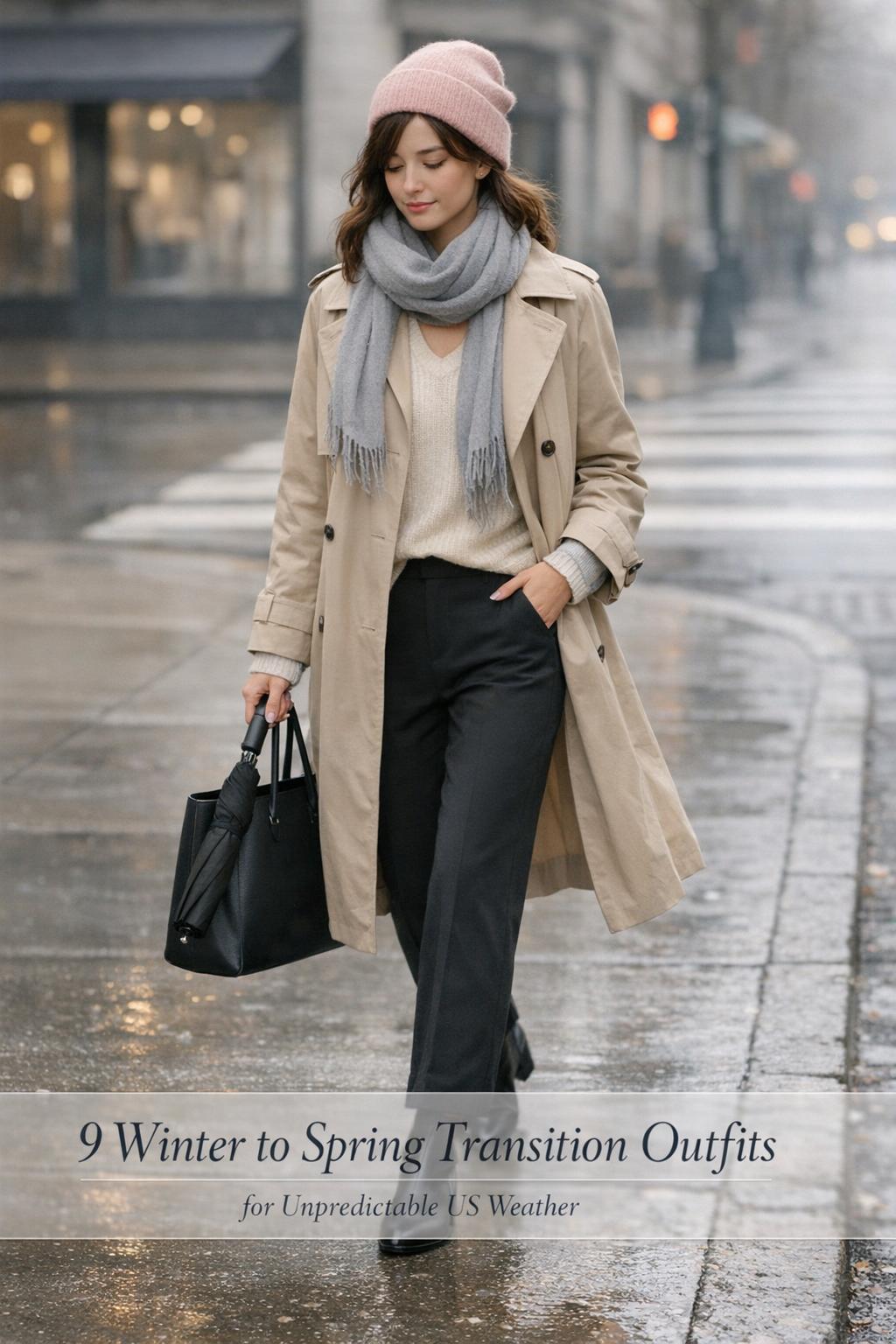
Outfit Ideas by Weather Scenario (Practical Temperature Bands)
Many people searching for outfits for transitional weather are really asking, “What do I wear when it’s not quite cold and not quite warm?” Use the scenarios below to pick a formula that matches your day, then adjust a layer up or down.
Cold mornings, mild afternoons (about 40–55°F): layer so you can subtract
This is classic in-between weather: you need warmth early, then breathability later. The most reliable move is a base you’re happy to wear indoors (knit top + jeans, or a knit dress), topped with an outer layer that can come off easily.
- Look 1: knit top + jeans + cardigan + trench coat + boots
- Look 2: knit dress + tights + boots + trench coat
- Look 3: knit top + tailored pants + warm coat (like a teddy coat) + boots
Rain-ready transitions (about 40–60°F, wet days): prioritize outerwear and boots
Rain changes everything. A ready-for-anything rain jacket and puddle-proof rain boots protect the outfit underneath, so you can still dress spring-forward without worrying about getting soaked. This is also where tights can make dresses and skirts feel practical.
- Look 1: rain jacket + knit top + jeans + waterproof boots
- Look 2: trench coat (if it’s drizzly) + knitwear + tailored pants + boots
- Look 3: dress + tights + rain boots + rain jacket
Tips: On wet days, build from the outside in. Choose the rain layer and puddle-proof footwear first, then pick the outfit underneath. It’s the fastest way to avoid getting dressed twice.
Sunny yet cool days (about 50–65°F): lighter layers, spring-leaning silhouettes
When the sun is out, your outfit can look more “spring” even if the air still feels cool. This is prime time for trench coats, knit dresses with tights, and lighter knitwear. A small styling shift—like sneakers instead of heavy boots—can make the whole look feel seasonally right.
- Look 1: trench coat + knit top + jeans + sneakers
- Look 2: cardigan + knit top + tailored pants + boots
- Look 3: floral dress + tights + boots + light outerwear
Warmer window days (about 60–70°F): reduce bulk, keep one light layer
These are the days that tempt you to dress like it’s fully spring, but mornings and evenings can still surprise you. Aim for lighter fabrics and minimal layering: keep one easy layer—like a trench coat or cardigan—available for temperature dips.
- Look 1: knit top + jeans + trench coat (carried or worn open) + sneakers
- Look 2: dress + light jacket + dressier shoes
- Look 3: spring suiting with minimal under-layers, plus a light outer layer for early hours
Regional Guide: Adapting Winter-to-Spring Looks Across the U.S.
Even the best transitional dressing advice needs a regional reality check. The pieces stay the same—trench coats, rain jackets, knitwear, denim, boots, tights—but how you layer them changes based on cold snaps, rain patterns, and day-to-day variability.
Northeast / Midwest: cold snaps, wind, and lingering winter
In colder regions, winter-to-spring transition outfits often require true warmth well into “spring.” Keep a warm outerwear option (like a teddy coat) in rotation, and rely on knitwear and tights to make spring silhouettes wearable without feeling exposed to cold wind.
Tips: Don’t rush the shoe swap. Boots can stay in the mix longer here, while the “spring” feeling comes from lighter outerwear choices (like a trench) and subtle color shifts rather than bare ankles.
South / Southeast: early warmth with frequent rain
Warmer climates can move into spring temperatures earlier, but rain can still dominate. A rain jacket and puddle-proof boots become high-value pieces, and you can lean into lighter layers sooner—cardigans over knit tops, trench coats on breezy mornings, and dresses with tights when you want a spring-forward look without feeling chilled indoors.
West Coast: mild days with variable mornings and evenings
Milder regions often live in the sweet spot of transitional weather: not freezing, not hot. That makes versatile layers—trench coats, cardigans, light jackets, and knitwear—especially effective. The key is flexibility: an outfit that looks good with the outer layer on or off.
Temperature tracking tips for daily outfit decisions
Transitional dressing works best when you plan for the full day, not just the morning. Check the high and low, then pick a base outfit you’ll be comfortable wearing indoors and outdoors. Add an outer layer for the coldest part of your day and choose shoes that match the conditions—especially if rain is possible.
Footwear, Hosiery, and Accessories That Make Transitional Dressing Easier
Clothes do a lot, but the finishing details—shoes, tights, and accessories—are what make winter to spring transition outfits feel intentional. These pieces also offer quick comfort fixes: warmer legs, drier feet, or a more balanced look when you’re mixing heavy and light layers.
Boots to sneakers: how to time the swap
Instead of declaring “boot season is over,” treat footwear as weather-based. Boots stay relevant for cold mornings and wet days, while sneakers become more practical as temperatures rise and conditions dry out. Keep both in rotation so you can match the day rather than the calendar.
- Choose boots when it’s cold, windy, or damp, or when you’re wearing tights and knitwear-heavy looks
- Choose sneakers on mild, dry days—especially with denim and light outerwear
- Keep rain boots available for puddle-proof protection on wet forecasts
Tights and legwear for early spring
Tights are a transitional powerhouse. They extend the life of dresses and skirts while keeping outfits comfortable in cooler temperatures. They also help bridge late winter styling (boots, coats, knitwear) with spring silhouettes (floral dresses and lighter layers).
Tips: If you want your outfit to feel more springlike, keep the tights but lighten something else—choose a trench instead of a heavy coat, or switch to a lighter knit. That balance is the hallmark of good transitional dressing.
Bags, scarves, and hats: small additions with big payoff
Accessories are the easiest way to manage comfort without changing the outfit. A scarf can add warmth in the morning and tuck away later. A hat can help on windy days. A simple bag choice can make casual layers feel pulled together, especially when you’re wearing a trench coat or spring suiting.
Shopping and Budget Guide for Transitional Wardrobes
Winter-to-spring shopping is most effective when it supports versatility. Instead of buying “one-time” seasonal items, focus on pieces that work across multiple outfit formulas: rain-ready layers, classic outerwear like a trench coat, knitwear, and shoes that can handle mixed weather.
How to build the capsule at different budget levels
A capsule wardrobe approach works at any price point because the strategy is about re-wear and combination. Prioritize the pieces that affect comfort and weather protection first (outerwear and footwear), then fill in with knit tops, denim, and a versatile dress.
- Budget approach: focus on one dependable outer layer, one rain-ready option, and versatile basics you can layer repeatedly
- Mid-range approach: add a second outerwear choice (like trench + teddy coat) and a dress option you can style with tights
- Premium approach: invest in cohesive neutral wardrobe pieces and elegant, adaptable layers that create a polished capsule feel
What to prioritize first (so you don’t overbuy)
If you’re tempted to buy everything at once, prioritize by impact: outerwear and shoes determine whether you’re comfortable, while knitwear and denim determine how many outfits you can create. Add spring-forward pieces like floral dresses or lighter layers after your foundation is set.
Quick-Start Checklist and Capsule Worksheet (Copy/Paste Friendly)
Use this quick-start list to build your transitional wardrobe plan in minutes. It’s designed to help you create layered outfits for transitional weather without second-guessing what works together.
1-page checklist: your transition essentials
- Pick a neutral base palette and one soft accent color story
- Choose two outerwear options: one classic (trench) and one warm or cozy (teddy coat)
- Add one rain-ready layer (rain jacket) and one puddle-proof option (rain boots)
- Make sure you have at least two mid-layers (cardigans/knitwear)
- Include tights so dresses can work earlier in the season
- Keep a footwear rotation: boots + sneakers + one dressier option
A simple layering order you can reuse
When you’re unsure how to layer, use this repeatable structure: start with a comfortable base (knit top + jeans, or a dress), add a mid-layer (cardigan or knitwear), then finish with the outer layer that matches the forecast (trench, teddy coat, or rain jacket). This formula makes outfit planning faster and keeps your look cohesive.
7-day sample capsule plan (repeat with small swaps)
Day 1: cardigan + knit top + jeans + boots. Day 2: trench coat + knit top + jeans + sneakers. Day 3: knit dress + tights + boots + trench coat. Day 4: rain jacket + knitwear + jeans + rain boots. Day 5: teddy coat + knit top + tailored pants + boots. Day 6: floral dress + tights + boots + light outerwear. Day 7: spring suiting + trench coat + weather-appropriate shoes.
FAQ
What are the best winter to spring transition outfits for unpredictable days?
The best options are layered outfits that look complete with or without the outer layer, such as cardigan + knit top + jeans, a knit dress with tights and boots, or a trench coat over a simple base like denim and knitwear.
How do I dress for the winter-to-spring transition when it’s 40–55°F?
Wear a base you’ll be comfortable in indoors (knit top + jeans or a knit dress), add a mid-layer like a cardigan, and finish with a coat you can remove easily, such as a trench or a warmer cozy coat if mornings are especially cold.
What should I wear on rainy early spring days?
Start with weather protection first: a ready-for-anything rain jacket and puddle-proof rain boots, then build your outfit underneath with knitwear and denim or a dress with tights so you stay comfortable and polished even in wet conditions.
When should I switch from boots to sneakers in early spring?
Switch based on conditions rather than the calendar: keep boots for cold, windy, or wet days, use rain boots for puddles, and bring sneakers into rotation on mild, dry days—especially with denim and lighter outerwear like a trench.
Can I transition my existing winter wardrobe into spring without buying much?
Yes—focus on re-styling: pair winter knits with lighter outerwear like a trench, wear dresses with tights and boots, and rotate between warm coats and rain-ready layers depending on the day so your winter pieces feel seasonally balanced.
What pieces are most important for transitional dressing?
The most important pieces are versatile outerwear (especially a trench coat), cozy mid-layers like cardigans and knitwear, weather-ready options like a rain jacket and rain boots, and dependable basics like denim, knit tops, and tights for early spring outfits.
How many outfits should a winter-to-spring transition wardrobe cover?
A practical goal is enough variety for at least a week of outfits that you can repeat with small changes—outerwear swaps, different footwear, and tights versus bare legs—because transitional weather changes often and repeatable formulas make daily dressing easier.
How do I make outfits look more “spring” while it’s still cold?
Keep the warmth where you need it—coats, knitwear, boots, and tights—while introducing spring cues through lighter outerwear like a trench, spring suiting, or a floral dress layered with tights so the overall look reads spring-forward but remains weather-appropriate.