
9 Late Winter Early Spring Outfits for U.S. City Weather
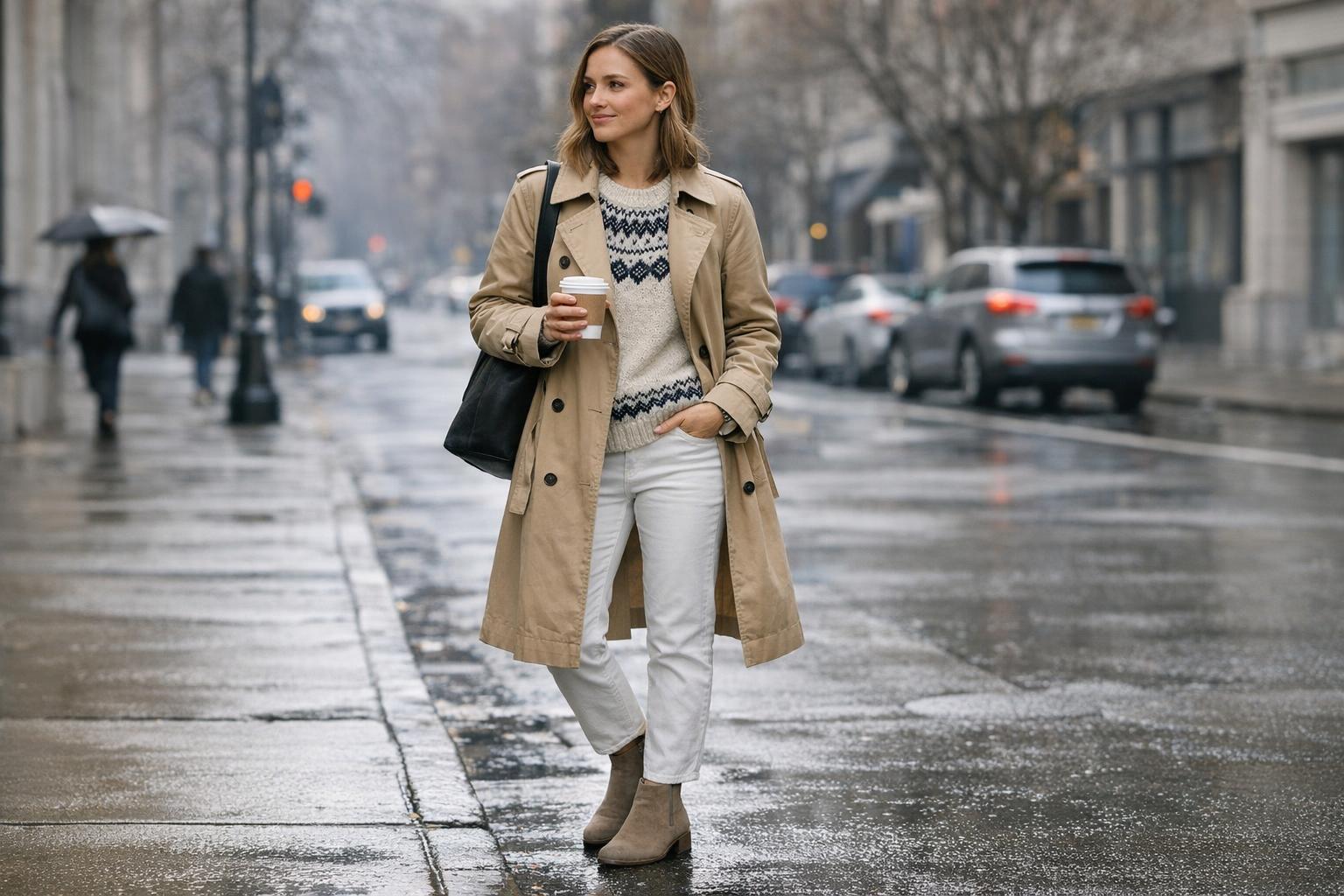
Late Winter, Early Spring Outfits: A Transitional Wardrobe Guide for US Weather
Late winter early spring outfits are all about staying comfortable through unpredictable days while still feeling like your style is moving forward. In the US, this stretch of the season can mean cold mornings, warmer afternoons, surprise rain, and a return to chill after sunset—all in the same week. The best approach isn’t to overhaul your closet overnight; it’s to rely on repeatable outfit formulas, smart layering, and a few transitional pieces that bridge winter-to-spring fashion without looking or feeling heavy.
This guide focuses on practical, wearable transitional outfits you can recreate with a capsule mindset: dependable outerwear, knitwear with lightweight layers, and footwear that can handle real life. You’ll find core principles, five ready-to-wear capsule formulas, a weather-driven week-by-week planner, a curated set of outfit ideas, and a shopping framework (budget to investment) so you can build a plan that fits your life.
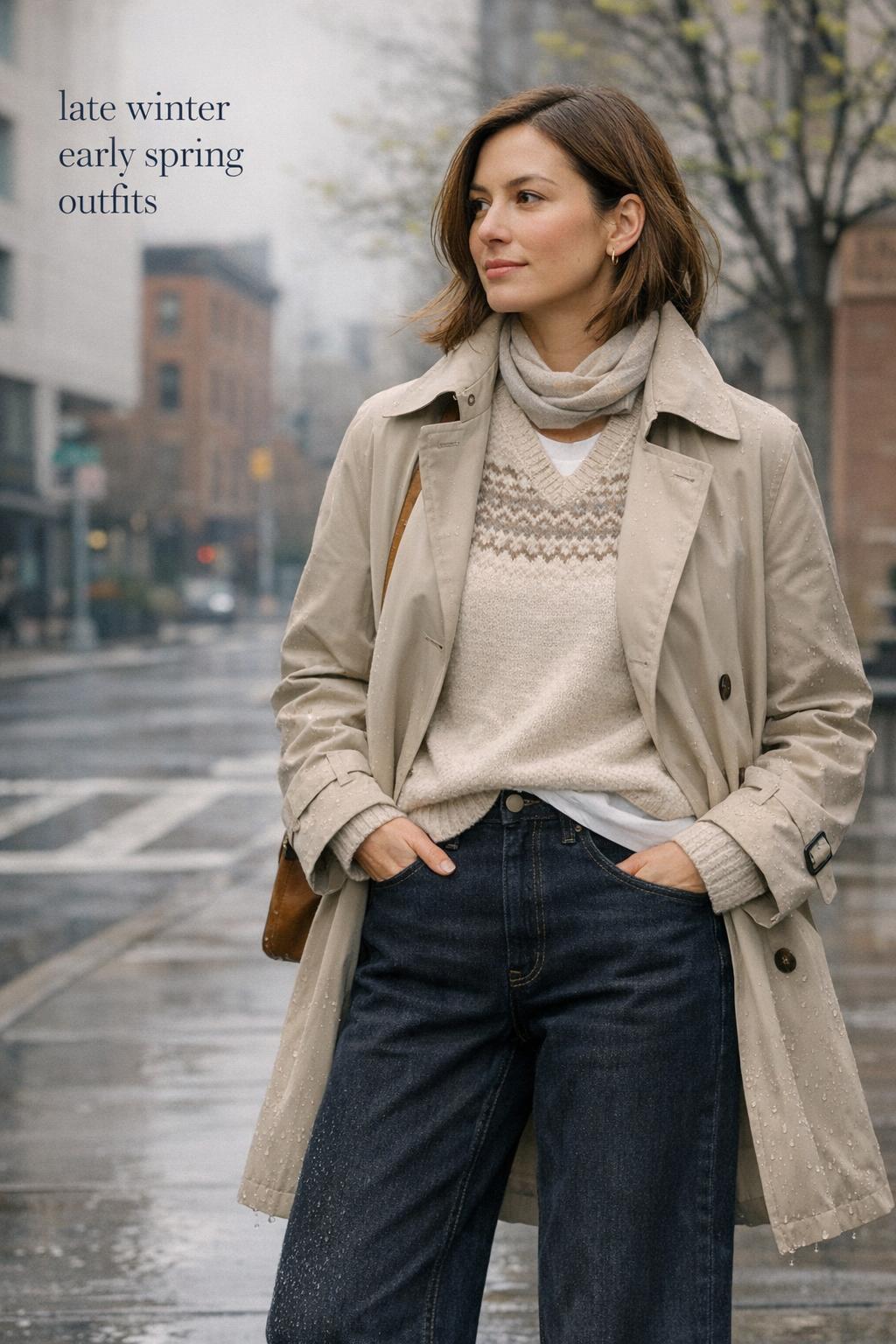
Key Principles for Transitional Dressing
Transitional winter outfits work best when you treat your look like a system: base layer + warmth layer + weather layer + footwear. Once you build a few reliable combinations, getting dressed becomes easier, and you can adjust quickly as temperatures swing.
Layering 101: Fabrics, weights, and how to combine pieces
If you’re looking up how to layer for late winter, the goal is warmth without bulk. Start with a comfortable base you can live in all day, add a knit or structured layer for insulation, then finish with an outer layer that can handle wind and drizzle. Transitional fabrics tend to be the most versatile: knitwear that isn’t overly heavy, wool-blends that hold warmth, leather finishes that block wind, and the classic trench coat that signals spring while still offering coverage.
A practical way to think about layering is to choose one “cozy” element and one “light” element in the same outfit. For example, a knit sweater with lighter denim, or a leather jacket with a softer cardigan underneath. This balance keeps late winter to early spring outfit ideas from feeling either too wintry or too bare for the forecast.
Color story: Warm neutrals with spring accents
Color is one of the fastest ways to transition your wardrobe without sacrificing warmth. Warm neutrals make an ideal base in late winter because they feel grounded and pair easily with heavier textures like knits and leather. Then, as you shift toward early spring outfits, introduce lighter or fresher accent colors through one intentional piece—rather than changing everything at once.
Tips: If your closet is mostly winter-dark, keep your foundation the same and “springify” the look with a brighter knit, a light skirt, or white denim. If you already wear warm neutrals, your simplest spring accent may be switching to a lighter outer layer (like a trench) or adding a more spring-forward accessory while keeping the rest streamlined.
Footwear and accessories that actually work in transition weather
Footwear can make or break spring-transition outfits because sidewalks are still wet, days can be cold, and you may not want fully winter boots anymore. The most useful rotation usually includes ankle boots, loafers, and sneakers—each with a purpose. Ankle boots tend to be the easiest bridge when it’s still truly late winter; loafers feel fresh for early spring but can still work with socks on colder days; sneakers are the most casual option and pair well with suiting for a modern seasonal twist.
Tips: Choose footwear based on your day, not just your outfit. If you’ll be outside or commuting, prioritize weatherproofing and comfort first, then style. If you’re mostly indoors, you can lean more spring-forward with loafers or sneakers and rely on your outer layer for warmth.
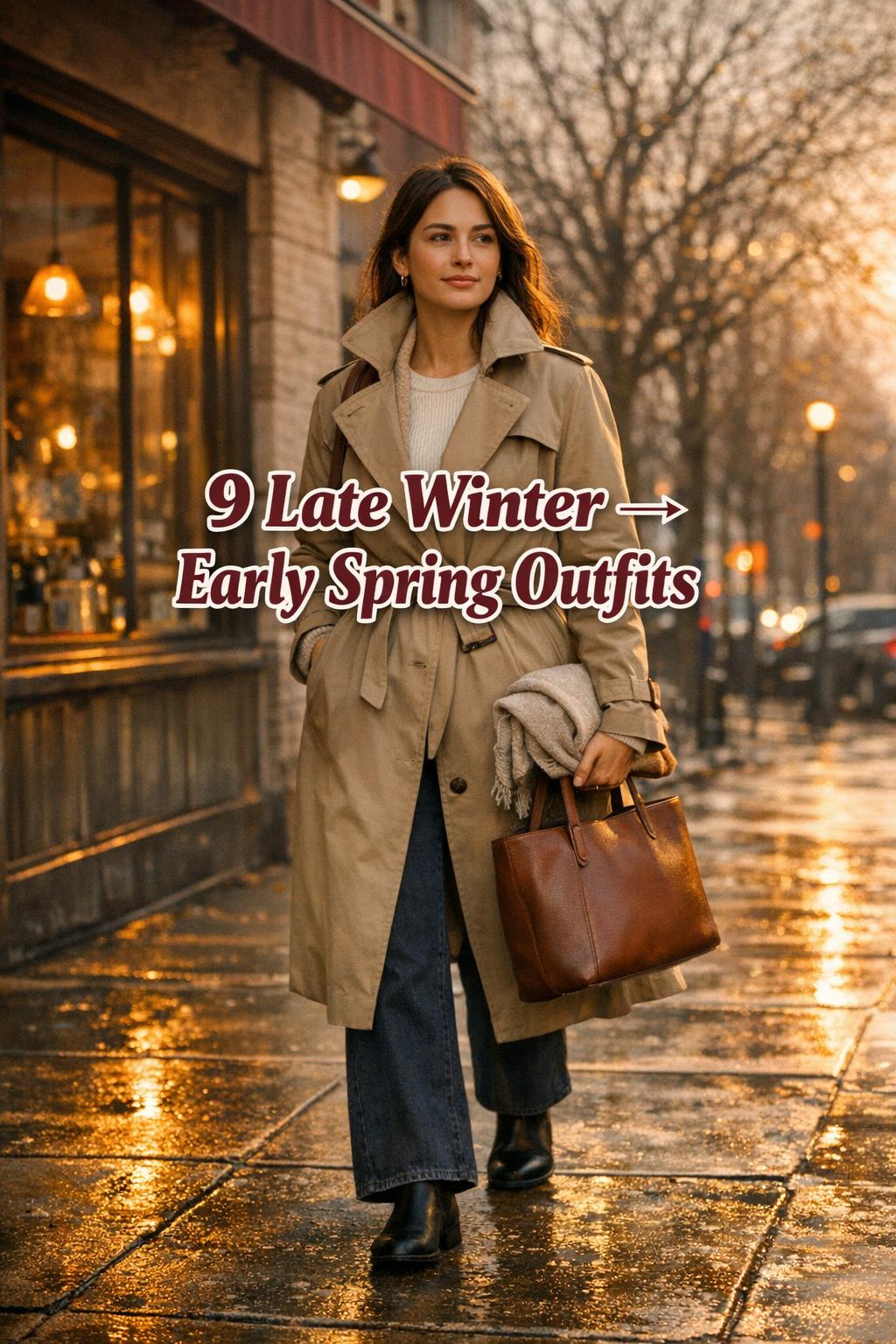
US Weather Reality Check: How to Dress by Region (Without Overcomplicating It)
Late winter and early spring don’t feel the same across the US, and that’s why a single outfit list can fall short. A transitional wardrobe works best when it’s adaptable: you keep the same outfit formula but switch the weight of your layers and the practicality of your footwear.
If you’re in colder areas where winter lingers longer, you’ll likely lean into knitwear layering and more protective outerwear (think wool-blends, leather finishes, and a trench as your “spring signal”). If you’re in milder areas where spring arrives earlier, you can keep the same outfit structure but swap in lighter layers sooner—like a utility jacket instead of heavier outerwear—while still keeping a warm layer in your bag or car for temperature drops.
Tips: Make your plan based on your coldest moment of the day (often morning or evening), then build in a removable layer so you’re not stuck overheating midday. This small habit is one of the most effective transitional styling tips for unpredictable weeks.
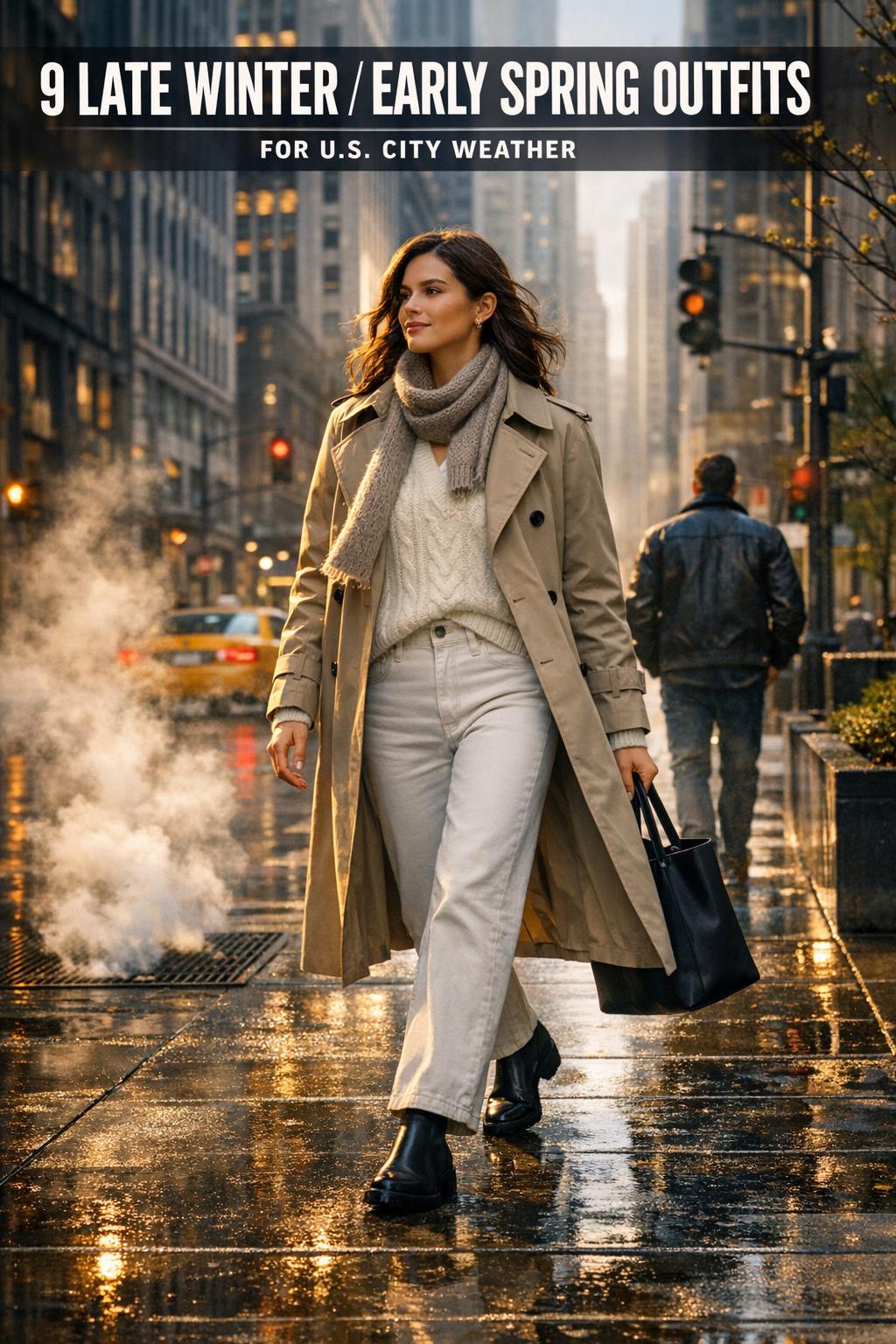
Capsule Wardrobe Templates: 5 Ready-to-Wear Outfit Formulas
A winter-to-spring capsule wardrobe doesn’t have to be big. The most useful approach is to build a handful of formulas you can repeat, then rotate the same core pieces across casual days, work, and weekend plans. The five formulas below are designed to be mixed and matched, with enough structure to feel polished and enough flexibility to handle shifting temperatures.
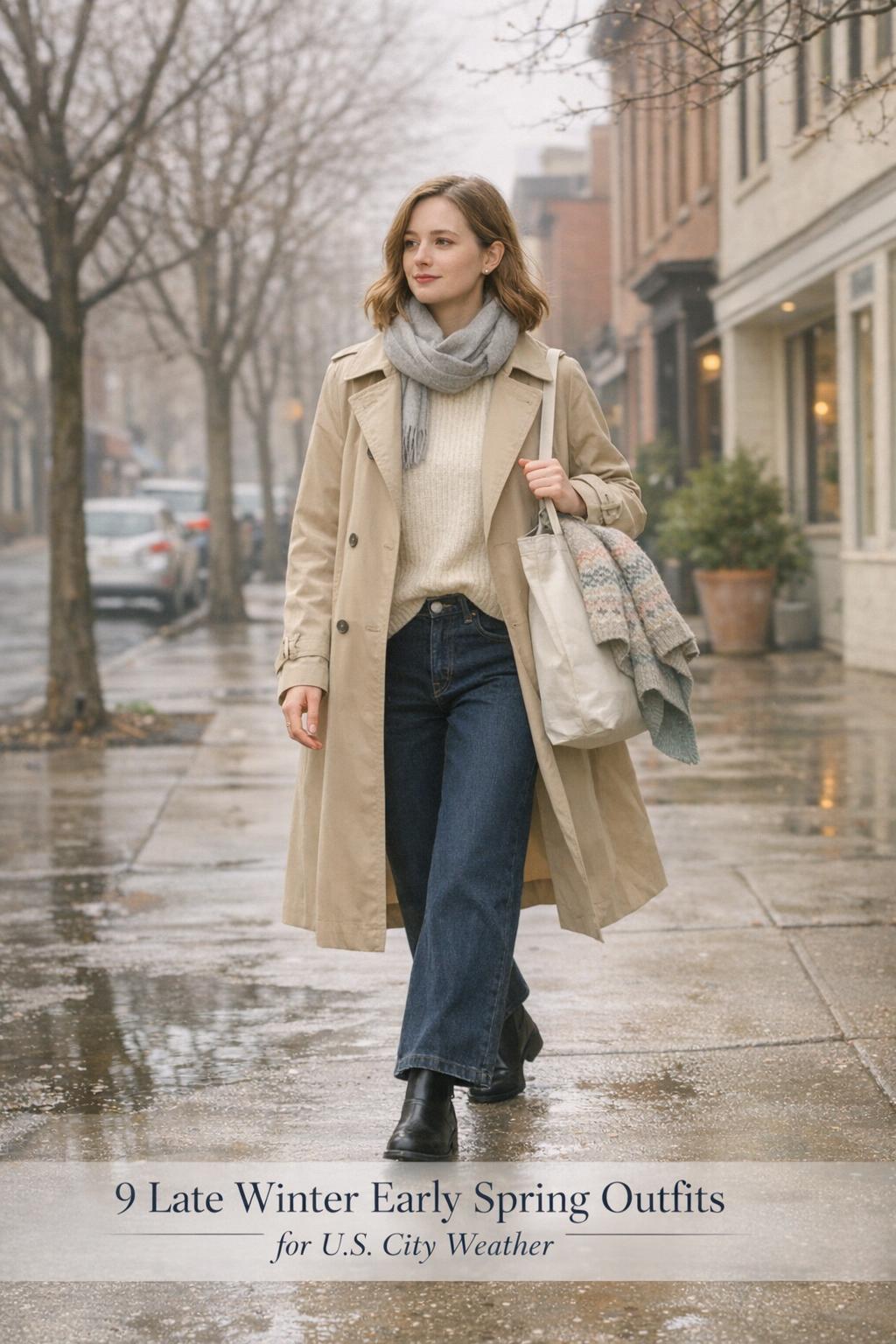
1) Classic trench + knit + dark jeans
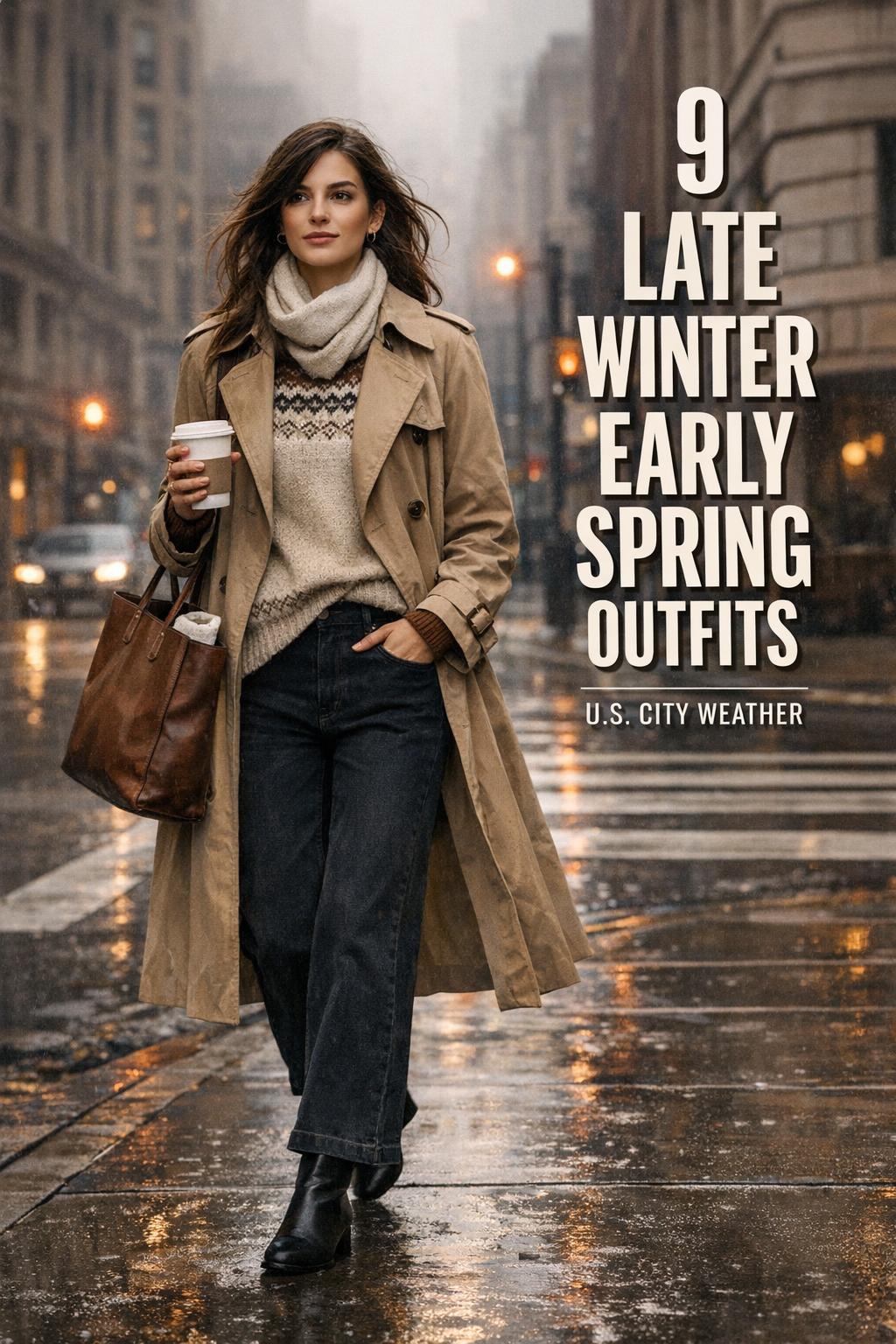
This trench coat outfit formula is a reliable baseline for late winter early spring outfits because it reads “spring is coming,” but the knit keeps you warm. Dark jeans add structure and make the outfit feel finished, especially when the weather is still unpredictable.
- Weather layer: trench coat
- Warmth layer: knit sweater or cardigan
- Base: simple top under the knit (optional, depending on warmth needs)
- Bottom: dark jeans
- Shoes: ankle boots for colder days; loafers when it warms
Tips: Keep the silhouette balanced. If your knit is slightly chunky, choose a more streamlined jean shape. If your jeans are wider, opt for a neater knit or tuck strategically so the outfit stays clean rather than bulky.
2) Fair Isle knit + leather jacket + wide-leg jeans
A Fair Isle outfit brings texture and interest when you’re tired of winter basics, and leather finishes add wind-blocking structure that’s perfect for the late winter stretch. Wide-leg jeans keep it current and comfortable, making this one of the easiest cozy chic late-winter outfits that still feels intentional.
This is also a strong “day-to-evening” transitional outfit: the knit reads casual, but the leather jacket adds edge and polish. If you want the look to feel more early-spring than mid-winter, keep the rest of the styling simple and avoid piling on extra heavy accessories.
3) Utility jacket + white denim + ankle boots
A utility jacket outfit is one of the most practical early spring wardrobe ideas because it’s lighter than winter outerwear but still provides structure. White denim instantly brightens the look and delivers that “spring shift” even if temperatures haven’t fully caught up.
- Outer layer: utility jacket
- Mid layer: light knit or cardigan (add or remove as needed)
- Bottom: white denim
- Shoes: ankle boots when it’s chilly or wet; sneakers for a more casual day
Tips: If white denim feels intimidating in late winter, keep the rest of the palette grounded with warm neutrals. The contrast still feels fresh, but the overall outfit remains seasonally appropriate.
4) Floral or light skirt + cashmere cardigan + tights
This formula is ideal when you want to start wearing spring pieces before the weather fully cooperates. A floral skirt spring transition moment works best when you keep the temperature problem solved: a cashmere cardigan for warmth and tights for coverage. The end result feels lighter and more optimistic without leaving you cold.
Because the skirt reads “spring,” you can keep everything else simple and grounded. This is also an easy way to test spring color accents: choose a skirt with a lighter feel, then keep the rest of the look in warm neutrals so it’s wearable on a gray late-winter day.
5) Suiting with sneakers (a seasonal twist)
For spring-suitable workwear, suiting with sneakers is a clean, modern way to transition. It’s polished enough for many work settings but comfortable and practical when the weather is changeable. This look also bridges the gap between winter-to-spring fashion by mixing a structured piece (the suit) with a casual, spring-leaning element (the sneakers).
Tips: Keep the outfit cohesive by choosing a streamlined sneaker silhouette and letting the suit do the heavy lifting. If you need more warmth, add a knit layer under the blazer rather than switching to a heavy coat that fights the outfit’s lighter direction.
Weather-Driven Week-by-Week Planner (4–6 Weeks of Outfit Direction)
Instead of guessing each morning, use a simple week-by-week transition plan that maps your wardrobe from late winter into early spring. The goal is to keep your core pieces stable while gradually shifting your color story and outer layers. You can treat the structure below as a printable checklist: repeat the same outfit formulas, but swap one variable each week.
Week 1: Keep winter structure, add one spring signal
Start with your most reliable late winter outfits—knits, jeans, and protective outer layers—then add one spring-leaning element per outfit. This could be switching to a trench, introducing warm neutrals with a lighter accent, or testing white denim on a dry day.
Week 2: Lean into transitional outerwear and lighter-looking bottoms
This is where trench coats and utility jackets shine. Keep at least one cozy layer (like a cardigan) but start rotating in lighter-looking pieces such as white denim or a wider-leg jean to make outfits feel less “deep winter.”
Week 3: Add a spring piece, keep the winter support layers
Bring in a floral skirt, a lighter dress-like silhouette, or a brighter knit while keeping tights, a cardigan, or a structured jacket in the mix. This week is about controlled contrast: the outfit looks like early spring, but it’s still built for a cold breeze.
Week 4: Shift footwear and reduce bulk
As conditions allow, move from ankle boots toward loafers and sneakers. Keep weatherproofing in mind—especially if you’re dealing with rain or wet sidewalks—then reduce bulk by choosing one main warm layer rather than stacking multiple thick pieces.
Weeks 5–6 (optional): Repeat formulas, rotate color accents and textures
Once you have a few repeatable winter-to-spring outfit formulas, you can keep repeating them and simply rotate color accents, textures (knit vs. leather finishes), and footwear. This is often the easiest way to stay consistent and avoid buying too much during the transition window.
10 Outfit Ideas You Can Recreate (With Transition-Friendly Notes)
Think of these as outfit “templates” rather than strict rules. Each one is designed to handle shifting temperatures and still feel seasonally right. If you’re building a winter-to-spring capsule wardrobe, these ideas can help you see how the same pieces repeat across multiple looks.
- Trench + knit sweater + dark jeans + ankle boots (classic, weather-ready, easy for work or weekend)
- Trench + cardigan + wide-leg jeans + loafers (less bulky, more early-spring energy)
- Leather jacket + Fair Isle knit + wide-leg jeans (texture-forward and cozy without feeling heavy)
- Leather jacket + cardigan layered underneath + dark denim (a simple way to add warmth without switching coats)
- Utility jacket + light knit + white denim + ankle boots (brightens late winter days while staying practical)
- Utility jacket + button-down feel (a crisp layer) + soft denim walk (relaxed and clean for daytime)
- Floral or light skirt + cashmere cardigan + tights + ankle boots (spring piece supported by winter layers)
- Skirt + knit + trench (a polished “in-between” that still blocks wind)
- Suiting + sneakers + knit layer (comfortable spring-suitable workwear that still reads polished)
- Blazer + sneakers + denim (a simplified suiting-with-sneakers twist for casual offices or weekends)
Tips: If you try one of these and it feels “off,” adjust just one variable at a time. Too cold? Add a warmer knit. Too wintery? Swap the outer layer to a trench or utility jacket. Too springy for the temperature? Bring back tights or ankle boots. This small, controlled approach is the simplest way to master transitional outfits.
Shopping Guide: What to Buy Now (Without Overbuying)
The most effective mid-season buys are pieces that work in multiple formulas: transitional outerwear, versatile knitwear, and shoes that can handle unpredictable conditions. Rather than chasing a whole new wardrobe, focus on a few categories that make your current closet more flexible.
Budget-friendly focus: one layer that changes the season
If you want the biggest impact with minimal spending, choose one outerwear piece or one “spring signal” bottom that you can wear repeatedly. A utility jacket can transform winter basics instantly, and white denim can make knitwear look fresh again. Pair that with a consistent shoe choice (like ankle boots) to keep the plan simple.
Mid-range focus: the repeat-wear capsule staples
Mid-range is often where it makes sense to invest in versatility: a trench coat you’ll wear across many weeks, a reliable cardigan, and jeans that fit into multiple silhouettes (dark straight or wide-leg). These staples are the backbone of late winter to early spring outfit ideas because they work across casual and more polished settings.
Premium focus: investment pieces that carry you season to season
When you want an investment that earns its place, prioritize pieces that anchor your formulas year after year: a high-quality trench, a leather jacket with a clean silhouette, and knitwear that layers well without feeling bulky. These are the items that make transitional outfits feel elevated even when the rest is simple.
Common Mistakes to Avoid (And What to Do Instead)
Transition dressing can go wrong when the outfit solves style but not temperature—or when it solves warmth but looks heavy and out of season. A few small adjustments keep your outfits comfortable and intentional.
Mistake: Too much bulk on top
When you stack multiple thick layers, the outfit can feel heavy and restrictive. Instead, choose one main warm piece (a knit) and one protective outer layer (trench or leather), then keep the rest streamlined so you stay warm without feeling stuffed.
Mistake: Dressing for the warmest moment of the day
Late winter mornings and evenings can still feel very cold. Dress for the coldest point, then build in an adjustable layer you can remove. Cardigans, lighter knits, and transitional jackets make this easy without changing your entire outfit.
Mistake: Over-accessorizing for transitional temps
Too many accessories can make an outfit feel visually heavy when you’re trying to shift toward spring. Keep accessories functional and intentional: one strong element is often enough, especially when your outfit already includes texture (like Fair Isle or leather finishes).
Mistake: Choosing footwear that can’t handle the weather
Early spring can be wet and unpredictable, so delicate shoes can become frustrating fast. Use ankle boots as your default for messy conditions, then switch to loafers or sneakers when the day is dry and stable. This is one of the simplest ways to make transitional footwear work.
Practical Tips for Making Transitional Outfits Feel Effortless
Tips: Build your week around two outer layers rather than five different coats. For many people, a trench and a leather or utility jacket cover most late winter to early spring needs, and you can vary warmth with the knitwear underneath.
Tips: Keep a consistent “base uniform.” If you know you feel good in jeans and a knit, repeat it—then make the outfit feel new by changing just one element at a time: white denim instead of dark, a trench instead of a heavier layer, loafers instead of boots when conditions allow.
Tips: If comfort and ease are priorities, choose adjustable, durable pieces that don’t require constant fussing. A cardigan that layers cleanly, jeans that move with you, and shoes you can walk in will always outperform a look that’s trendy but impractical for transitional weather.
FAQ
How do I layer for temps around 40–60°F?
Use a simple three-part system: a comfortable base, a warm knit layer (sweater or cardigan), and a weather layer like a trench, leather jacket, or utility jacket. Dress for the coldest part of your day and make the middle layer removable so you can adapt as temperatures change.
What are the best late winter early spring outfits for unpredictable days?
Outfit formulas that rely on transitional outerwear and knitwear tend to work best, such as a trench plus a knit plus dark jeans, or a utility jacket with a light knit and white denim. These combinations look seasonally appropriate while still allowing you to add or remove warmth.
What footwear works best for transitional weather?
Ankle boots are the easiest bridge when it’s cold or wet, loafers feel fresh for early spring when conditions are dry, and sneakers are ideal for casual days or pairing with suiting for a modern twist. The key is matching your footwear to the day’s conditions, not just the outfit.
How can I make winter outfits look more like early spring without buying a lot?
Keep your winter basics and change one visible element: swap a heavy coat for a trench or utility jacket, switch dark jeans to white denim on a dry day, or add a spring accent through a skirt or lighter-looking knit. Small changes signal the season while your layers keep you warm.
What are the most useful pieces for a winter-to-spring capsule wardrobe?
Focus on versatile layers and repeat-wear staples: a trench coat, a utility jacket or leather jacket, dependable knitwear (sweaters and cardigans), dark jeans and/or wide-leg jeans, optional white denim, and a footwear rotation anchored by ankle boots with loafers or sneakers as conditions allow.
How do I wear a floral or light skirt when it still feels like winter?
Use support layers to make it weather-appropriate: pair the skirt with a cashmere cardigan for warmth and add tights for coverage. Finish with ankle boots and a structured outer layer like a trench to keep the outfit grounded and comfortable.
What are common layering mistakes during the winter-to-spring transition?
The most common issues are piling on too much bulk, dressing only for midday warmth, and choosing shoes that can’t handle wet conditions. A better approach is one warm knit plus one protective jacket, an adjustable layer you can remove, and practical footwear like ankle boots when weather is uncertain.
How do I style suiting in early spring without feeling overdressed?
Pair your suit with sneakers for a more relaxed, modern feel and add a knit layer if you need warmth. Keeping the sneaker silhouette streamlined helps the outfit look intentional while making it comfortable and workable for transitional temperatures.