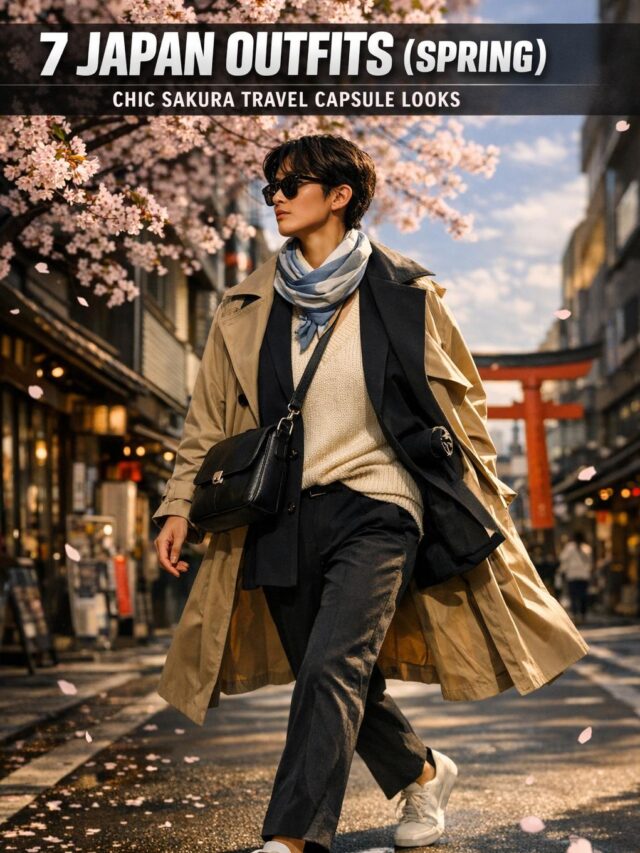
7 Japan Outfits Spring: Chic Sakura Travel Capsule Looks

Japan Outfits Spring: A Definitive Guide to Cherry-Blossom Style (and Smart Packing)
Planning japan outfits spring can feel deceptively tricky: the season is iconic for cherry blossoms, but the weather is changeable, day-to-night temperatures swing, and your itinerary can jump from city streets to temples to evening dining in the same day. The goal isn’t to overpack—it’s to build a cohesive, layer-friendly wardrobe that looks polished in photos, feels comfortable for long walks, and aligns with local style cues that blend minimalism, street style, and subtle traditional influence.
This guide pulls together what travelers most often need for Japan spring outfits: a clear approach to spring weather and layering, a practical capsule wardrobe for 7–14 days, city-by-city outfit frameworks (Tokyo, Kyoto, Osaka/Hiroshima), and ready-to-wear outfit formulas you can repeat across activities like hanami (cherry blossom viewing), shopping districts, and shrine visits. You’ll also find accessory and packing tips designed for unpredictable spring conditions—without sacrificing style.

Japan Spring Weather and Style: What to Expect
Spring in Japan is a season of transitions. Travelers often notice that what feels mild in the afternoon can turn cool after sunset, and a “clear forecast” can still mean a breezy morning or sudden rain. That variability is why the most reliable spring outfits Japan travelers pack are built around layers, breathable fabrics, and outerwear that can handle temperature shifts across a full day of sightseeing.
Temperature and weather patterns (March to May) and why layering wins
Across March, April, and May, spring conditions generally trend from cooler to warmer, but the bigger challenge is inconsistency—especially between daytime exploring and evening plans. A flexible layering system lets you adjust without constantly returning to your hotel. Think in “modules”: a base layer for comfort, a mid-layer for warmth, and a top layer that adds structure or weather protection.
Tip: If you’re building outfits specifically for cherry blossom season, prioritize items that look complete even when you remove a layer for warmth changes. In practice, that means the inner outfit (top + bottom + shoes) should stand on its own, and your outer layer should elevate it rather than “save it.”
Day-to-night outfit planning: the spring challenge
Japan spring outfits often need to transition from park mornings (hanami picnics, photos, strolling) to city afternoons (shopping districts, museums, cafés) to evening dining or nightlife. The most effective approach is to choose one outfit base and change the mood with outerwear and accessories—switching from a cardigan to a blazer, or from a casual layer to a trench-style top layer for a more polished silhouette.
Tip: Aim for one “structured layer” in your bag rotation (like a blazer) and one “soft layer” (like a cardigan). This pairing makes it easier to go from casual comfort to sophisticated style without rethinking your entire outfit.

Core Styling Philosophy: Wa-Modern Minimalism Meets Street Style
Many spring outfits in Japan feel intentional and cohesive rather than loud or overly trend-driven. A helpful lens is “wa-modern”: a blend of traditional influence and modern everyday dressing. You don’t need to wear kimono to respect the aesthetic; you can echo the feeling through clean lines, thoughtful layers, and refined color palettes that photograph beautifully against sakura scenery and urban backdrops.
Color palettes that feel like spring (sakura accents, pastels, and neutrals)
Cherry blossom outfits Japan travelers gravitate toward often use soft, spring-forward colors—especially blush pink—balanced with neutrals for a grown-up, wearable look. Pastels (soft blues, whites, warm-toned layers) can feel fresh and modern when anchored by classic pieces like denim, tailored trousers, or a trench-style outer layer.
- Sakura-inspired accents: blush pink details in a skirt, top, scarf, or bag
- Soft blues and whites: crisp and photo-friendly for daytime city exploring
- Timeless neutrals: beige, cream, gray, black as the backbone of a travel capsule
- Olive green: an effortless chic alternative to standard neutrals
- Warm-toned spring layers: cozy but still seasonal when kept lightweight
Tip: If you want your photos to look cohesive across multiple days, choose one core neutral family (light neutrals or dark neutrals) and repeat it, adding one or two spring accent colors (like sakura pink or soft blue).
Fabrics and silhouettes that travel well
Spring travel style works best when your clothing layers easily and resists looking rumpled after long walking days. Breathable fabrics, pleats, and straight-leg denim appear often in travel-ready Japan spring capsules because they mix well, handle movement, and can swing from casual to polished with the right outerwear. Silhouette-wise, aim for clean proportions: a streamlined bottom with a slightly relaxed top, or a simple dress/skirt base with a tailored layer.
At a practical level, your outfit should still feel like “you”—but with enough structure to look finished even on day three of a trip. A polished blazer, a classic trench for breezy days, and a few versatile layering basics do a lot of heavy lifting.

Build Your Spring Capsule Wardrobe for Japan (7–14 Days)
A capsule wardrobe is the fastest way to plan Japan spring outfits without overpacking. Instead of thinking in single-use looks, choose pieces that mix-and-match across activities: cherry blossom viewing, city exploring and shopping districts, temple and shrine visits, and evening dining. This approach is especially useful when the weather changes—because you can reconfigure layers rather than needing entirely separate outfits.
Core pieces to pack: outerwear, tops, bottoms
Most travelers do best with a small set of reliable “foundation” pieces, then a few personality items that make outfits feel spring-specific. Prioritize layers you can wear open or closed, and bottoms that work with both sneakers and a more polished shoe.
- Outerwear: lightweight trench, blazer, cardigan, and a haori-inspired layer for a wa-modern feel
- Tops: versatile layering basics in neutrals and one or two spring colors
- Bottoms: straight-leg denim, tailored trousers, and a pleated skirt option for a soft, feminine look
- Optional statement: a romantic sakura-inspired piece (like a blush skirt) or a bold/edgy street style layer if that matches your vibe
Tip: Choose at least one outfit base that feels “camera-ready” without effort: for example, a monochrome set with a playful twist, or a simple neutral base with one spring accent. When you’re tired from travel, that’s the outfit you’ll default to—and you’ll still look great.
Layering rules and capsule ratios
The easiest way to make a small wardrobe feel large is to use layers strategically. Think of outfits as formulas: base + layer + shoe + accessory. If the base repeats, the layer changes the whole impression. This also supports a mix of casual comfort and sophisticated style, depending on your day’s plan.
- Repeatable base: 2–3 tops + 2 bottoms that can create multiple combinations
- Layer variety: 2–3 layers (soft + structured + weather-friendly)
- One “polish piece”: blazer or tailored outerwear to upgrade simple looks
- One “spring piece”: pleats, pastels, or sakura-inspired color for seasonal feel
Tip: When planning for 7–14 days, don’t double your wardrobe. Instead, keep the capsule steady and vary your look through layering, color accents, and silhouette changes (pants day vs skirt day).
Budget-friendly shopping strategy (what to buy and when)
Some travelers prefer to pack light and shop once they arrive. A practical strategy is to bring your most comfortable walking shoes and a few trusted basics, then pick up one or two seasonal layers locally—especially items that suit the current conditions. If you’re building a spring capsule specifically for sakura travel, prioritize a layer you can wear daily (like a trench or cardigan) and one piece that reflects the season’s palette.
Tip: If you plan to shop, keep your travel wardrobe intentionally neutral so anything spring-colored you buy integrates easily. That way, your new “sakura accent” doesn’t require additional purchases to work.

City-by-City Outfit Framework
Japan spring outfits can shift subtly by destination. A city-by-city framework helps you pack smarter and feel appropriately dressed whether you’re leaning into modern street style, a more traditional aesthetic, or a casual confidence that still looks intentional.
Tokyo spring outfits: street-style polish meets practical comfort
Tokyo outfits in spring often balance fashion and function. You’ll likely spend long stretches walking through city neighborhoods and shopping districts, so comfort is non-negotiable—but the overall look tends to be polished. A blazer-and-denim combo is a reliable anchor here: it reads “put-together” while staying travel-friendly. Layer with a cardigan when the day starts cool, and switch to a trench for breezy conditions.
Tip: In Tokyo, a simple outfit looks instantly elevated when your outerwear has clean structure. If your base is casual (like denim), choose a tailored top layer and keep your palette cohesive.
Kyoto spring outfits: wa-modern layers with temple-appropriate choices
Kyoto is the easiest place to lean into wa-modern styling. Think traditional aesthetics interpreted through modern layering: a haori-inspired layer over a simple base, refined neutrals with one soft seasonal color, and silhouettes that feel respectful for temple and shrine visits. A pleated skirt or tailored trousers paired with a modest top and a light outer layer creates a balanced look that fits both cultural sites and café stops.
Tip: For temple and shrine days, choose outfits that stay neat when you’re walking, pausing for photos, and stepping in and out of spaces. Avoid anything that requires constant adjusting, and keep layers easy to remove and carry.
Osaka and Hiroshima: comfortable classics with confident accents
For Osaka and Hiroshima, a comfortable classic base works well—then add a playful or confident finishing touch. That might be a pop of green, a warmer-toned layer, or a slightly bolder street-style piece. The key is to keep the outfit functional for long days while still feeling intentional. A “city explorer chic” formula (comfortable shoes, practical bag, layered top) fits naturally here.
Tip: If your itinerary includes multiple cities, build one shared capsule and change the “city vibe” with one layer and one accessory. It keeps packing light and avoids the common mistake of creating separate wardrobes per destination.

Outfit Formulas: 15 Ready-to-Wear Japan Spring Looks
The most useful Japan spring outfit ideas are formulas you can repeat. Below are 15 ready-to-wear looks inspired by common spring travel needs—hanami days, city exploring, café stops, and evenings out—using color palettes that feel like spring (pastels, neutrals, sakura accents) and layers that handle weather shifts.
1) Chic blazer + denim combo
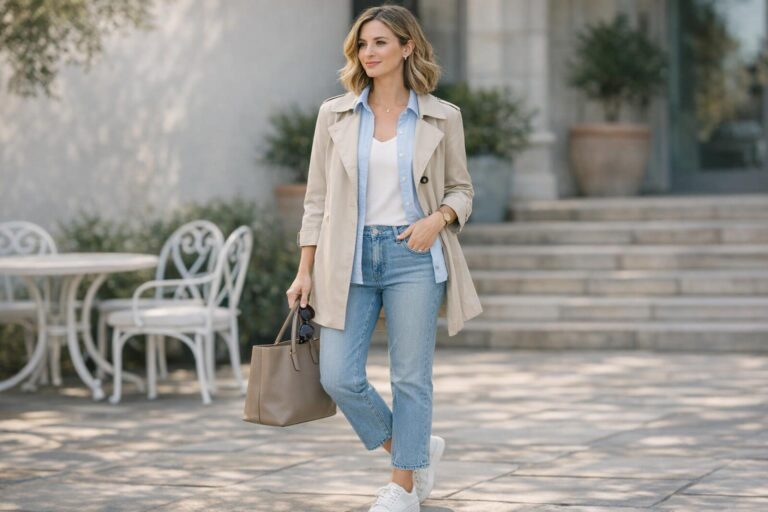
A tailored blazer over a simple top with straight-leg denim creates an instantly polished city look. Add a spring accent (like blush or soft blue) through your top or accessories to keep it seasonal.
2) Classic trench for breezy days
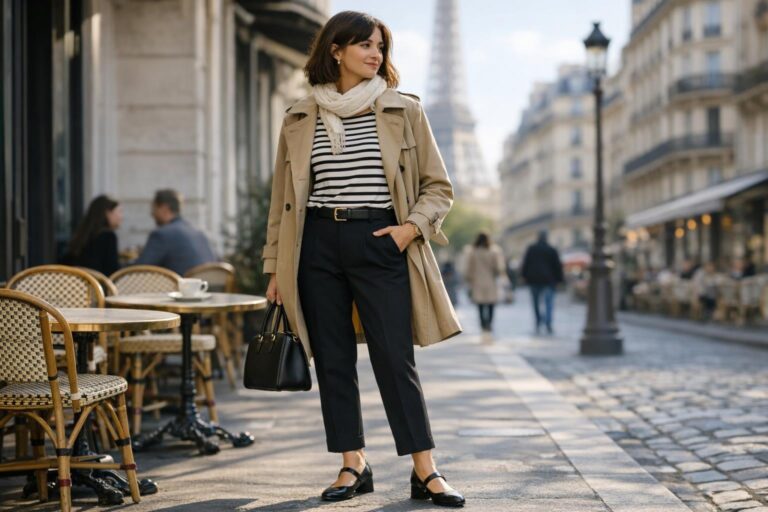
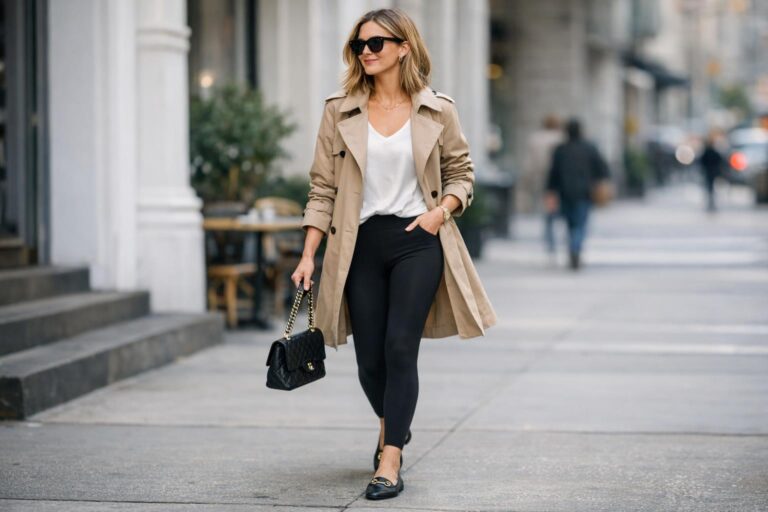
Build a neutral base (top + trousers or denim), then top it with a classic trench-style layer. This is ideal for variable spring weather and looks especially cohesive in travel photos.
3) Cozy spring layers (soft layer focus)
Start with versatile layering basics and add a cardigan for warmth. Keep the palette neutral with one soft seasonal color so you can remove layers without losing the outfit’s shape.
4) Blush pink elegance for cherry blossom season
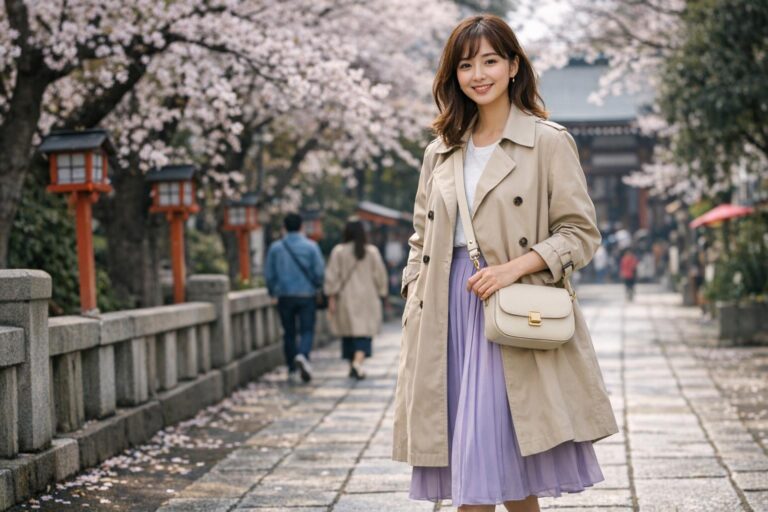
Use blush pink as the hero—through a skirt, top, or subtle accent—then balance it with cream, beige, or other timeless neutrals. This formula reads “sakura-ready” without looking costume-like.
5) Romantic sakura-inspired ensemble (soft + feminine)
Pair soft and feminine pleats with a simple top and a light outer layer. The movement of pleats photographs beautifully during park walks and cherry blossom viewing.
6) Effortless chic in olive green
Olive green brings a refined, understated twist to spring outfits Japan travelers often wear. Combine it with neutrals and let the color carry the interest rather than relying on extra accessories.
7) Fresh and modern in soft blues and whites
Soft blue and white is crisp, light, and ideal for daytime exploring. Add a structured layer (like a blazer) if you want the look to transition smoothly into evening plans.
8) Timeless neutrals for a classic spring look
When in doubt, build an all-neutral outfit and use texture or silhouette to keep it interesting—pleats, tailoring, or layered lengths. This is one of the easiest “repeatable bases” for a capsule wardrobe Japan spring trip.
9) Casual comfort meets sophisticated style
Combine a comfortable base (simple top and easy bottom) with one elevated item—like a blazer or a refined outer layer. It’s an ideal choice for long days that end with a nicer dinner.
10) Polished blazer for a sophisticated touch
Use a polished blazer to anchor an otherwise minimal outfit. This works well for travelers who prefer compact packing: one strong layer can upgrade multiple tops and bottoms.
11) Playful and romantic skirt look
Choose a skirt (pleated or otherwise soft and feminine), keep the top simple, and add a cardigan or light jacket. This is especially fitting for café stops and photo-heavy days.
12) Elegant café look (refined but comfortable)
Build with tailored trousers or a skirt, add a neat top, then finish with a light layer that you can remove indoors. Keep accessories minimal for a clean, modern feel.
13) City explorer chic
Prioritize walking comfort and a practical bag, then keep the clothing sleek: straight-leg denim or tailored trousers, a layered top, and a trench or blazer. This is a reliable formula for Tokyo, Osaka, and beyond.
14) Modern monochrome with a playful twist
Pick one color family (light neutrals or dark neutrals) and keep most pieces within it, then add one playful accent—like a sakura-toned accessory or a pop of green. This gives a street-style edge without being loud.
15) Bold and edgy street style (optional statement day)
If your style leans bold, dedicate one day to an edgier look using a strong layer or sharper contrast, while still keeping the base travel-friendly. The key is not complexity—it’s a confident focal piece paired with simple supporting items.
How to adapt any look for weather shifts
Most outfit formulas become weather-proof when you make the layer removable and the base complete. If it warms up, you’re still comfortable and presentable; if it cools down, you add the cardigan, blazer, trench, or haori-inspired layer. Keep your palette consistent so swapping layers doesn’t disrupt the look.
Tip: When choosing your “main layer” each day, decide whether the day is primarily about warmth (soft layer) or polish (structured layer). That one decision simplifies everything else.
Accessorizing for Sakura: Shoes, Bags, Umbrellas, and Scarves
Accessories can make Japan spring outfits more functional and more photogenic at the same time. In spring, the practical add-ons matter: you’re outside a lot, walking frequently, and navigating changing conditions. The best accessories support comfort and weather-readiness without overpowering the outfit.
- Footwear that won’t fail you: prioritize walking comfort for city exploring and park days
- Bags: choose a practical bag that fits daily essentials and a light layer
- Umbrellas: a compact option is a smart spring staple for unpredictable weather
- Scarves: useful for temperature swings and a simple way to add a sakura accent
Tip: If your capsule is mostly neutrals, use one accessory (scarf or small bag detail) as your consistent spring signature across the trip. It ties outfits together and looks intentional in photos.
Cultural Considerations and Etiquette When Dressing in Japan
Japan’s spring style culture often emphasizes neatness and thoughtfulness. For travelers, the most important cultural consideration is to dress appropriately for the places you’ll visit—especially temples and shrines—while keeping outfits comfortable and easy to move in. Modest, well-put-together outfits are a safe default, and wa-modern styling (traditional influence expressed through modern layering and clean silhouettes) fits naturally in many settings.
If your spring trip includes seasonal events—such as hanami gatherings, graduation ceremonies, weddings, or occasions where traditional clothing like kimono or hakama may be present—consider that you’ll see a blend of traditional and contemporary outfits. You don’t need to match formalwear, but aiming for a polished, respectful look helps you feel comfortable in photos and in public spaces.
Tip: When in doubt for temple/shrine days, choose a refined base (simple top + tailored trousers or a longer skirt), then add a light outer layer. This avoids feeling underdressed without requiring anything overly formal.
Packing Checklist and Quick-Reference Templates
Use this checklist to build a travel-ready spring wardrobe that supports cherry blossom viewing, city exploring, shopping districts, and evenings out. The emphasis is on mix-and-match pieces, layering, and a cohesive color palette so you can create many outfits from a small set.
- Outerwear: lightweight trench; blazer; cardigan; optional haori-inspired layer
- Tops: versatile layering basics in neutrals; 1–2 spring-color tops (sakura pink, soft blue, white)
- Bottoms: straight-leg denim; tailored trousers; pleated skirt (optional but highly versatile)
- Outfit “anchors”: one polished layer for evenings; one easy base look for tired travel days
- Accessories: practical bag; compact umbrella; scarf for temperature swings and color accent
- Footwear: comfortable walking-first shoes suitable for full-day itineraries
Tip: Before you pack, test-build three complete outfits from your capsule that fit three different activities: a hanami/park day, a city shopping day, and a temple/shrine day. If you can do that smoothly, your wardrobe will hold up across the trip.
FAQ
What should I wear in Japan in spring for cherry blossom season?
Build your outfit around light layers and a cohesive palette: a comfortable base for walking (top + denim or trousers), a removable layer like a cardigan or blazer, and a weather-ready outer layer like a lightweight trench for breezy moments, then add a subtle sakura accent such as blush pink to feel season-appropriate.
How do I plan Japan spring outfits when the weather changes throughout the day?
Use a modular approach: make sure your base outfit looks complete on its own, then add one soft layer for warmth (cardigan) and one structured or weather-friendly layer (blazer or trench) so you can adjust without needing an entirely different outfit.
What colors work best for spring outfits in Japan?
Spring-friendly palettes commonly include timeless neutrals anchored with pastels, especially sakura pink, along with soft blues and whites; olive green is also a chic option, and the easiest way to keep outfits cohesive is to repeat a neutral base and rotate one or two seasonal accent colors.
What are the most versatile pieces for a Japan spring capsule wardrobe?
A lightweight trench, a blazer, a cardigan, versatile layering tops, straight-leg denim, tailored trousers, and an optional pleated skirt form a reliable capsule because they mix-and-match easily and can shift from casual daytime exploring to more polished evenings with minimal changes.
What should I wear for temple and shrine visits in Kyoto during spring?
Choose a neat, modest, walkable outfit such as a simple top with tailored trousers or a longer skirt, then add a light layer for changing temperatures; wa-modern styling—clean lines, refined neutrals, and haori-inspired layering—fits well for Kyoto and feels appropriate for cultural sites.
How can I look polished in Tokyo while staying comfortable?
Use a practical base like straight-leg denim and a simple top, then add structure through outerwear—especially a blazer or trench—and keep your colors cohesive; this combination reads city-polished while remaining comfortable for long walking days and shopping districts.
How many outfits do I need for a 7–14 day spring trip to Japan?
Rather than packing a unique outfit for each day, pack a small mix-and-match capsule that creates repeatable formulas: a few tops, a few bottoms, and multiple layers; you’ll get more variety by rotating outerwear and accessories than by doubling the number of base pieces.
What accessories matter most for spring travel in Japan?
Prioritize comfort and weather-readiness: walking-first shoes, a practical daily bag that can hold a light layer, a compact umbrella for unpredictable spring days, and a scarf that helps with temperature swings while adding a subtle seasonal accent.