15 Easy Spring Outfits Korea Ideas for U.S. Weather Swings

Spring Outfits Korea: A Complete Guide to Korean Spring Styles in the US (2026)
Spring outfits Korea style are popular in the U.S. for a reason: the looks are polished without feeling overdone, and the layering approach is practical for the unpredictable shift between cool mornings and warmer afternoons. This guide brings together Korean spring outfit ideas you can actually wear day to day—complete with color palettes, fabric-by-weather guidance, layering essentials, 15 outfit formulas you can repeat, accessory finishing touches, a U.S.-friendly shopping approach, and a 30-day spring outfit planner you can customize.
The focus here is simple: help you build Korean spring outfits that work for transitional weather, feel cohesive as a capsule wardrobe, and are easy to mix and match—whether your style leans soft and romantic, clean and minimal, or casual street-inspired.

Why Korean Spring Style Works in the US
Korean spring style translates well to U.S. wardrobes because it’s built around approachable silhouettes and smart layering rather than hard-to-wear statement pieces. You’ll see recurring combinations—cardigans with skirts, light jackets over dresses, oversized shirts layered over tanks—that can be adapted to many climates and dress codes.
Another reason these outfits feel so wearable is their mix-and-match mindset. Instead of treating each look as a one-off, Korean street style spring outfits often rely on a small set of reliable items (light knits, denim, skirts, relaxed trousers, and easy outerwear) styled in different proportions and color stories. That’s exactly what makes a spring wardrobe feel fresh without requiring a full closet overhaul.
Tip: If you’re new to Korea-inspired styling, start by repeating one “anchor formula” (like cardigan + skirt, or denim jacket + dress) in two color palettes—one pastel and one neutral. You’ll get variety without losing cohesion.

Core Color Palettes for Spring 2026
Color is one of the fastest ways to make an outfit read “Korean spring” without changing your entire wardrobe. The most useful approach is to choose one base palette you can repeat, then add a small accent color when you want more energy.
Pastel Symphony (Soft Pinks, Mint, Baby Blue)
Pastel spring outfits are a consistent signal in Korean spring outfit ideas, especially when the silhouette is simple (cardigans, pleated skirts, or a clean dress). To keep pastels from feeling overly sweet, balance them with a grounded neutral—cream, black, or taupe—and keep accessories streamlined.
Tip: If you’re unsure about wearing head-to-toe pastels, start with one pastel piece (like a cardigan or skirt) and keep the rest of the outfit neutral. This gives you the “monochrome pastel” vibe without feeling costume-y.
Neutrals with a Twist (Cream, Taupe, Camel with Pops)
Neutral tones are the backbone of many Korean spring outfits because they make layering look intentional. Cream, taupe, and camel feel elevated in daylight, and they pair easily with denim, light knits, and simple skirts. Add a “twist” using one pop color accessory or one slightly unexpected item—like a cropped jacket over a minimal base.
Bold Accents (Coral, Emerald, Electric Blue)
Bold accents work best when they’re controlled. Instead of building an entire look around a bright shade, use bold color as a focal point: a bag, a shoe, or a single layer (like an oversized shirt). This keeps the overall outfit balanced while still looking current and intentional.
Tip: When adding a bold accent, keep the base outfit simple and repeat one neutral across two items (for example, a cream top and cream socks). That repetition helps bright accents look cohesive rather than random.

Essential Fabrics and Fabrics by Weather
Korean spring layering ideas shine when fabric choices match the day’s temperature swings. The goal is to create outfits that can handle cool mornings, warmer afternoons, and rain without looking bulky or feeling uncomfortable.
Light Cotton & Linen for Warm Days
For warmer spring days, prioritize breathable fabrics that still hold shape for clean lines—especially if you’re building outfits around skirts, oversized shirts, or light dresses. Light cotton and linen textures pair naturally with spring color palettes and keep layered looks from feeling heavy.
Light Wool/Blends for Cooler Mornings
Cool mornings call for light knits and blends that insulate without turning into a winter outfit. Lightweight knit cardigans and thin sweaters are foundational for Korean cardigan and skirt spring outfits, especially when you want a soft silhouette and easy layering that you can remove by midday.
Water-Resistant Layers for Rain
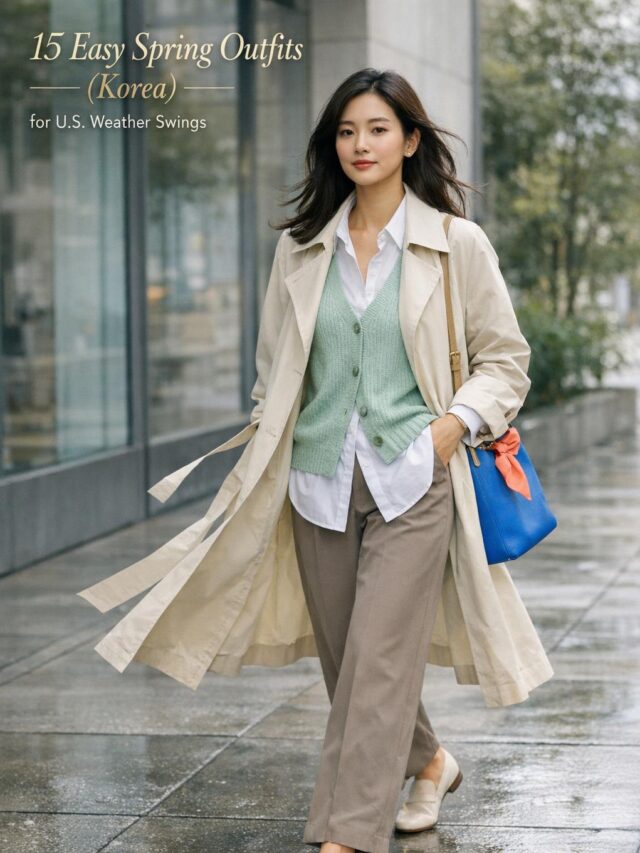
Rain is where spring outfits in Korea-inspired styling become especially practical: you can keep the outfit refined by adding a water-resistant outer layer and simplifying everything underneath. A light trench-style layer works well because it reads polished while protecting your inner layers.
Tips for rain-proofing without bulk: Keep your base outfit slim (tank + shirt, or a simple dress) and let the outerwear do the work. If you add multiple thick layers, the look can quickly feel heavy for spring.

Layering Essentials: A Koreanish Capsule for Spring
The easiest way to build Korean spring outfits is to treat your closet like a small capsule wardrobe: a few tops, a few bottoms, and a few outerwear options that all work together. This section breaks down the pieces that show up again and again in Korea spring fashion styling—then shows how to combine them for transitional weather.
Tops: Cardigans, Lightweight Knits, and Blouses
Cardigans and lightweight knits are the heart of spring layering. They’re easy to throw over a dress, pair with a skirt, or wear over a simple tank. Blouses and oversized shirts add structure, and they’re especially useful for layered Korean spring outfits where you want dimension without heaviness.
Tip: Aim for tops that can play two roles: a cardigan that works as both a top and an outer layer, or an oversized shirt that can be worn open like a jacket.
Bottoms: Skirts (Plaid/Pleated), Wide-Leg Trousers, Jeans
Skirts—especially pleated or structured styles—are a recurring foundation in Korean spring outfit ideas because they pair effortlessly with knits and create a soft silhouette. Wide-leg trousers add a clean, modern line that still feels comfortable. Jeans (especially when layered with a tweed jacket or cardigan) keep outfits grounded and casual.
Outerwear: Lightweight Trench, Kimono-Style Coats, Cropped Jackets
Outerwear is where you control the outfit’s mood. A lightweight trench-style layer immediately makes a look feel refined. Kimono-style coats create an easy drape and can read minimalist or artsy depending on color. Cropped jackets (including denim and tweed-like options) add structure and balance skirts and wide-leg trousers.
Tip: For transitional weather outfits (think roughly 45–65°F), build the outfit in two removable layers: a base you’d be comfortable wearing indoors, plus one outer layer you can remove without the whole look falling apart.
15 Korean Spring Outfit Ideas (With Image Prompts)
These spring outfits Korea-inspired formulas are meant to be repeated and remixed. Each look includes practical styling notes and an optional image prompt you can use to visualize the outfit or plan your wardrobe combinations. Use them as templates, not rules—swap in your preferred colors from the palettes above and adjust layers based on weather.
Look 1: Floral Dress + Light Denim Jacket
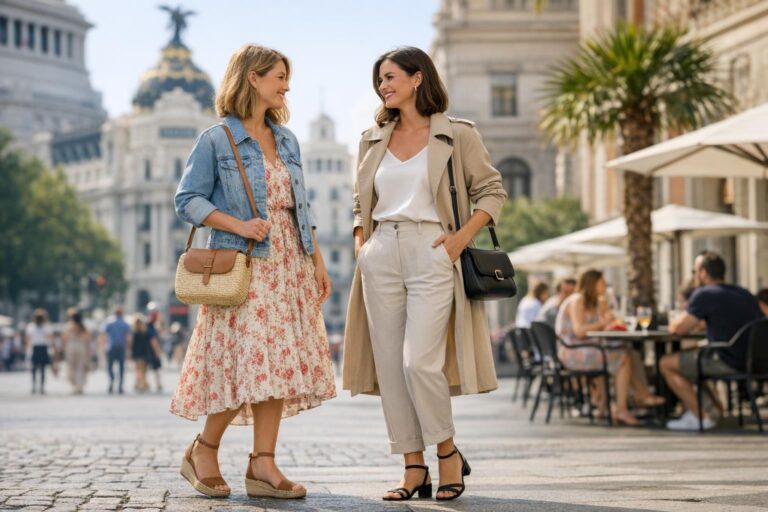
This is one of the most reliable Korean spring outfits because it balances romantic and casual in a single step. Keep the denim layer light so the look stays spring-appropriate, and let the floral print be the focal point. Image prompt: “Floral midi dress with a light denim jacket, soft daylight street style, minimal accessories.”
Look 2: White Midi Skirt + Black Cardigan
The contrast reads clean and intentional, and it’s easy to dress up or down. This outfit works well for anyone who wants a polished base without committing to bold color. Image prompt: “White midi skirt, black fitted cardigan, simple flats or low-profile sneakers, Korean minimal spring look.”
Look 3: Black Skirt + White Cardigan
Flip the contrast for a slightly sharper feel while keeping the same mix-and-match simplicity. This is a great formula when you want a darker bottom to ground the look. Image prompt: “Black skirt with white cardigan, tidy silhouette, soft spring lighting, understated bag.”
Look 4: Cardigan + Pleated Skirt
A cardigan with a pleated skirt is a signature pairing for soft Korean spring outfit ideas. Keep the cardigan shape clean (not overly bulky) so the pleats remain the focal texture. Image prompt: “Pastel cardigan and pleated skirt, airy Korean spring street style, neat hair and simple jewelry.”
Look 5: Layered Denim (Denim Top Layer + Simple Base)
Layered denim styling leans casual and youthful while still looking intentional. The key is to keep everything else simple—neutral base layers and minimal accessories—so the denim texture is the “statement.” Image prompt: “Layered denim jacket over neutral top, straight jeans or skirt, casual Korean spring outfit.”
Look 6: Monochrome Pastels (One Pastel Family Head to Toe)
Monochrome pastel outfits are popular for a soft, cohesive look. Choose one pastel family and keep the rest of the styling minimal so it feels modern rather than overly sweet. Image prompt: “Monochrome pastel outfit, clean silhouette, minimal accessories, Korean spring aesthetic.”
Look 7: Tweed Jacket + Jeans
This outfit bridges classic and casual. The tweed-like texture adds refinement, while jeans keep it wearable for daily errands or casual meetups. Image prompt: “Textured tweed jacket with blue jeans, neutral top, polished casual Korean spring look.”
Look 8: Soft Hoodie + Pleated Skirt
Pairing a soft hoodie with a pleated skirt creates a playful contrast that still reads put-together. Keep the hoodie in a gentle tone or neutral to maintain the “soft and fashionable” vibe. Image prompt: “Soft hoodie and pleated skirt, casual Korean spring street style, simple sneakers.”
Look 9: Layered Tank Top + Oversized Shirt
This is an ideal transitional weather base: breathable indoors, adjustable outdoors. Wear the oversized shirt open like a light jacket or buttoned for a cleaner line. Image prompt: “Tank top layered under oversized button-down shirt, relaxed trousers or jeans, Korean spring layering.”
Look 10: Floral Accents (One Floral Piece, Everything Else Neutral)
If full florals feel too bold, use floral accents instead—one floral skirt, one floral blouse, or subtle floral detail—and keep the rest quiet. This keeps the outfit wearable while still clearly spring-forward. Image prompt: “Neutral outfit with one floral accent piece, clean Korean spring styling, minimal bag.”
Look 11: Cropped Layer + High-Waist Bottom
A cropped layer (like a cropped jacket or cropped knit) works especially well with high-waist jeans, trousers, or skirts to create balanced proportions. Keep the inner layer simple to avoid visual clutter. Image prompt: “Cropped jacket with high-waist wide-leg trousers, neutral palette, Korean spring proportions.”
Look 12: Puffy Sleeve Top + Simple Bottom
A puffy-sleeve top adds shape and trend energy without requiring complicated styling. Pair it with a simple skirt or jeans so the silhouette stays clean and modern. Image prompt: “Puffy sleeve blouse with straight skirt or jeans, spring daylight, refined Korean-inspired look.”
Look 13: Elevated Basics in Cream and Taupe
This is a minimalist spring wardrobe formula: cream knit + taupe trousers (or the reverse) with an optional light coat. The power here is repetition and restraint—everything looks intentional because it harmonizes. Image prompt: “Cream and taupe elevated basics, simple silhouette, polished Korean spring minimal style.”
Look 14: Bright Neutral Base + Bold Accent
Build the outfit with bright neutrals (cream, light taupe) and add a bold accent—coral, emerald, or electric blue—in one place. This keeps the outfit wearable while still feeling fresh. Image prompt: “Cream neutral outfit with one bold accent accessory, Korean spring street style, clean lines.”
Look 15: Lightweight Trench Over a Simple Set
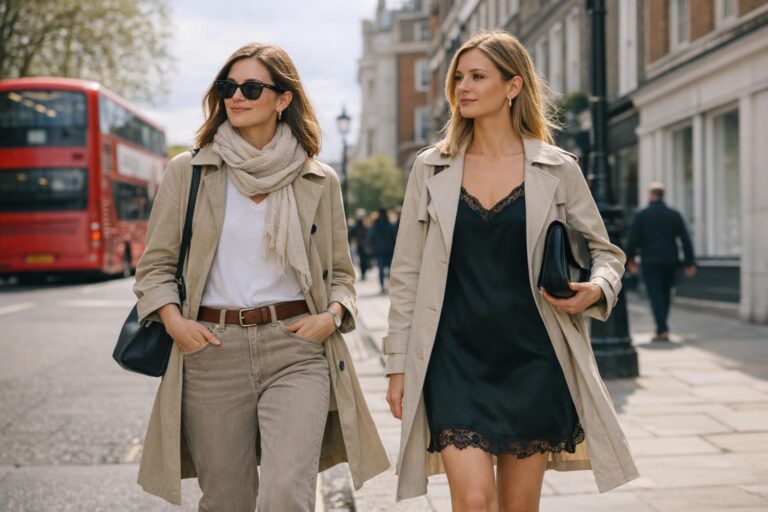
When you want instant polish, add a lightweight trench-style layer over a simple base like a knit top and skirt, or a tee and trousers. This is one of the most adaptable outfits for spring layering ideas Korea-inspired dressing. Image prompt: “Light trench coat over simple neutral outfit, breezy spring street scene, minimal accessories.”
Accessorizing Korean Spring Looks
Accessories are what make a repeated outfit formula feel fresh. In Korean spring styling, the goal is usually refinement: accessories that look intentional, not loud. Small changes—shoe style, sock choice, bag shape—can shift the same outfit from casual daytime to slightly dressier.
Shoes, Socks, Handbags, and Belts
Shoes and socks can define the vibe of spring outfits in Korea-inspired looks. A simple shoe keeps pastel outfits from feeling too precious, while a more structured shoe can elevate denim-based outfits. Bags and belts work best when they echo the outfit’s palette—matching neutrals, or a single controlled accent color.
- Use socks intentionally: pick a shade that repeats a top or cardigan color rather than treating socks as an afterthought.
- Choose one “structure item” per outfit (either a structured bag or a belt) to keep layered looks from becoming too soft.
- If your outfit already has a standout texture (pleats, tweed-like jacket), keep accessories quieter.
Hair and Jewelry Tips
Hair and jewelry are the finishing touches that help Korean spring outfits look clean and cohesive. The most consistent approach is simple: let the outfit’s silhouette and color palette lead, and keep jewelry minimal enough that it doesn’t compete with layering lines.
Tip: If you’re wearing an oversized shirt, puffy sleeves, or a textured jacket, scale jewelry down so the neckline and shoulder line stay uncluttered.
Transitional Weather Styling: How to Layer Without Bulk
One of the biggest opportunities in Korean spring styling is mastering transitional weather. The best layered Korean spring outfits feel light, not heavy—because each piece is chosen for flexibility. Think of your outfit as a system: a base layer that works indoors, a mid layer that adds warmth, and an outer layer that handles wind or rain.
Build in Removable Layers
Instead of stacking thick items, focus on layers you can remove cleanly. A tank or simple top under an oversized shirt is a classic move; add a cardigan if needed; finish with a light trench for outdoors. When you step inside, you can take off one layer and still look styled.
Use Contrast to Keep Layers Looking Intentional
Contrast can be color-based (white skirt + black cardigan) or texture-based (tweed jacket + jeans). This helps each layer read as a deliberate styling choice rather than “extra clothes because it’s cold.”
Tip: If you’re wearing three layers, keep at least two of them in the same neutral family (cream/taupe/black) so the third layer can stand out without the whole outfit becoming visually noisy.
Regional Variability: Adapting Korean Spring Outfits for Different Conditions
Even within Korea, spring conditions can vary by region, which is a useful mindset for U.S. dressing too: what works for a cooler, windier day won’t feel the same as a warmer, more humid one. Rather than copying a look exactly, treat Korean spring outfit ideas as adaptable templates—then adjust fabric weight, layering count, and accessory choices for your local weather.
For cooler conditions, prioritize lightweight knits and an outer layer that blocks wind. For warmer or more humid conditions, simplify to breathable base layers and keep your outer layer optional. For rainy days, use a water-resistant top layer and keep the outfit underneath clean and minimal so it dries quickly and still looks polished.
US Shopping Guide for Korean-Inspired Spring Pieces
Many people searching for spring outfits Korea want the aesthetic but need items they can actually buy and return easily in the U.S. The most practical approach is to shop by category—cardigans, skirts, oversized shirts, light outerwear—and prioritize pieces that match the color palettes and layering formulas in this guide.
Where to Buy: US Retailers with Korean-Inspired Lines
For U.S.-friendly shopping, look for retailers known for elevated basics and affordable spring wardrobe updates, especially when you want neutral palettes, clean silhouettes, and easy layering pieces. Build your cart around foundational items (a light cardigan, a pleated skirt, a simple dress, an oversized shirt) rather than chasing one-off trend pieces.
Price Ranges and Value Picks
Value in a Korea-inspired spring wardrobe usually comes from repeat wear. A cardigan that functions as both a top and a layer, or an oversized shirt that can be worn open or buttoned, tends to outperform cheaper single-purpose items. If you’re choosing where to invest, prioritize the pieces you’ll wear across multiple looks: outerwear and knit layers.
Shipping, Returns, and Fit Tips
Fit and returns matter because Korean spring outfits often rely on proportion: a relaxed shirt, a tidy skirt waist, a cardigan that hits at the right point. When shopping in the U.S., focus on stores with clear return policies, and choose flexible silhouettes when you’re unsure—like oversized shirts, knit cardigans, and trench-style layers that don’t require precision tailoring.
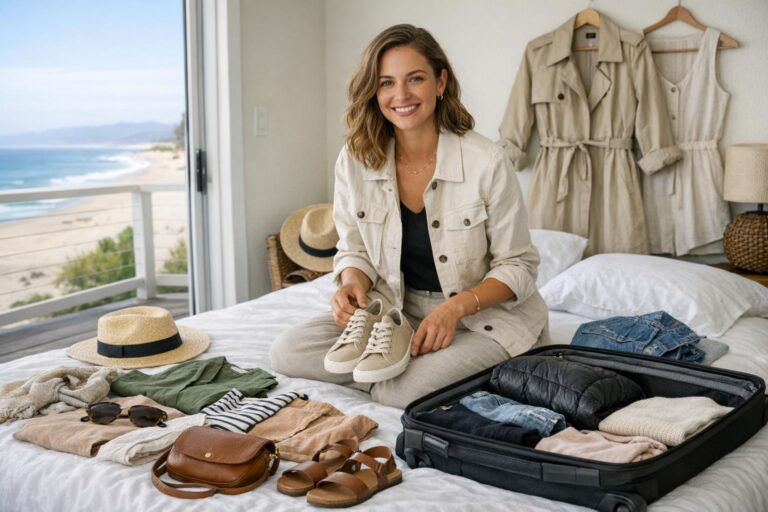
Tip: If you’re building a capsule quickly, pick two bottoms (one skirt, one jean or trouser) and two top layers (one cardigan, one jacket). That small set can create many outfits while you refine your preferences.
30-Day Spring Outfit Planner (Printable)
This 30-day plan is designed around mix-and-match Korean spring outfits: repeated formulas with small changes in color, layering, and accessories. Treat it as a starting template—swap items based on your closet, your comfort, and your local weather.
Week 1: Soft Foundations (Skirt + Cardigan Focus)
In week one, build the habit of repeating a single silhouette: cardigan + skirt, with small shifts in color palette (pastel vs. neutral) and optional outerwear when mornings are cool.
- Day 1: White midi skirt + black cardigan
- Day 2: Black skirt + white cardigan
- Day 3: Cardigan + pleated skirt (pastel palette)
- Day 4: Monochrome pastels (simple silhouette)
- Day 5: Floral accents with neutral base
- Day 6: Elevated basics in cream and taupe
- Day 7: Lightweight trench over a simple base set
Week 2: Casual-to-Polished (Denim and Texture)
Week two leans into denim and texture. The goal is to keep your outfit formulas casual enough for everyday life while adding one refined element, like a textured jacket or cleaner neutral palette.
- Day 8: Floral dress + light denim jacket
- Day 9: Layered denim with a neutral base
- Day 10: Tweed jacket + jeans
- Day 11: Oversized shirt layered over a tank + jeans
- Day 12: Puffy sleeve top + simple bottom
- Day 13: Bright neutral base + bold accent
- Day 14: Cardigan + skirt (repeat with a new accessory focus)
Week 3: Street-Style Ease (Relaxed Layers)
Week three is about comfort and movement: relaxed layers that still look styled. Repeat the same pieces in different combinations to reinforce the capsule wardrobe effect.
- Day 15: Soft hoodie + pleated skirt
- Day 16: Layered tank + oversized shirt + wide-leg trousers
- Day 17: Cropped layer + high-waist bottom
- Day 18: Cardigan worn as a top + skirt
- Day 19: Denim jacket over elevated basics
- Day 20: Monochrome pastels (swap shoes and bag)
- Day 21: Lightweight trench + simple base (repeat with different palette)
Week 4: Weather Contingency (Rain, Wind, and Quick Swaps)
Week four is your flexible week. Use the same outfit formulas, but plan for quick adjustments: add a water-resistant layer for rain, switch to lighter fabrics for warmth, or simplify to fewer layers on humid days.
- Day 22: Water-resistant outer layer + minimal base outfit
- Day 23: Oversized shirt as outerwear + simple skirt
- Day 24: Cardigan + pleated skirt + optional trench
- Day 25: Floral dress + removable layer (shirt or light jacket)
- Day 26: Tweed jacket + jeans (swap in lighter top if warm)
- Day 27: Puffy sleeve top + simple bottom (add light coat if cool)
- Day 28: Elevated basics (cream/taupe) + bold accent (optional)
- Day 29: White midi skirt + black cardigan (repeat, refine proportions)
- Day 30: Black skirt + white cardigan (repeat, switch accessories)
Tip: Print this planner and write in your own substitutions (your specific cardigan, your favorite skirt). The power comes from repeating the same few items across many days while changing one detail at a time.
Practical Tips to Make Korean Spring Outfits Look Intentional
Tip: Use a “Two-Neutral Rule” for Easy Cohesion
Choose two neutrals you’ll repeat frequently—like cream and black, or taupe and white—then build most outfits around them. This makes it much easier to add pastels or bold accents without clashing, and it keeps your spring wardrobe Korea-inspired rather than scattered.
Tip: Repeat One Outfit Formula Twice Before You Change It
If you’re trying to develop your personal version of Korean street style spring outfits, don’t reinvent the wheel daily. Wear the same silhouette twice (for example, cardigan + skirt) and change only one variable—color, shoe style, or outer layer. This teaches you what actually improves the look.
Tip: Keep One “Clean Base” Ready for Busy Days
On days when you don’t want to think, rely on a clean base outfit: a neutral top with a simple skirt or trousers. Then add one layer (cardigan, oversized shirt, or lightweight trench). This is a reliable way to get the Korean spring outfits effect even when you’re short on time.

FAQ
What colors are trending for spring 2026 in Korea-inspired looks?
Spring 2026 Korea-inspired palettes commonly center on soft pastels (soft pinks, mint, baby blue), refined neutrals (cream, taupe, camel), and controlled bold accents (coral, emerald, electric blue). The most wearable approach is to build a neutral base and add either one pastel piece or one bold accent.
How do I style spring outfits Korea-inspired for transitional weather?
Use removable layers: start with a simple base you can wear indoors, add a light mid-layer like a cardigan or oversized shirt, and finish with a lightweight trench or cropped jacket when it’s cooler outside. Aim for contrast in color or texture so the layers look intentional rather than bulky.
What are the easiest Korean spring outfits to recreate with basics?
Some of the simplest formulas are floral dress + light denim jacket, cardigan + pleated skirt, white midi skirt + black cardigan (or the reverse), and layered tank top + oversized shirt. These outfits rely on common wardrobe pieces and look polished with minimal accessories.
How can I adapt Korean spring outfit ideas to a corporate environment?
Stick to refined neutrals, clean silhouettes, and structured layering: a cardigan with a midi skirt, elevated basics in cream and taupe, or a lightweight trench over a simple set. Keep accessories minimal and choose one statement element at most, such as a textured jacket.
How do I make pastel spring outfits look modern instead of overly sweet?
Ground pastels with neutrals and simple shapes. Use one pastel item at a time, or keep a monochrome pastel look streamlined with minimal accessories and clean layers, such as a simple cardigan and skirt without extra embellishment.
What are the best layering pieces for Korean spring outfits?
The most versatile layering pieces are lightweight knit cardigans, oversized shirts that can be worn open or buttoned, and outerwear like a lightweight trench or cropped jacket. These items help you adjust to changing temperatures while keeping the outfit cohesive.
How do I style Korean spring outfits for humid days?
Reduce the number of layers and prioritize breathable fabrics like light cotton and linen textures. Use a simple base (like a tank with an oversized shirt) and keep outerwear optional, adding it only when you need protection from wind or rain.
What’s the most practical way to build a Korean spring capsule wardrobe?
Start with a small set of repeatable pieces: two bottoms (one skirt and one jean or trouser), two layering tops (a cardigan and an oversized shirt), and one or two outer layers (a lightweight trench and/or a cropped jacket). Then rotate through a few proven outfit formulas while changing colors and accessories.